Lithium Brine Extraction at Scale
Geography: Americas · South America · Latin America
Argentina is the third vertex of the Lithium Triangle, with vast brine deposits across the high-altitude salars of Jujuy, Salta, and Catamarca provinces. The country aims to increase lithium production by 75% in 2025, driven by multiple projects reaching operational scale. CATL signed a landmark $1.4 billion agreement with YPF to develop the Salar del Hombre Muerto deposit, targeting 30,000 tonnes of lithium carbonate equivalent annually by 2028. The Salar del Rincón project in Salta ($1.2 billion) is projected to add 25,000 tonnes annually.
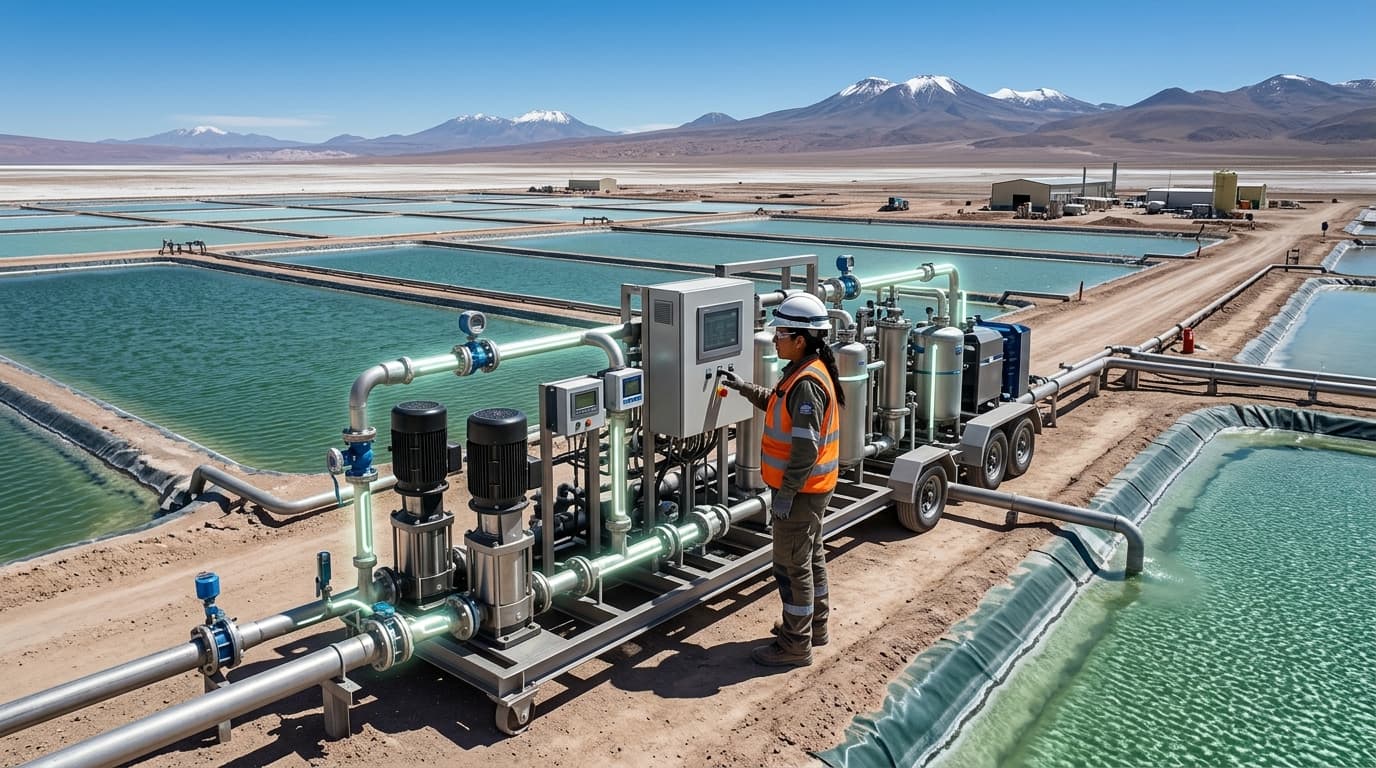
Argentina's extraction primarily uses conventional evaporation pond technology — pumping lithium-rich brine to the surface and concentrating it through solar evaporation over 12-18 months. This established approach (TRL 8-9) contrasts with Chile's push toward DLE. The Argentine government's 10-year lithium plan identifies dozens of projects across the three northwestern provinces, with a total investment pipeline exceeding $10 billion. Some newer projects are piloting DLE as an add-on to improve recovery rates.
The geopolitical landscape is intense: Chinese companies (CATL, Ganfeng, Zijin) are making the largest investments, raising concerns in Washington about Chinese control of critical mineral supply chains. Argentina under Milei has taken a market-friendly approach — no nationalization, welcoming all investors — which contrasts with Chile's state-controlled model and Bolivia's stalled state-owned approach. This open-door policy accelerates production but cedes strategic control of a mineral that will define 21st-century energy security.
Research this in Signals
Signals turns a topic into a sourced research record you can inspect and rerun. Your first scan is free, and this one starts with Lithium Brine Extraction at Scale already loaded, so edit it or scan as is.