Semiconductor Specialty Chemicals
Geography: Asia Pacific · East Asia · Japan
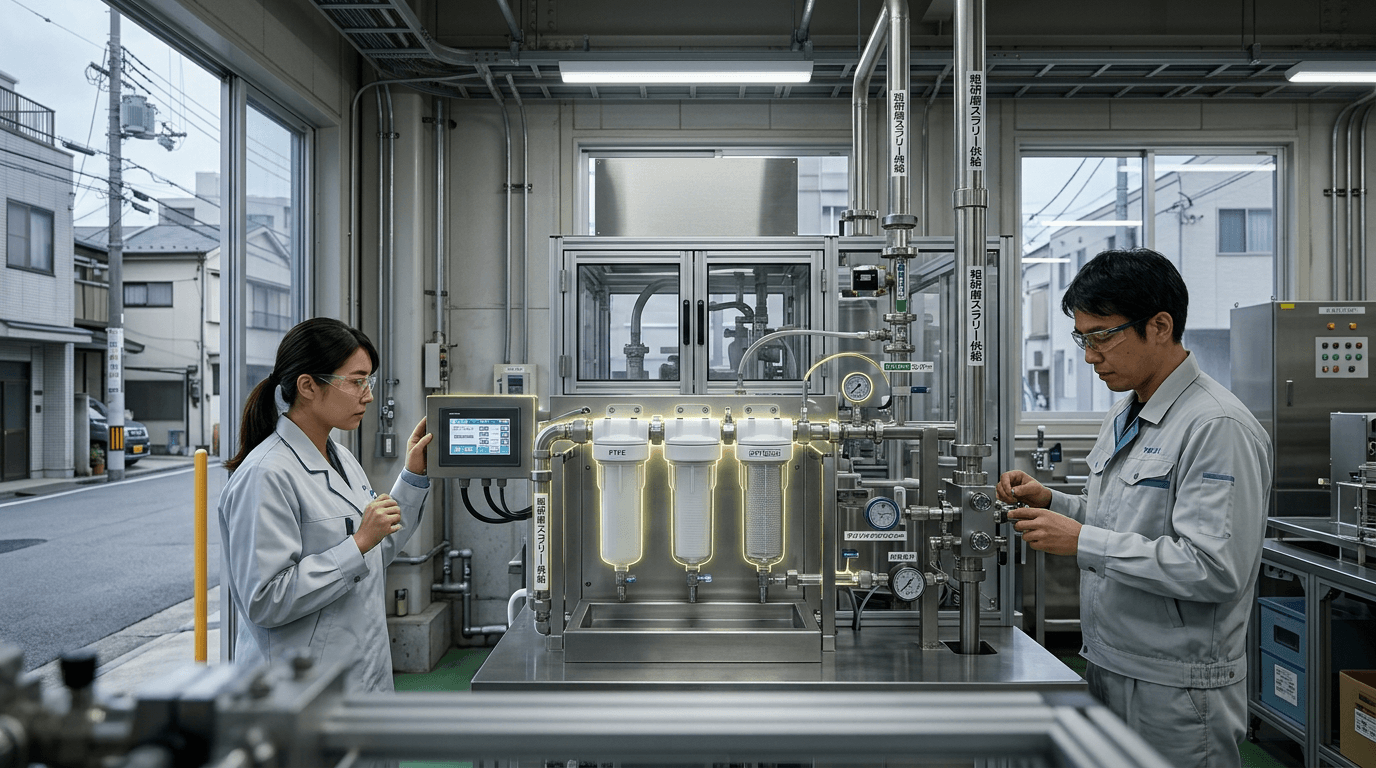
Beyond photoresists and silicon wafers, Japanese chemical companies dominate virtually every specialty chemical category in semiconductor manufacturing. Fujimi Inc. controls a leading share of chemical-mechanical polishing (CMP) slurries used to planarize wafer surfaces between process steps. Stella Chemifa and Morita Chemical lead in high-purity hydrofluoric acid for etching. Kanto Chemical, Mitsubishi Chemical, and Fujifilm supply ultra-pure solvents and developers. In total, Japanese firms hold 50-90% global market share across multiple semiconductor chemical segments.
The purity requirements for semiconductor chemicals are staggering — parts per trillion levels of contamination that require decades of process refinement to achieve consistently at production scale. A single batch of contaminated photoresist or etchant can destroy millions of dollars of chips in process. This extreme quality requirement creates enormous barriers to entry and gives incumbent Japanese suppliers near-insurmountable advantages.
The concentration of semiconductor chemicals in Japan creates what industry analysts call the 'Japanese chemicals chokepoint' — alongside photoresists, silicon wafers, and coating equipment, virtually no advanced chip can be manufactured without multiple Japanese chemical inputs at every process step. This collective dependency is far more strategically significant than any individual company's market share suggests.
Research this in Signals
Signals turns a topic into a sourced research record you can inspect and rerun. Your first scan is free, and this one starts with Semiconductor Specialty Chemicals already loaded, so edit it or scan as is.