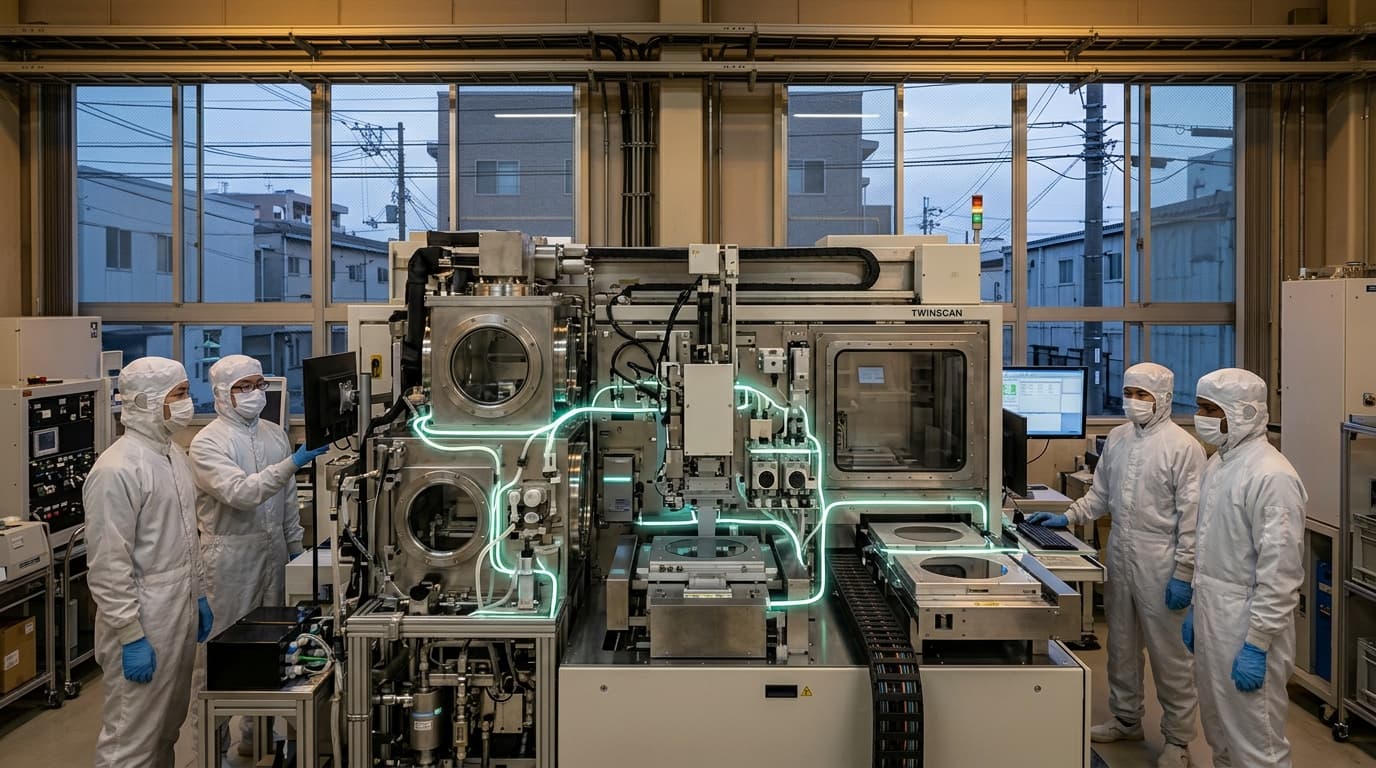
EUV Photoresist Materials
Geography: Asia Pacific · East Asia · Japan
Japanese companies dominate photoresist production with approximately 91% global market share for advanced EUV lithography photoresists. JSR (now taken private in a ¥900 billion deal), Tokyo Ohka Kogyo, Shin-Etsu Chemical, and Fujifilm Electronics Materials are the key producers. In November 2025, Tokyo Ohka Kogyo and JSR announced major investments specifically targeting next-generation photoresists for 2nm and below chip manufacturing.
Photoresists are the light-sensitive chemical coatings that transfer circuit patterns onto silicon wafers during semiconductor manufacturing. At the EUV level (13.5nm wavelength), the chemistry is extraordinarily precise — molecular-level purity and performance requirements that only Japanese specialty chemical firms have mastered at production scale. This gives Japan a chokepoint comparable to ASML's lithography monopoly.
The strategic implications are profound: every TSMC, Samsung, and Intel advanced chip depends on Japanese photoresists. Japan has used this leverage carefully, aligning with US export controls while maintaining commercial supply to key customers. The Rapidus 2nm program further concentrates photoresist R&D in Japan, creating a virtuous cycle where the most demanding customers drive the most advanced chemistry development.
Research this in Signals
Signals turns a topic into a sourced research record you can inspect and rerun. Your first scan is free, and this one starts with EUV Photoresist Materials already loaded, so edit it or scan as is.