Engineered Wood and CLT Construction
Geography: Asia Pacific · East Asia · Japan
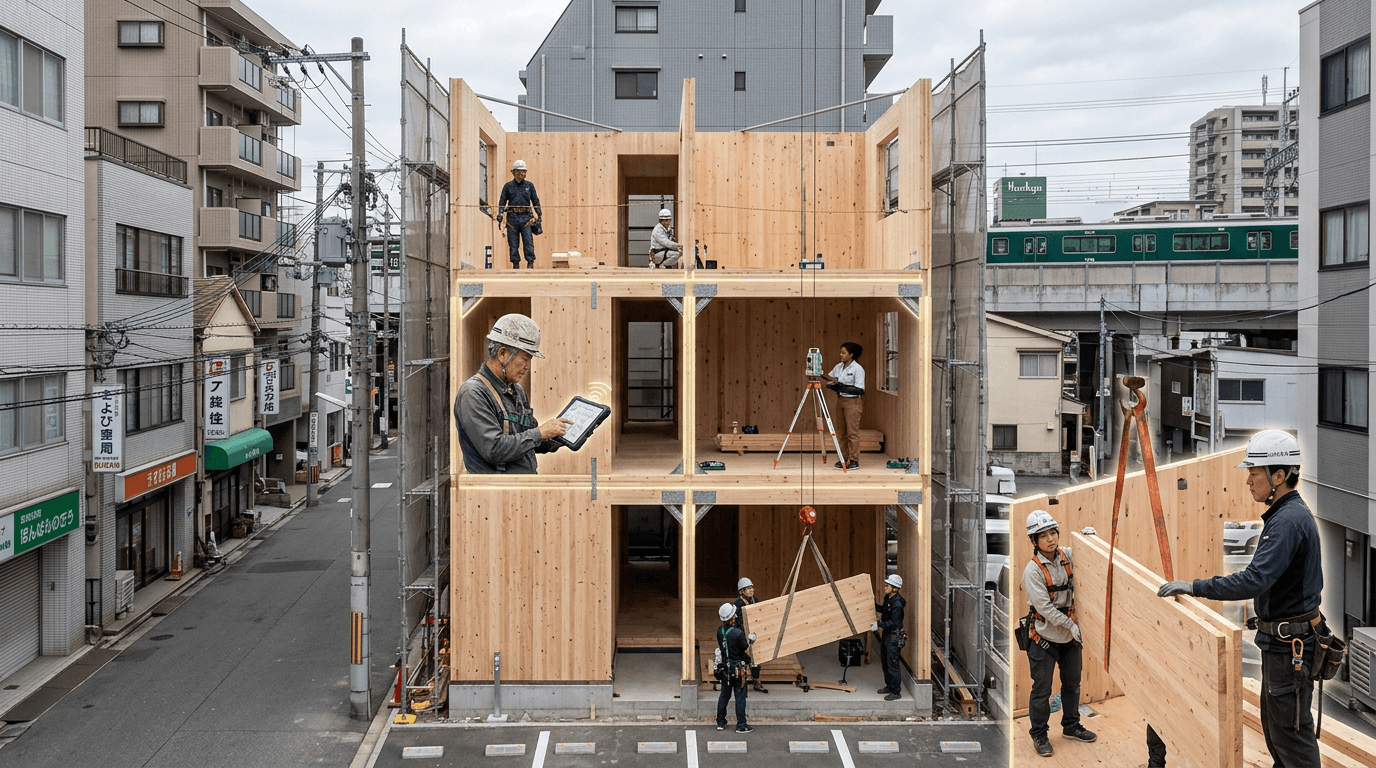
Japan is developing CLT (cross-laminated timber) construction technology uniquely adapted to severe seismic conditions — a challenge that doesn't exist for CLT builders in Europe or North America. Japanese engineers at institutions like Kozo Keikaku Engineering (with architect Kengo Kuma) have developed the 'CLT Checkered Block Wall' system — panels arranged in checkered patterns with steel plates and drift pins that absorb seismic energy through controlled deformation, maintaining structural integrity during major earthquakes.
The country's motivation is both environmental and cultural. Japan is 67% forested — one of the highest ratios among developed nations — but domestic timber use has declined for decades. The government's 2010 Act for Promotion of Use of Wood in Public Buildings and subsequent CLT roadmap aim to revitalize Japan's forestry sector while reducing construction carbon emissions. Japanese CLT buildings now reach up to 18 stories, using hybrid timber-concrete systems where CLT handles vertical loads while concrete provides lateral resistance.
Japan's engineered wood innovation is globally significant because it solves the hardest constraint in mass timber construction: earthquake resistance. If CLT buildings can be proven safe in Japan's extreme seismic environment — regularly experiencing magnitude 7+ earthquakes — they can be built anywhere. This positions Japan as the validator and technology licensor for seismic timber construction, a growing market as building codes worldwide begin to accommodate mass timber and carbon-conscious construction gains urgency.
Research this in Signals
Signals turns a topic into a sourced research record you can inspect and rerun. Your first scan is free, and this one starts with Engineered Wood and CLT Construction already loaded, so edit it or scan as is.