AI-Powered Battery Mineral Recycling
Geography: Americas · North America · Canada
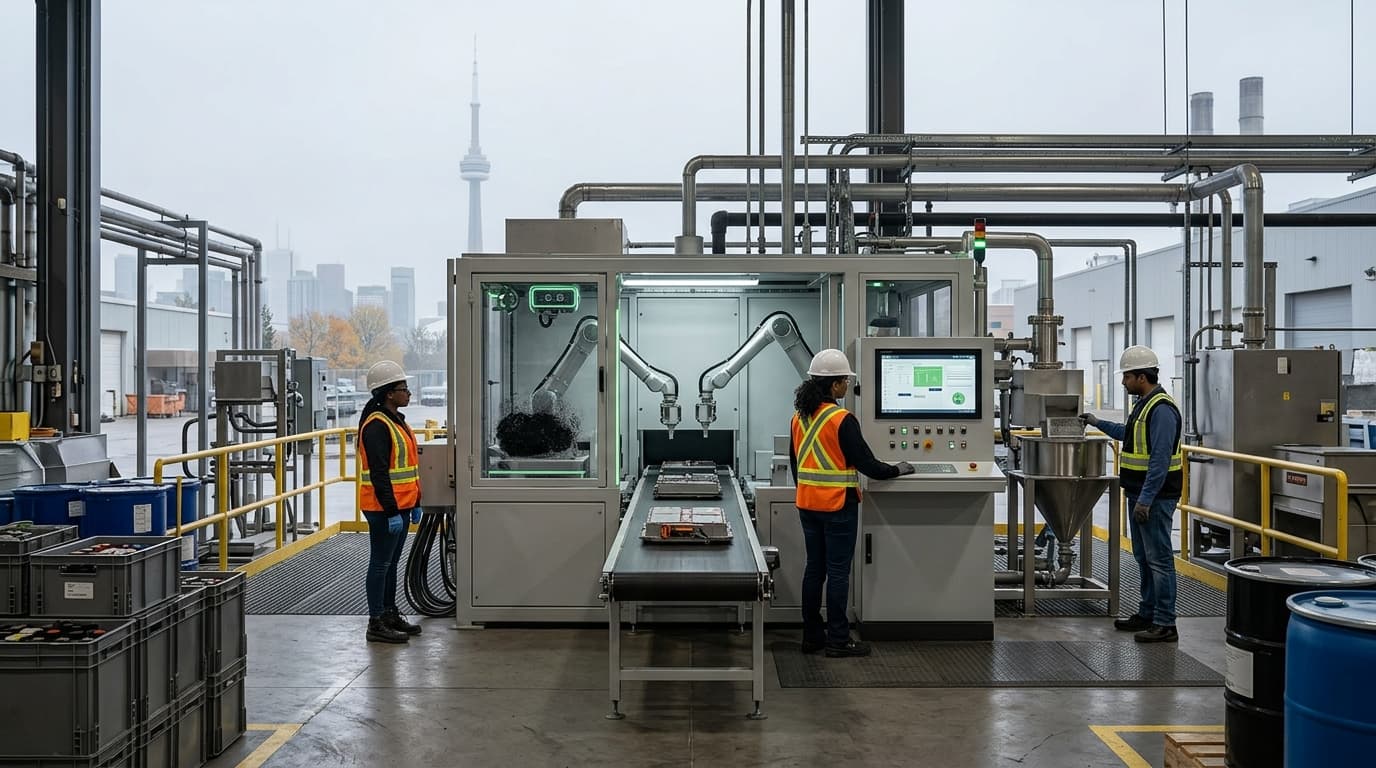
The National Research Council of Canada launched the AI-PAP collaboration project in September 2025, a three-year initiative combining artificial intelligence with advanced processing and recycling techniques to recover valuable materials from spent lithium-ion batteries. The project uses machine learning to optimize hydrometallurgical and pyrometallurgical recycling processes, improving recovery rates for lithium, cobalt, nickel, and other critical minerals.
Battery recycling matters because the first massive wave of EV batteries will reach end-of-life in the late 2020s and 2030s, creating both an environmental challenge and a domestic mineral supply opportunity. Efficient recycling could provide a significant secondary source of critical minerals, reducing the need for new mining and creating a circular economy for battery materials. AI optimization of recycling processes can improve yield and reduce energy consumption.
This project reflects Canada's broader strategy of using its AI capabilities to enhance its natural resource industries — a cross-pollination between the country's two strongest innovation sectors. The three-year timeline suggests the technology could be ready for industrial-scale deployment by 2028-2029, coinciding with the expected surge in battery waste volumes.
Research this in Signals
Signals turns a topic into a sourced research record you can inspect and rerun. Your first scan is free, and this one starts with AI-Powered Battery Mineral Recycling already loaded, so edit it or scan as is.