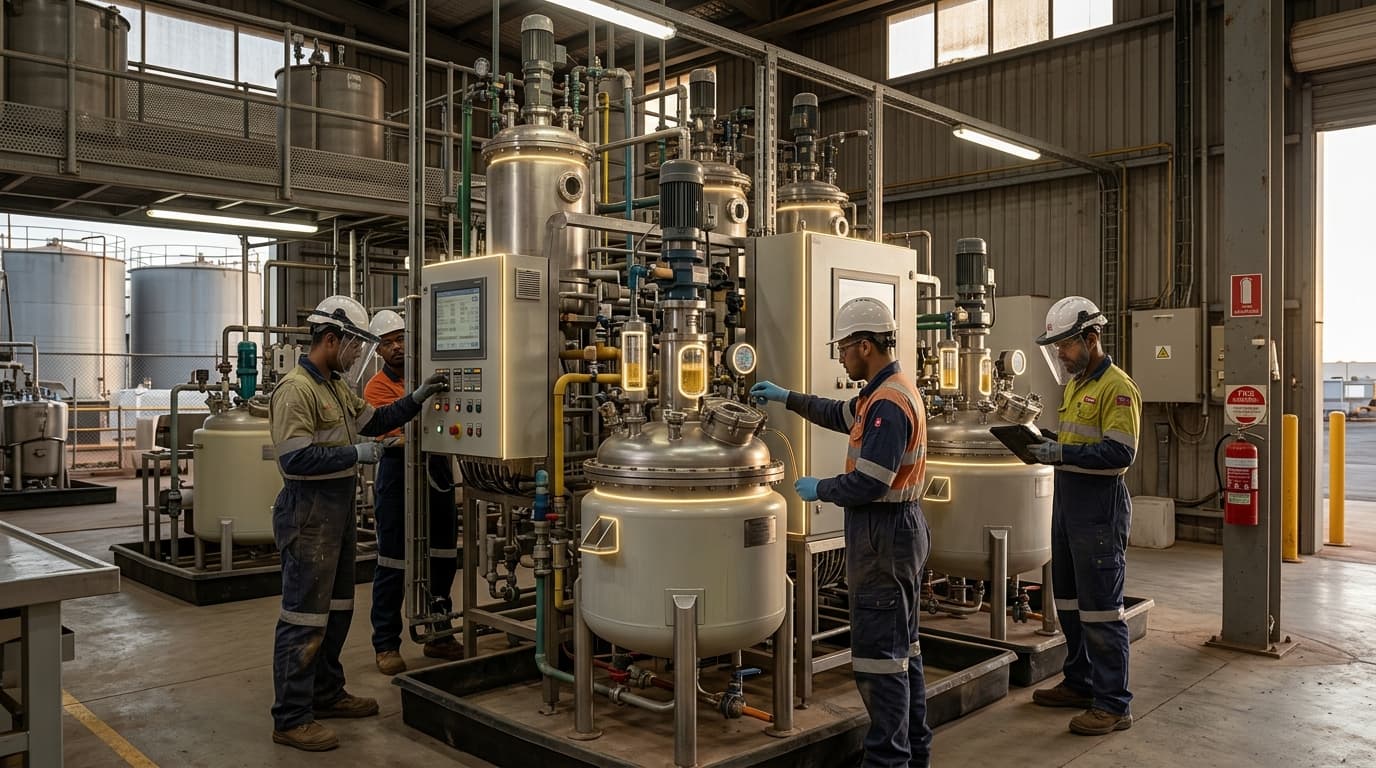
Non-Chinese Rare Earth Refining
Geography: Asia Pacific · Oceania · Australia New Zealand
Australia holds the world's sixth-largest rare earth reserves and is building the non-Chinese processing capacity that global supply chain diversification demands. Lynas Rare Earths, already the world's largest non-Chinese rare earth producer, achieved a landmark in May 2025 by producing commercial quantities of dysprosium oxide — a heavy rare earth critical for permanent magnets in EVs and wind turbines — at its Kalgoorlie facility. Iluka Resources is constructing Australia's first fully integrated rare-earth refinery at Eneabba, north of Perth.
China controls approximately 60% of rare earth mining and 90% of processing globally. Every electric vehicle motor, wind turbine generator, and military guidance system depends on these materials. Australia's move into downstream processing — not just raw ore export — addresses the most critical vulnerability in Western technology supply chains. The October 2025 US-Australia Critical Minerals Framework formalized bilateral cooperation, with Australia receiving its first EXIM Bank financing for rare earth processing.
The strategic calculus is clear: without non-Chinese rare earth processing, the clean energy transition and Western defense capability remain dependent on a single geopolitical rival. Australia's rare earth ambitions, backed by both Canberra and Washington, represent one of the most consequential resource sovereignty plays of the 2020s. Challenges remain in scaling cleaner processing technologies (improved solvent extraction, closed-loop systems) and managing environmental impacts in biodiverse regions.
Research this in Signals
Signals turns a topic into a sourced research record you can inspect and rerun. Your first scan is free, and this one starts with Non-Chinese Rare Earth Refining already loaded, so edit it or scan as is.