Geothermal Brine Mineral Extraction (Silica + Lithium)
Geography: Asia Pacific · Oceania · Australia New Zealand
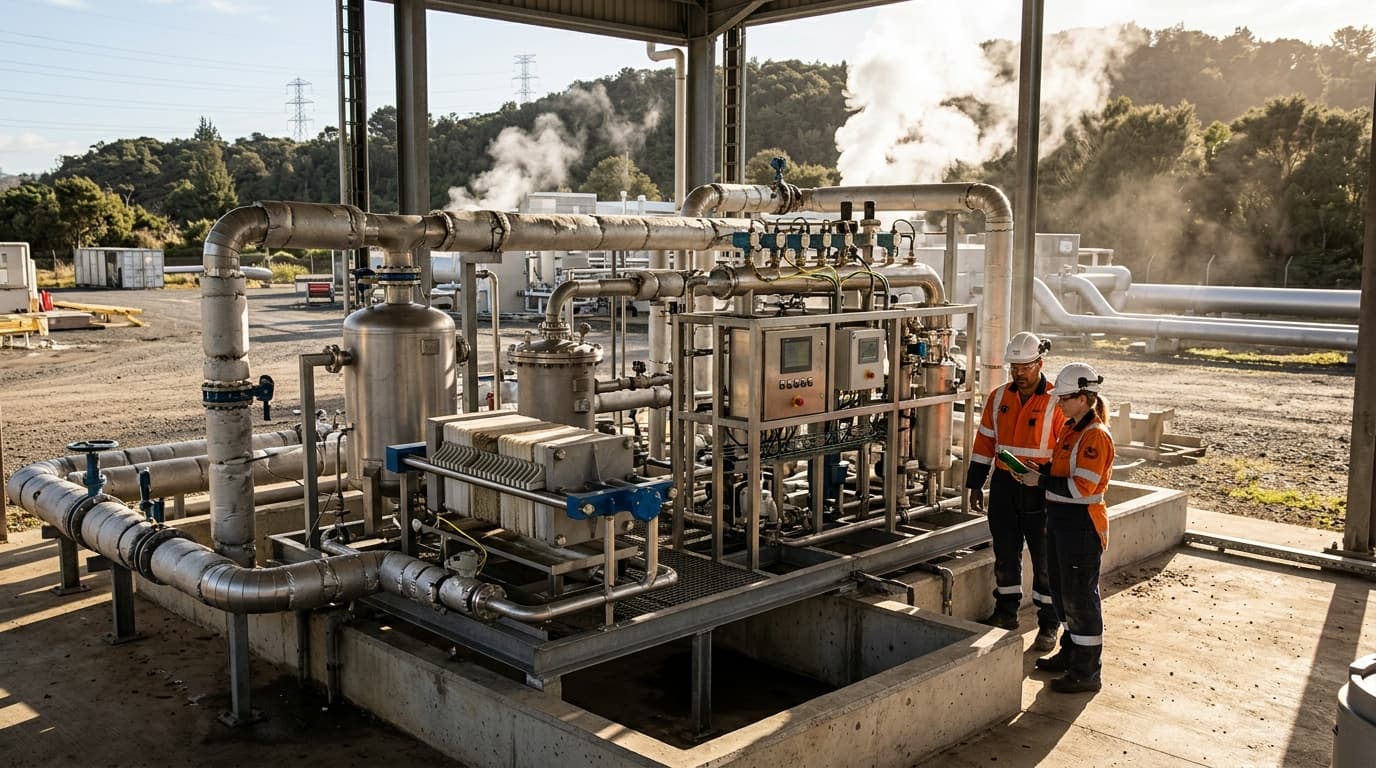
New Zealand's Geo40 has developed proprietary technology to extract valuable minerals — first silica, then lithium — from geothermal brines that are otherwise treated as waste. Operating at Contact Energy's Ohaaki geothermal power station in the Taupo Volcanic Zone, Geo40's commercial silica recovery plant removes amorphous silica that would otherwise cause scaling and maintenance problems in geothermal infrastructure. The same platform is being extended to extract lithium using a proprietary GeoSieve direct lithium extraction (DLE) compound.
Geothermal brines contain dissolved minerals at concentrations that are economically interesting but technically challenging to extract. Geo40's sequential approach — remove problem silica first (solving an operational issue for geothermal plants while creating a valuable product), then extract lithium from the cleaned brine — creates a dual revenue stream while improving the efficiency of existing geothermal infrastructure. The NZ government funded NZ$2 million to scale up the lithium extraction technology.
This technology sits at the convergence of two strategic themes: New Zealand's geothermal energy leadership and the global scramble for lithium supply. If Geo40 can prove commercial lithium extraction from geothermal brines, the approach could be exported to any geothermal field worldwide — from Indonesia's vast geothermal resources to California's Salton Sea (where Controlled Thermal Resources is pursuing a similar concept). The circular economy logic — transforming a waste stream into critical battery minerals while improving existing infrastructure — is compelling for any nation with geothermal resources.
Research this in Signals
Signals turns a topic into a sourced research record you can inspect and rerun. Your first scan is free, and this one starts with Geothermal Brine Mineral Extraction (Silica + Lithium) already loaded, so edit it or scan as is.