Autonomous Mining Haulage Systems
Geography: Asia Pacific · Oceania · Australia New Zealand
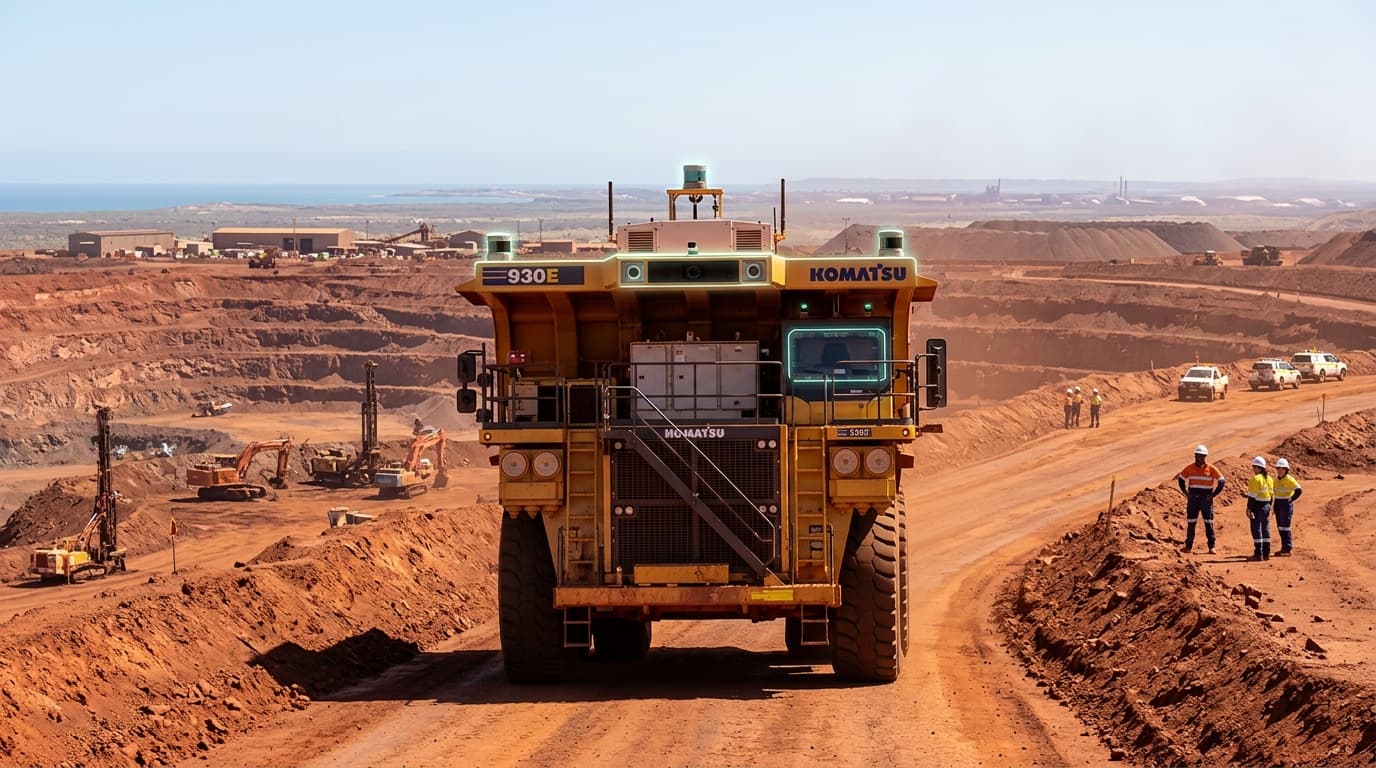
Australia's iron ore mines in Western Australia's Pilbara region are the global epicenter of autonomous mining haulage. Rio Tinto's Mine of the Future program has operated autonomous haul trucks since 2008, with over 160 trucks now running driverless across multiple sites, controlled remotely from Perth over 1,500km away. Fortescue signed a A$350M deal with Liebherr in April 2025 to deploy 360 battery-electric autonomous trucks across its Pilbara portfolio by 2030, combining electrification with autonomy.
The technology delivers approximately 15% productivity improvement through elimination of shift changes, breaks, and fatigue-related slowdowns, while significantly reducing safety incidents. Australia's remoteness, labor costs, and mine scale created the perfect conditions for autonomous haulage adoption, making the Pilbara a proving ground that has exported operational practices globally. Autonomous drilling rigs, with 50 cable and battery-electric units ordered under a separate A$350M deal, extend automation below the surface.
Australia's leadership in autonomous mining is strategically significant because it demonstrates that automation can be deployed at scale in harsh, remote environments — a capability directly transferable to defense logistics, agricultural robotics, and space resource extraction. The integration of battery-electric powertrains with autonomous control represents a convergence that could eliminate diesel from surface mining entirely within a decade, fundamentally altering the emissions profile of Australia's largest export industry.
Research this in Signals
Signals turns a topic into a sourced research record you can inspect and rerun. Your first scan is free, and this one starts with Autonomous Mining Haulage Systems already loaded, so edit it or scan as is.