Ultra-Deep Mine Automation and Safety Technology
Geography: Emea · Africa · Africa
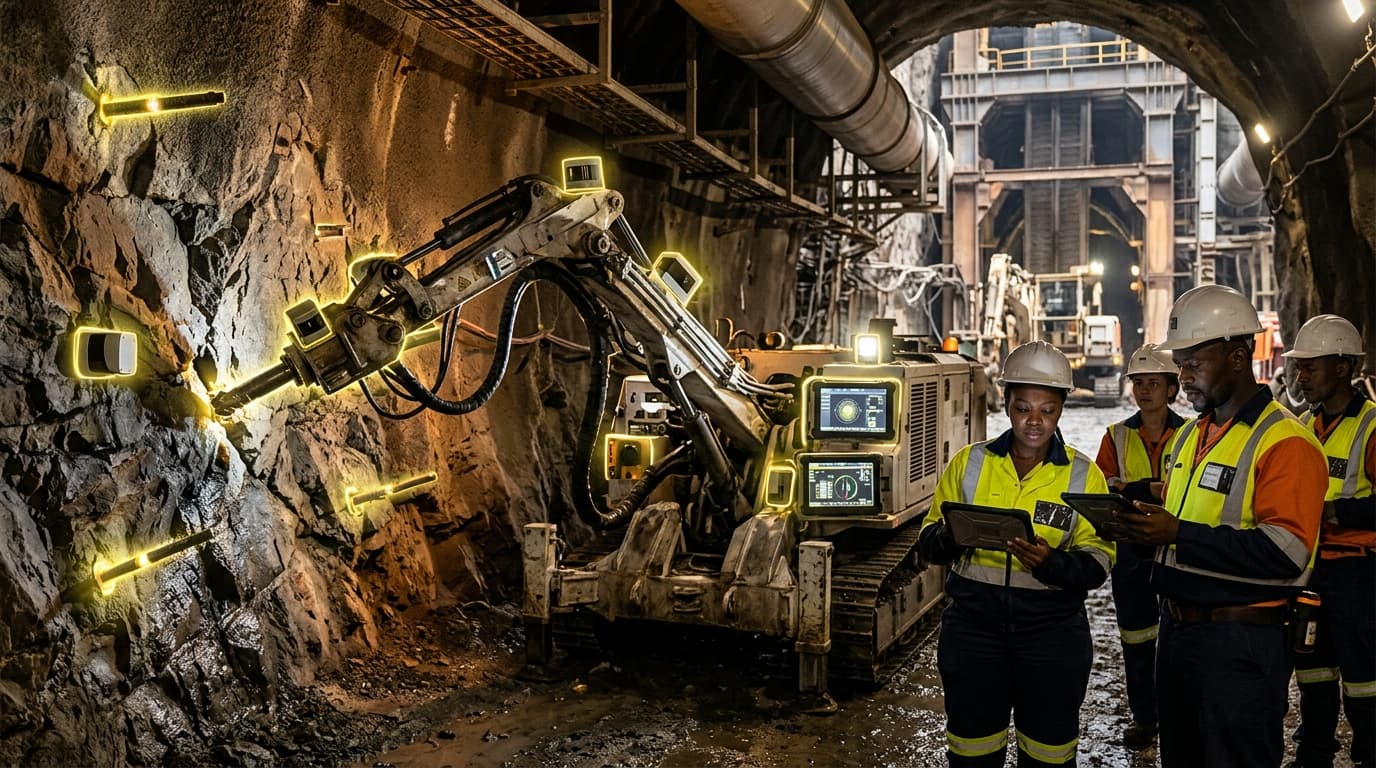
South Africa operates the world's deepest mines — Mponeng gold mine descends nearly 4 km below the surface, where rock temperatures reach 66°C. These extreme conditions have driven innovation in mine safety, cooling, and automation. The CSIR's Centre for Robotics and AI is developing autonomous mining robots, AI-powered seismic prediction systems that forecast rockbursts (the leading cause of mining deaths), and sensor networks for real-time environmental monitoring in deep mines.
AI-powered safety systems use machine learning to analyze seismic data from thousands of sensors, predicting dangerous rockbursts hours or days in advance — enough time to evacuate miners. Autonomous drilling systems operate in zones too hot or dangerous for human workers. Real-time air quality monitoring using IoT sensor networks detects dangerous gas accumulations before they reach toxic levels. These technologies are being developed and deployed by South African mining companies and research institutions.
The strategic significance is twofold. First, South Africa's mining sector employs 450,000 people and generates 8% of GDP — technology that improves safety and productivity protects a critical economic sector. Second, the deep-mine automation technology developed in South Africa's extreme conditions is exportable to mining operations worldwide. As ore bodies globally become deeper and more difficult to access, South African mining technology becomes increasingly valuable.
Research this in Signals
Signals turns a topic into a sourced research record you can inspect and rerun. Your first scan is free, and this one starts with Ultra-Deep Mine Automation and Safety Technology already loaded, so edit it or scan as is.