Envisioning is an emerging technology research institute and advisory.

LinkedInInstagramGitHub

2011 — 2026

research
  • Observatory
  • Newsletter
  • Methodology
  • Origins
  • Vocab
  • RSS Feeds
services
  • Signals Session
  • Bespoke Projects
  • Build Sessions
  • Pricing
  • Use Cases
  • Signals
  • Signal Scan↗free
impact
  • ANBIMAFuture of Brazilian Capital Markets
  • IEEECharting the Energy Transition
  • Horizon 2045Future of Human and Planetary Security
  • WKOTechnology Scanning for Austria
solutions
  • Innovation
  • Strategy
  • Consultants
  • Foresight
  • Associations
  • Governments
  • L&D
resources
  • Partners
  • Coding for Non-Coders
  • How We Work
  • Data Visualization
  • Multi-Model Method
  • FAQ
  • Security & Privacy
  • Public Sector
about
  • Manifesto
  • Community
  • Events
  • Support
  • Contact
ResearchServicesSignalsAbout
  1. Home
  2. Research
  3. Spore
  4. Autonomous Agricultural Robots

Autonomous Agricultural Robots

Solinftec's Solix is the first commercial autonomous robot platform built for large-scale tropical agriculture — AI-powered monitoring and intervention across millions of hectares

Geography: Americas · South America · Brazil

Back to SporeBack to BrazilView interactive version

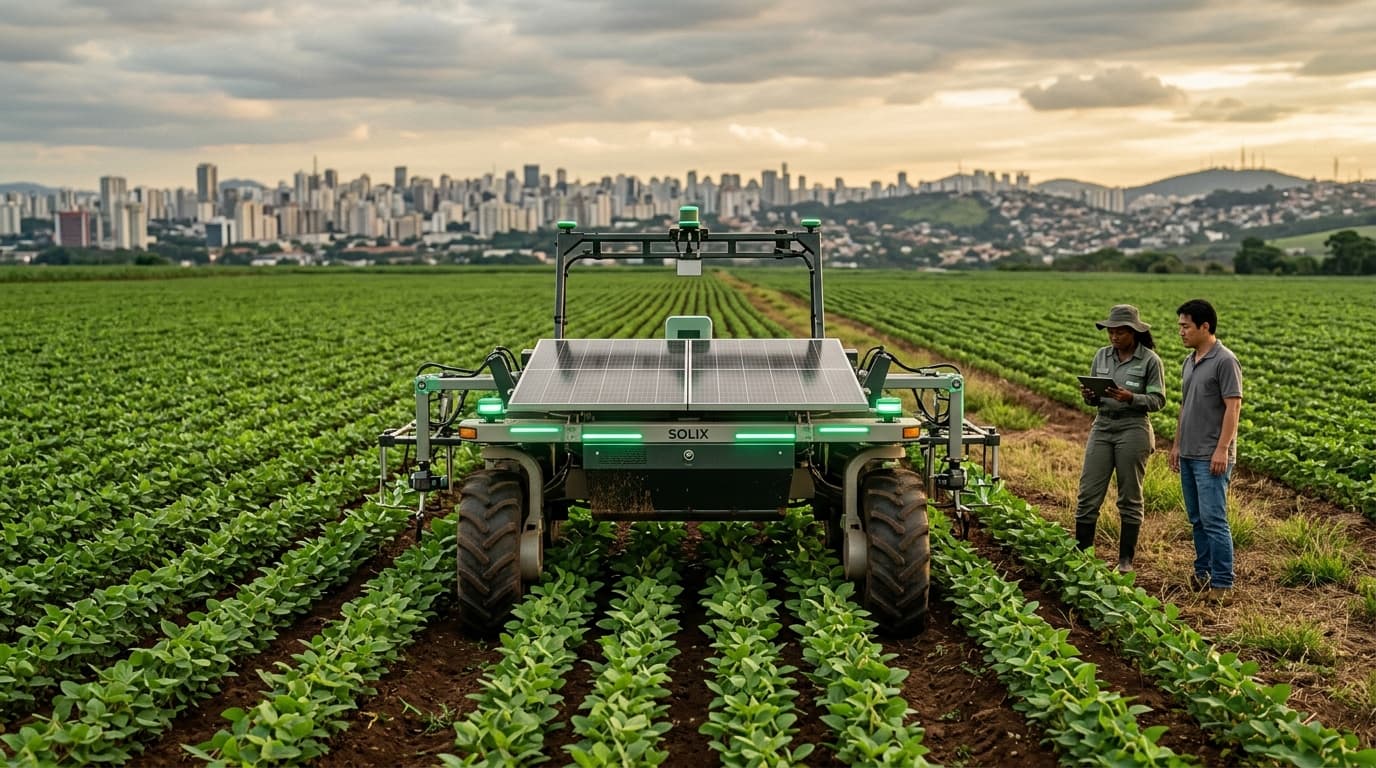
Solinftec, founded in Araçatuba (São Paulo), built Solix as the first autonomous robot designed specifically for large-scale row crop agriculture. The robot navigates fields using GPS and computer vision, monitoring plant health, detecting pests and diseases, and performing targeted interventions without human operators.

The technology is deployed commercially in Brazil, the US, and other Latin American countries. It complements satellite and drone monitoring by providing ground-level, plant-by-plant data collection — the resolution needed for precision application of inputs.

Brazil is a natural testbed for agricultural robotics because of the scale: individual farms in the cerrado can exceed 100,000 hectares, making autonomous systems economically compelling. The combination of large fields, high labor costs in remote areas, and year-round growing seasons creates ideal conditions for robotic farming.

TRL
7/9Operational
Impact
3/5
Investment
4/5
Category
Applications

Research this in Signals

Scan Autonomous Agricultural Robots for yourself.

Signals turns a topic into a sourced research record you can inspect and rerun. Your first scan is free, and this one starts with Autonomous Agricultural Robots already loaded, so edit it or scan as is.