Water Security & Construction Water Use
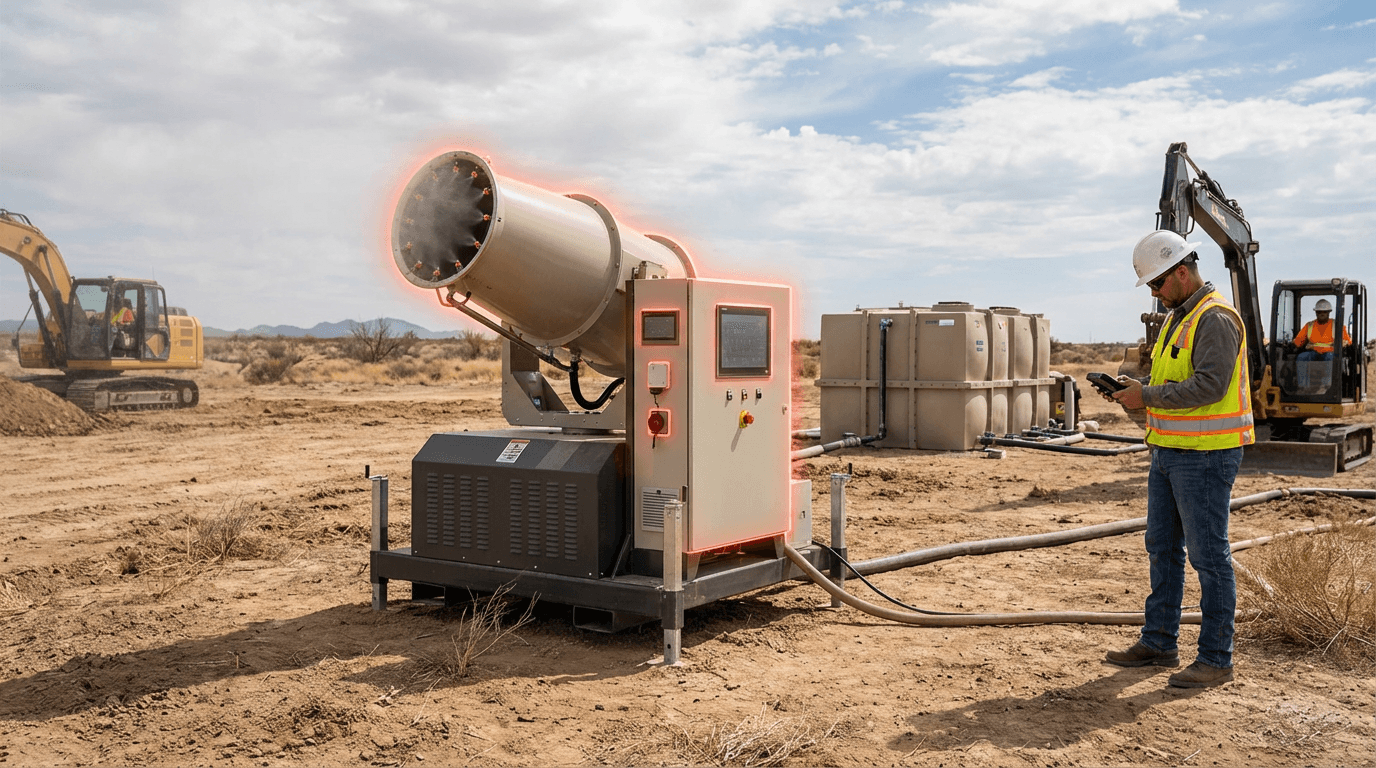
Water security in construction addresses a critical tension between building activity and freshwater scarcity in regions where every liter counts. Construction sites demand substantial water volumes for concrete curing, dust suppression, equipment washing, and worker welfare facilities. In water-stressed regions—from the Arabian Peninsula to California's Central Valley, from Australia's interior to sub-Saharan Africa—this consumption directly competes with agricultural irrigation and municipal drinking water supplies. The challenge intensifies as climate change amplifies drought cycles and urban expansion pushes development into increasingly arid zones. Traditional construction practices, designed in water-abundant contexts, often prove unsustainable when transplanted to regions where aquifers are depleting and surface water sources are unreliable. The technical problem extends beyond simple conservation; it requires rethinking fundamental construction processes to decouple building activity from freshwater dependency while maintaining quality standards and worker safety.
Industry responses have evolved from voluntary conservation toward systematic water management integrated into project controls and regulatory frameworks. Greywater recycling systems now capture runoff from equipment washing and worker facilities, treating it for reuse in dust suppression and non-potable applications. Dry dust suppression technologies employ polymer-based soil stabilizers and mechanical barriers that reduce airborne particulates without continuous water spraying. Advanced concrete curing techniques, including membrane-forming compounds and moisture-retaining blankets, minimize evaporative losses while maintaining proper hydration. Water accounting has emerged as a critical discipline, with contractors tracking consumption against project-specific budgets much as they monitor labor hours or material costs. Environmental permits in water-scarce jurisdictions increasingly mandate detailed water management plans, requiring contractors to demonstrate conservation measures and justify each category of use. Some regions have introduced tiered pricing structures that make construction water significantly more expensive than baseline rates, creating direct financial incentives for efficiency.
Current adoption varies widely by geography and project scale, with large infrastructure projects in the Middle East and Australia leading implementation of comprehensive water management systems. Smaller contractors in developing regions often lack access to advanced technologies but are pioneering low-cost adaptations, such as rainwater harvesting during brief wet seasons and community water-sharing agreements. The construction industry's water footprint will face increasing scrutiny as global water stress intensifies, particularly in rapidly urbanizing regions where building booms coincide with declining water availability. Future trajectories point toward closed-loop water systems on construction sites, real-time monitoring integrated with smart meters, and regulatory frameworks that treat water as a scarce resource requiring the same rigorous management as hazardous materials. This evolution reflects a broader recognition that sustainable construction in the 21st century cannot ignore the fundamental constraint of water availability.
Related Organizations
A specialist in water treatment for the construction sector, focusing on silt management and wastewater treatment.

Manufacturer of industrial dust control cannons (DustBoss) that use atomized mist.

A company specializing in soil stabilization and dust control solutions using polymers.
The organization best known for the LEED (Leadership in Energy and Environmental Design) green building rating system.

An international platform promoting the transition to sustainable water use.

A multinational construction and development company with aggressive climate targets and a portfolio of Deep Green projects.
Veolia Water Technologies
France · Company
Global utility giant offering mobile water services and packaged plants.

A global leader in water purification technology for industrial and infrastructure markets.

A specialty chemicals company developing admixtures and systems for self-healing and watertight concrete.
Supporting Evidence
Research this in Signals
Signals turns a topic into a sourced research record you can inspect and rerun. Your first scan is free, and this one starts with Water Security & Construction Water Use already loaded, so edit it or scan as is.