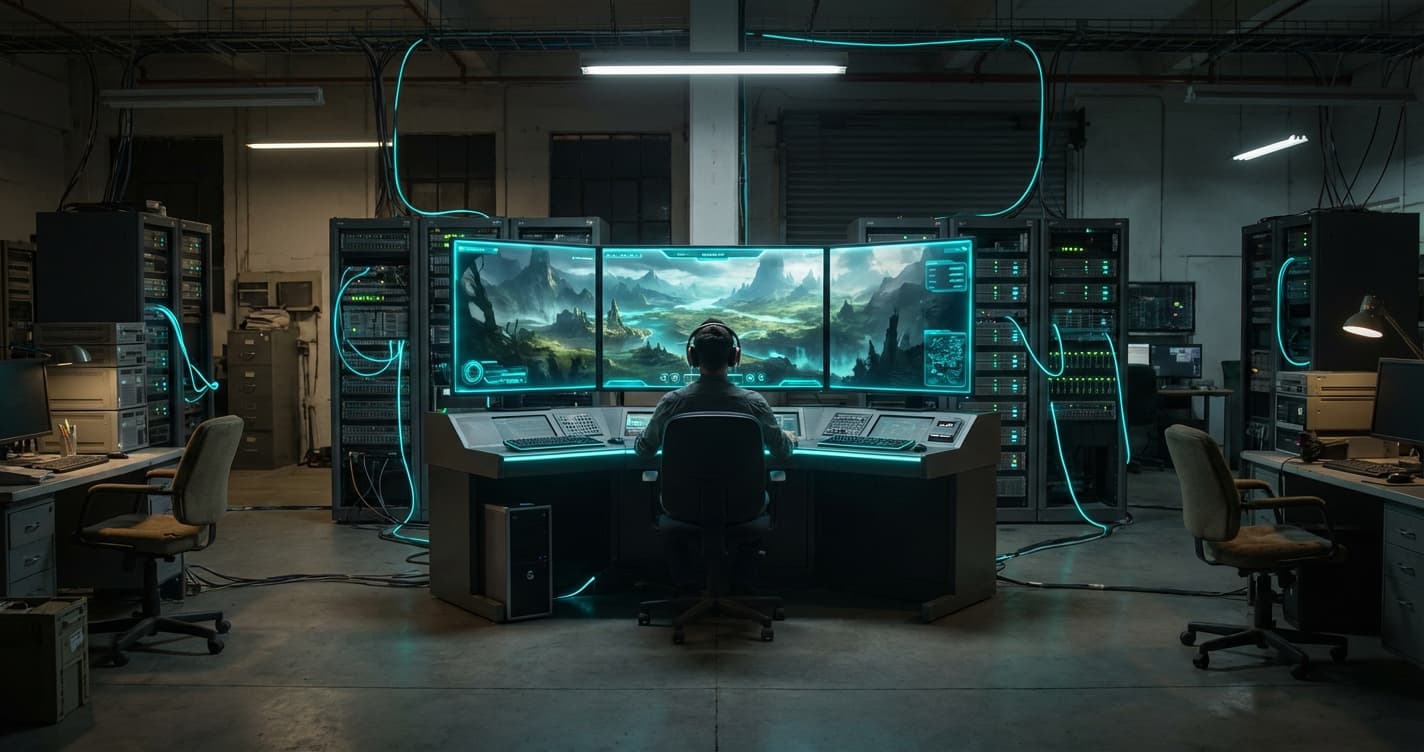
Generative MMO Worlds
Generative MMO worlds stitch procedural geography, simulationist economies, LLM-driven narrative engines, and agent-based ecologies into persistent universes that react to player diplomacy and commerce. Instead of static quest hubs, the world’s biomes, factions, and mythologies evolve daily as AI storytellers reinterpret telemetry, forging artifacts, cities, and dungeons that memorialize community actions. Dev teams set high-level constraints, then let the simulation iterate, treating designers more like gardeners curating emergent cultures than authors of linear content drops.
Studios such as NetEase, Singularity 6, and indie collectives using MUD-like sandboxes are piloting shards where guild treaties spawn new nations, esports finals alter the weather system, and streamer decisions ripple into canon. Brand partners drop limited events that permanently etch new constellations or trade routes, giving fans proof that their moments matter. Because content is co-authored with AI, localization, accessibility, and monetization knobs can adapt per region without fragmenting lore.
The approach sits around TRL 4–5: orchestration stacks must keep procedural creativity within safety rails, and regulators worry about loot-box analogues or copyright lineage of AI-authored assets. Standards efforts like OMA3’s simulation APIs and Khronos’ glTF scene graphs help, and publishers negotiate union agreements clarifying how procedural content intersects with writer credits. Expect smaller MMOs and creator economies to adopt generative worlds first, with AAA franchises layering the tech into seasonal modes once guardrails, provenance tracking, and ethical monetization models crystallize.
Related Organizations

Spatial computing company providing infrastructure for massive virtual worlds.
United States · Startup
Game studio developing BitCraft, a community-sandbox MMORPG.


A metaverse technology company known for SpatialOS, enabling massive simulations with thousands of concurrent agents.

United States · Company
Venture capital firm with a dedicated games fund.

Massive gaming platform with a persistent avatar identity system across millions of user-created experiences.
Supporting Evidence
Research this in Signals
Signals turns a topic into a sourced research record you can inspect and rerun. Your first scan is free, and this one starts with Generative MMO Worlds already loaded, so edit it or scan as is.