Decentralized Compute Markets
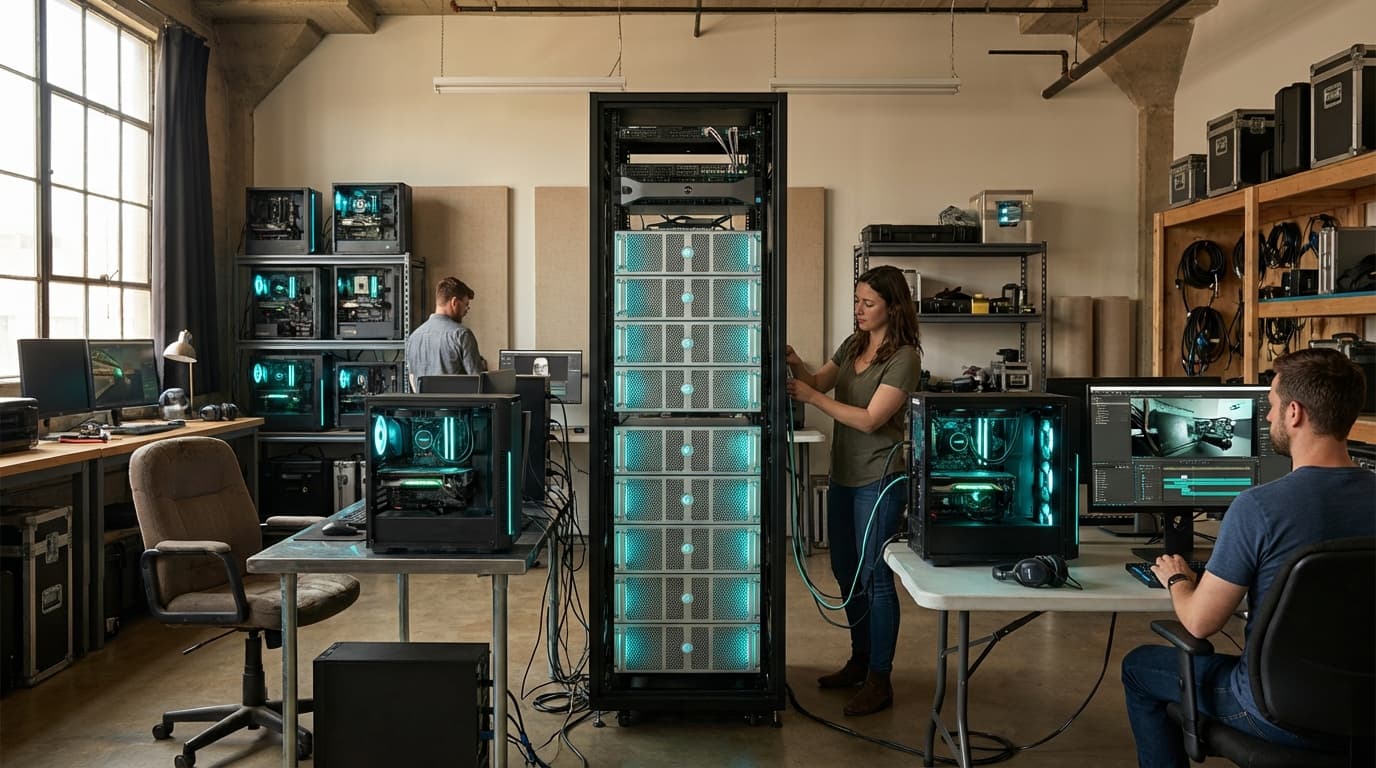
Decentralized compute markets pool idle GPUs from gamers, crypto miners, and boutique render farms into tokenized marketplaces where media teams can rent cycles for rendering, diffusion models, or video transcoding. Protocols such as Render, Akash, and io.net verify hardware specs on-chain, escrow payments, and route workloads through WebRTC or QUIC tunnels so assets never touch centralized hyperscalers. Benchmarks and reputation scores give studios confidence they’ll receive consistent throughput, while contributors monetize hardware without shipping it to a colocation rack.
Indie filmmakers, VTuber studios, and digital fashion houses rely on these grids to burst-render volumetric scenes overnight at a fraction of AWS pricing. Newsrooms spin up RAG workflows during breaking events, and hobbyists offer GPU time to local archives that need to colorize footage. Because markets are transparent, rights holders can demand that sensitive footage stays within specific jurisdictions, and sustainability teams can prioritize nodes powered by renewables.
Operating at TRL 6, decentralized compute still faces volatility—nodes can churn mid-render, and regulators scrutinize how copyright-protected media traverses untrusted hardware. Projects are responding with zero-knowledge proofs for workload integrity, multi-region redundancy, and insurance pools that reimburse failed jobs. Should these safeguards stabilize, decentralized compute will complement traditional clouds, giving media companies a hedge against GPU scarcity while rewarding communities for contributing the very compute that powers generative storytelling.
Related Organizations
United States · Consortium
A decentralized GPU rendering network connecting artists with idle GPU compute power.

A decentralized video streaming network that allows participants to rent out transcoding power.
United States · Company
Cloud graphics company that created the OctaneRender engine and founded the Render Network.
United States · Open Source
An open-source Supercloud that lets users buy and sell computing resources securely and efficiently.
United States · Startup
A decentralized physical infrastructure network (DePIN) that aggregates GPUs for ML applications.
Singapore · Startup
Decentralized cloud infrastructure focusing on GPU-as-a-service for gaming and AI.
United Kingdom · Startup
Building a decentralized compute protocol for machine learning, allowing AI models to be trained and run across distributed hardware resources.
Poland · Open Source
An open source platform for sharing computer resources, often used for Blender rendering.
United States · Open Source
A decentralized Web3 cloud infrastructure comprised of user-operated nodes.
United States · Startup
A distributed cloud network that aggregates idle consumer GPUs from gamers.
Supporting Evidence
Research this in Signals
Signals turns a topic into a sourced research record you can inspect and rerun. Your first scan is free, and this one starts with Decentralized Compute Markets already loaded, so edit it or scan as is.