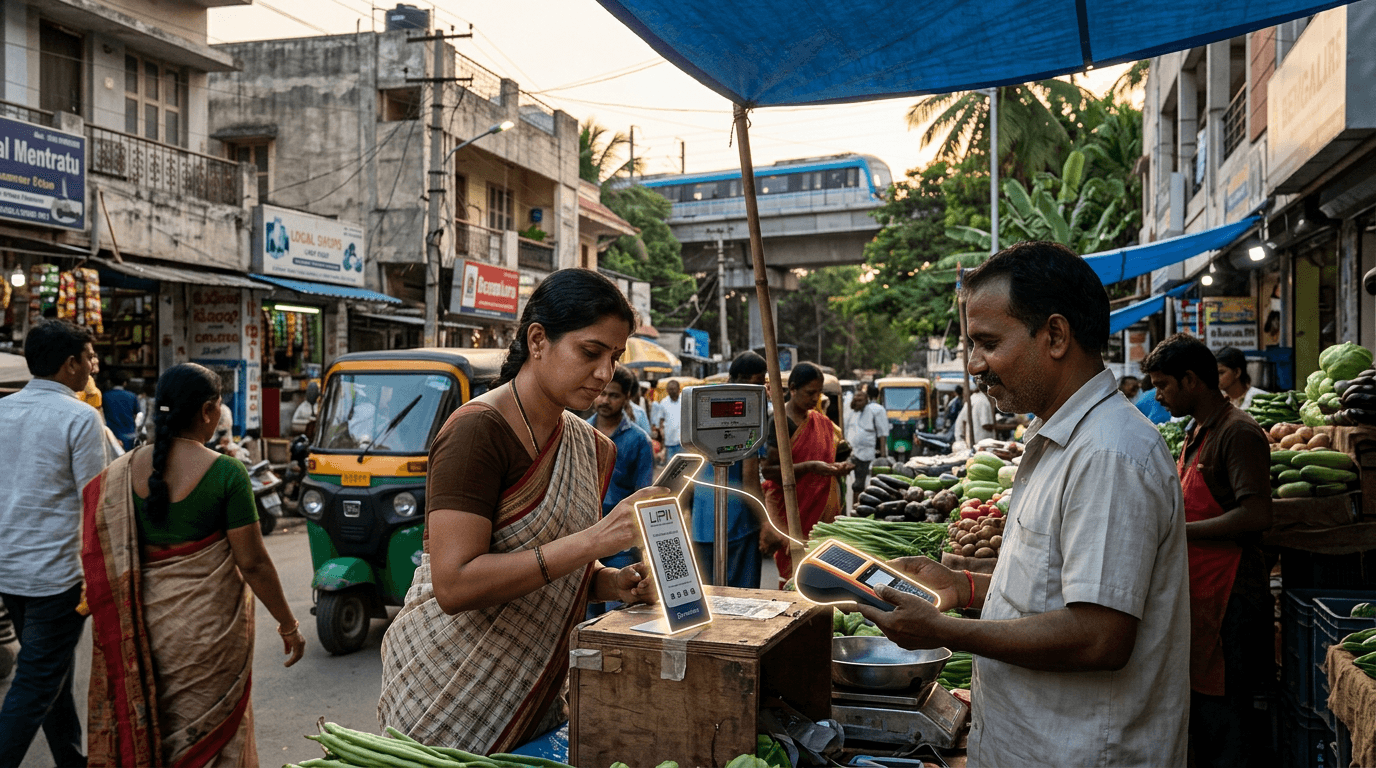
Unified Payments Interface (UPI)
Geography: Asia Pacific · South Asia · India
UPI is a real-time, interoperable payment protocol built by the National Payments Corporation of India (NPCI). Launched in 2016, it allows instant money transfers between bank accounts via mobile phone using QR codes, phone numbers, or virtual payment addresses. By December 2025, UPI hit 21.6 billion transactions in a single month, with over 500 million active users. The system is free for consumers and near-free for merchants.
UPI's impact on India is comparable to what the internet did for information access. Street vendors, auto-rickshaw drivers, and tea stalls all accept UPI — India effectively leapfrogged credit cards entirely. Cash usage has plummeted. The system handles everything from splitting a restaurant bill to paying for a $50,000 car, all in real-time, 24/7, with zero transaction fees for consumers.
UPI is now being exported internationally. It's live in Singapore, UAE, France, Sri Lanka, Bhutan, Nepal, and Mauritius, with more countries in negotiation. India's G20 presidency in 2023 positioned UPI as a model for global digital public infrastructure. No other country has built a payment system this inclusive, this fast, at this scale.
Research this in Signals
Signals turns a topic into a sourced research record you can inspect and rerun. Your first scan is free, and this one starts with Unified Payments Interface (UPI) already loaded, so edit it or scan as is.