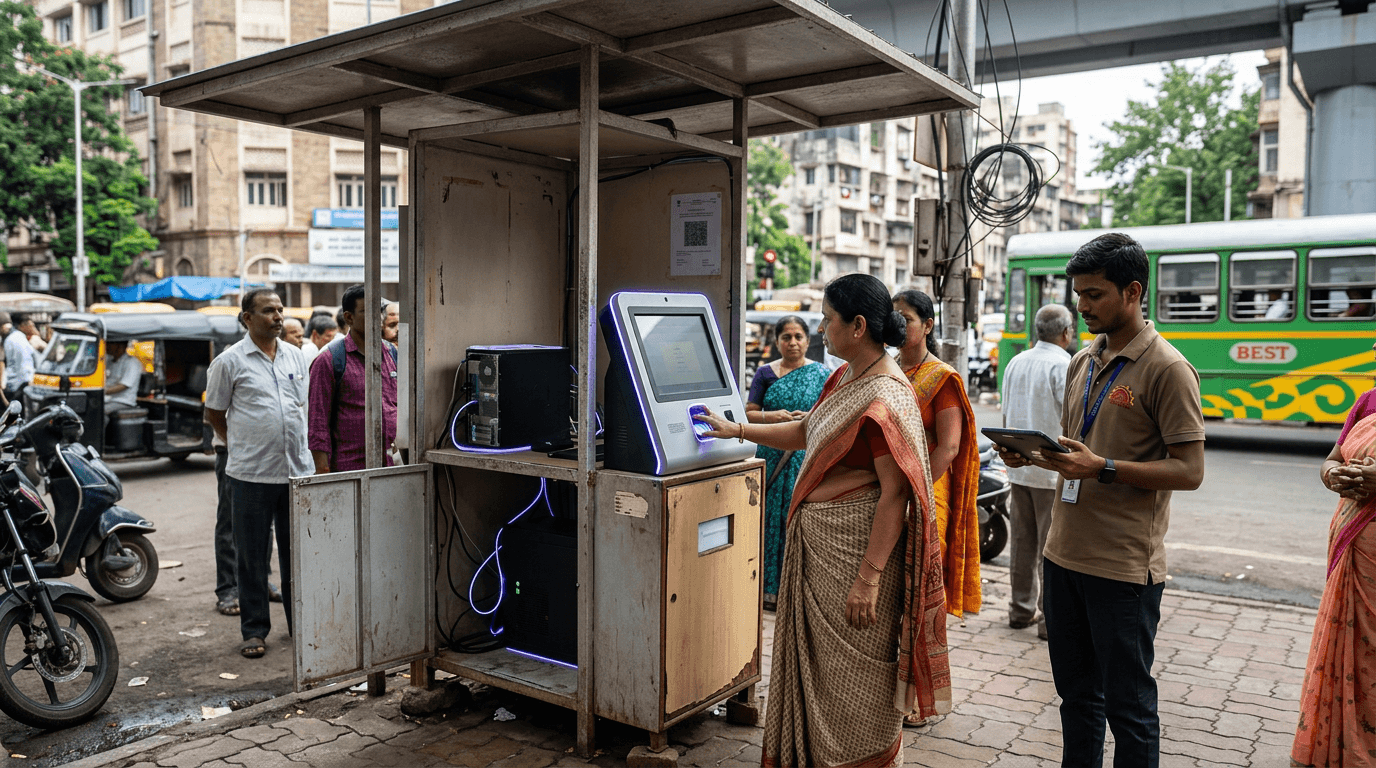
Aadhaar Biometric Identity System
Geography: Asia Pacific · South Asia · India
Aadhaar is a 12-digit unique identity number issued by the Unique Identification Authority of India (UIDAI), backed by biometric data (fingerprints and iris scans) for every enrolled resident. With over 1.4 billion enrollments, it is the largest biometric identity system ever built. Authentication happens in real-time — a fingerprint scan at a rural bank verifies identity in seconds against a central database.
Before Aadhaar, hundreds of millions of Indians had no formal identity document, making them invisible to the financial system, unable to open bank accounts or receive government benefits. Aadhaar solved this at population scale. It became the foundation layer for India Stack — enabling everything from instant bank account opening (eKYC) to digital signatures to welfare distribution.
The geopolitical significance is substantial. Aadhaar demonstrated that a developing nation could build a digital identity system covering its entire population at a cost of roughly $1 per enrollment. The World Bank has studied it as a model for other developing nations. Critics raise privacy concerns about centralized biometric databases, but the system's role in enabling financial inclusion for 500+ million previously unbanked Indians is undeniable.
Research this in Signals
Signals turns a topic into a sourced research record you can inspect and rerun. Your first scan is free, and this one starts with Aadhaar Biometric Identity System already loaded, so edit it or scan as is.