Gov Low-Code Process Automation
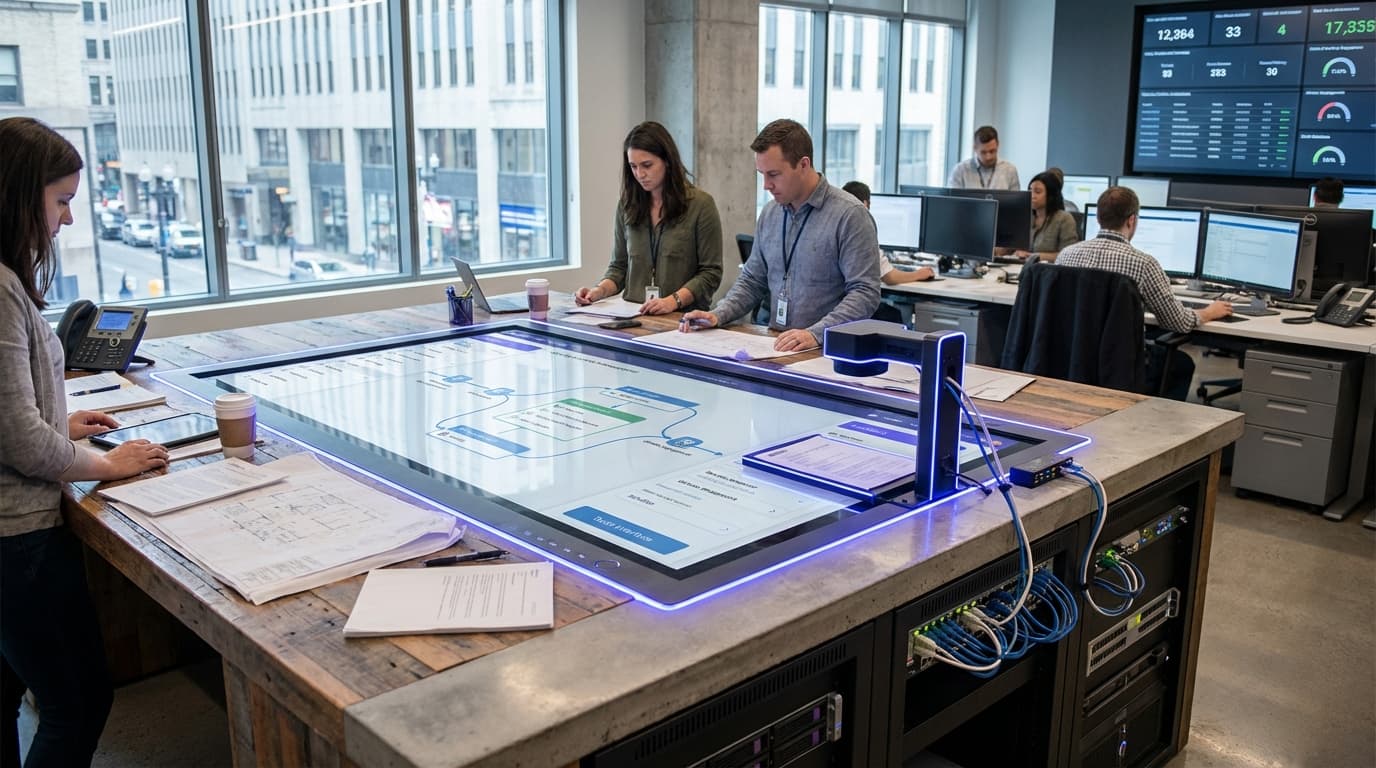
Government agencies worldwide grapple with outdated, paper-intensive processes that slow service delivery, increase administrative burden, and frustrate both civil servants and citizens. Traditional government IT modernization efforts have often been hampered by lengthy procurement cycles, rigid vendor lock-in, and the scarcity of specialized developers who understand both software engineering and the intricate regulatory requirements of public administration. Gov Low-Code Process Automation platforms address these challenges by providing visual development environments specifically designed for the public sector context. These platforms enable civil servants and business analysts—rather than specialized programmers—to design, deploy, and modify digital workflows through drag-and-drop interfaces, pre-built templates, and configuration wizards. Unlike generic low-code tools, government-focused variants come pre-loaded with compliance frameworks, security protocols, and audit mechanisms that align with public sector standards such as accessibility requirements, data protection regulations, and freedom of information mandates.
The core value proposition lies in dramatically reducing the time and cost required to digitize essential government services. Agencies can transform processes like permit applications, benefit eligibility determinations, inspection scheduling, and inter-departmental approvals from weeks-long paper shuffling exercises into streamlined digital workflows that route cases automatically, trigger notifications, and maintain complete audit trails. This democratization of application development addresses a critical bottleneck: the backlog of legacy processes awaiting modernization far exceeds the capacity of traditional IT departments. By empowering domain experts—the case workers, inspectors, and program managers who intimately understand these processes—to build their own solutions, agencies can accelerate digital transformation while ensuring that resulting systems actually reflect operational realities rather than consultants' assumptions.
Early deployments in municipal governments and national agencies have demonstrated measurable improvements in processing times and citizen satisfaction scores. Cities have used these platforms to consolidate fragmented licensing systems, enabling residents to track application status in real-time rather than making repeated phone calls. Social service agencies have automated eligibility screening workflows that previously required manual review of dozens of documents, freeing caseworkers to focus on complex cases requiring human judgment. The technology aligns with broader government modernization trends emphasizing agile development, citizen-centric design, and interoperability between agencies. As budget pressures intensify and public expectations for digital services rise, low-code automation represents a pragmatic path forward—one that balances the need for rapid innovation with the public sector's non-negotiable requirements for transparency, security, and accountability. The trajectory points toward increasingly sophisticated platforms that incorporate artificial intelligence for decision support while maintaining the human oversight and explainability that democratic governance demands.
Related Organizations

Provides civic tech solutions for land management, asset management, and licensing, facilitating automated regulatory enforcement.

Provides a low-code automation platform widely used by US federal agencies and defense departments for case management and acquisition modernization.

Provides a code-free workflow automation platform specifically designed for state and local government forms and processes.

Provides cloud-based software for government communications, meeting management, and digital services.

The largest software company in North America exclusively focused on the public sector, providing integrated cloud solutions.
United States · Startup
Enterprise no-code platform that has seen significant adoption in large public sector entities, including New York City, for rapid digital service deployment.

Enterprise content management and process automation provider with deep penetration in municipal and county governments.

OutSystems
United States · Company
High-performance low-code platform used by government agencies globally to modernize legacy systems and build citizen-facing apps.
Provides low-code platform and AI for government case management and intelligent automation.
Provides a cloud computing platform to help companies manage digital workflows for enterprise operations.

Provides process orchestration and decision automation software based on open standards (BPMN), used by tech-forward government agencies.

Siemens-owned low-code platform enabling rapid application development, used by various European and US government bodies.
Supporting Evidence
Research this in Signals
Signals turns a topic into a sourced research record you can inspect and rerun. Your first scan is free, and this one starts with Gov Low-Code Process Automation already loaded, so edit it or scan as is.