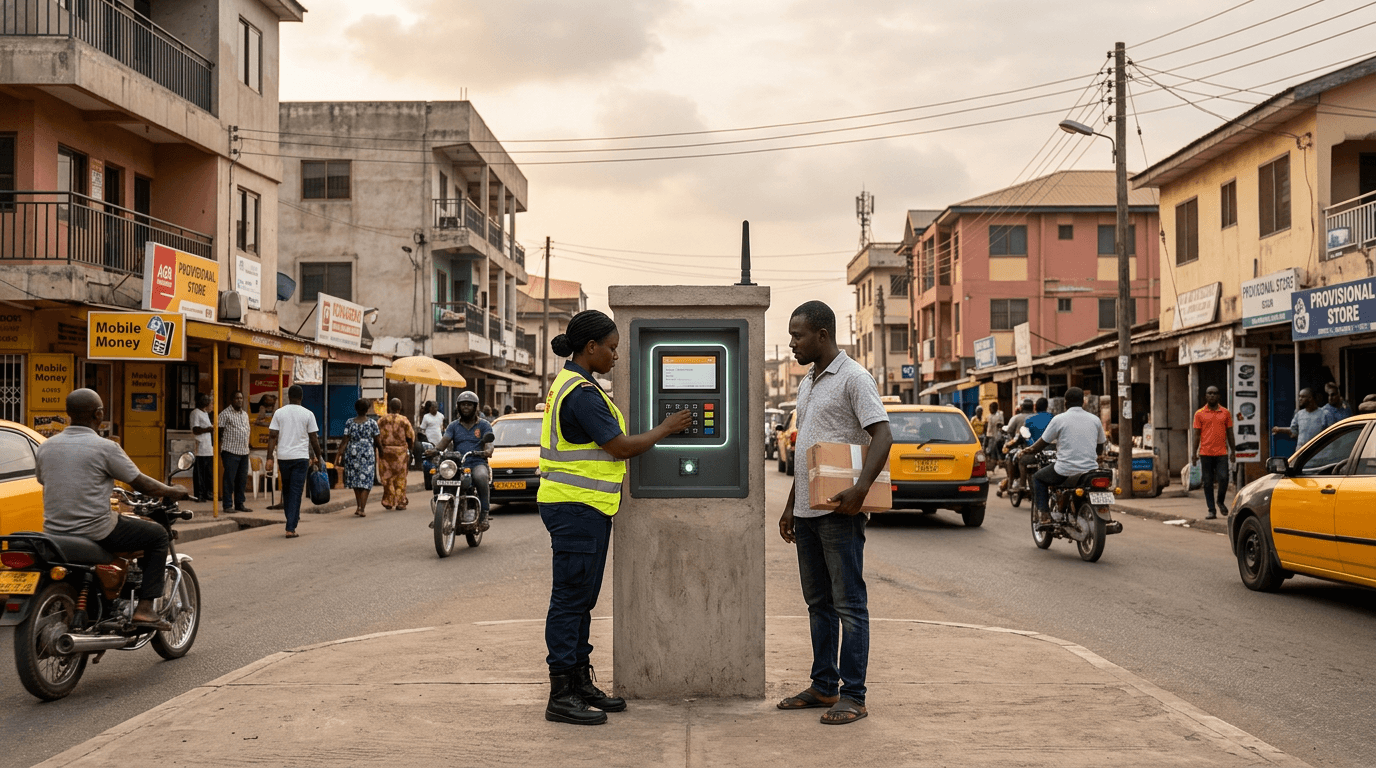
National Digital Property Address System
Geography: Emea · Africa · Africa
Ghana's GhanaPostGPS system, launched in 2017, assigns a unique digital address to every 5-meter by 5-meter area across the entire country. The system generates alphanumeric codes (e.g., AK-484-2178) tied to precise GPS coordinates, providing formal addresses for the estimated 70% of Ghana's land that has no street names or house numbers. The system works via a smartphone app and can also be accessed via USSD on feature phones.
The lack of formal addresses is a development bottleneck across Africa: you can't deliver packages, dispatch emergency services, register property, or collect taxes if locations can't be identified. GhanaPostGPS addresses this by overlaying a digital grid on the entire country, independent of traditional street infrastructure. The system is integrated with Ghana's postal service, emergency services (911), and is being adopted by ride-hailing and delivery companies.
While the system's adoption has been slower than hoped, the concept has influenced similar initiatives across the continent. Nigeria's National Address Verification System, Rwanda's location codes, and Kenya's Huduma addressing all draw on the same principle: digital addressing as foundational infrastructure for modern governance and commerce. The technology is simple — the challenge is adoption, integration with existing systems, and building the network effects that make addresses useful.
Research this in Signals
Signals turns a topic into a sourced research record you can inspect and rerun. Your first scan is free, and this one starts with National Digital Property Address System already loaded, so edit it or scan as is.