Record-Breaking Fusion Experiments
This page is a narrower case of it.
Geography: Asia Pacific · East Asia · South Korea
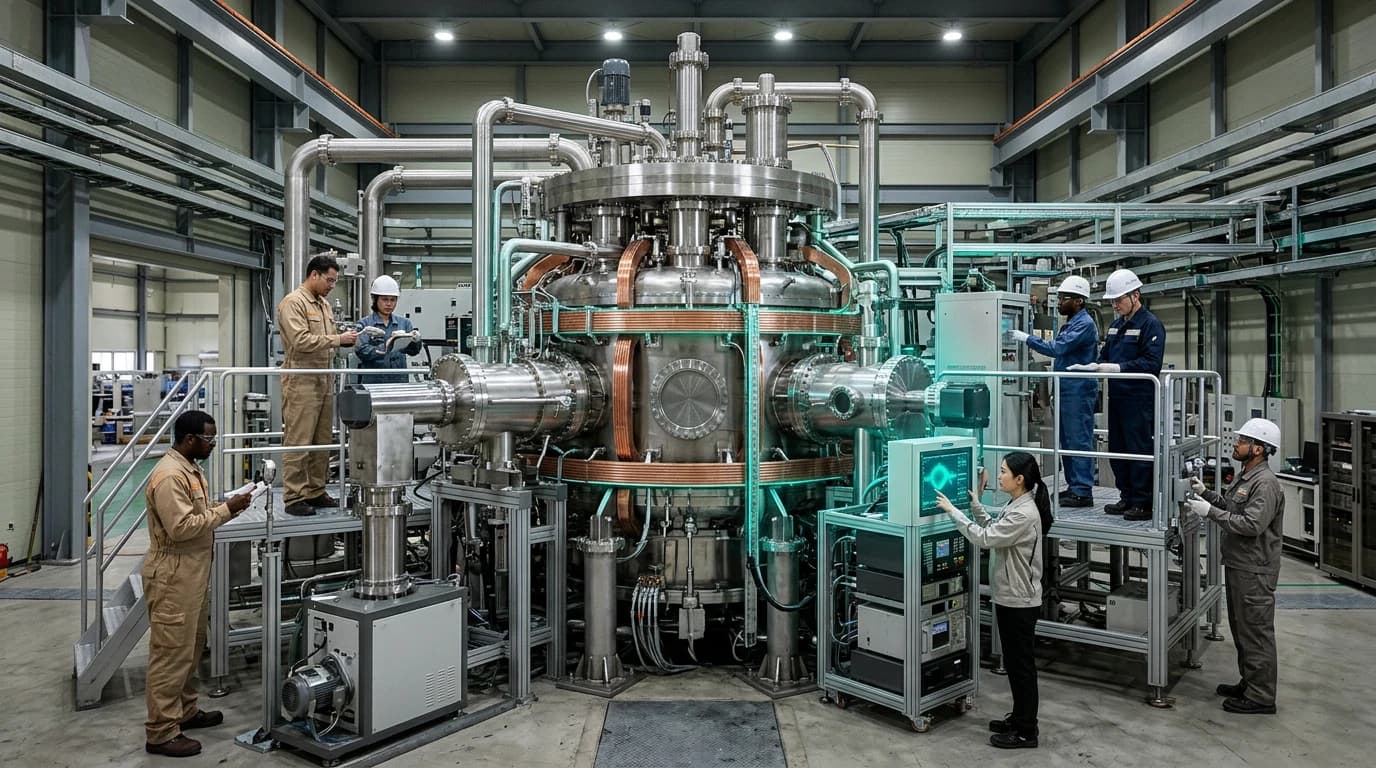
The Korea Superconducting Tokamak Advanced Research (KSTAR) facility, operated by the Korea Institute of Fusion Energy (KFE), achieved a world record in early 2024 by sustaining plasma at ion temperatures of 100 million degrees Celsius for 48 seconds — seven times hotter than the Sun's core. The previous record was 30 seconds, set by KSTAR itself in 2021. The reactor uses superconducting magnets to confine hydrogen plasma in a donut-shaped vessel, replicating the energy-producing reactions that power stars.
KSTAR's record matters because sustained high-temperature plasma confinement is the central unsolved problem of fusion energy. While other tokamaks (China's EAST, Europe's JET) have achieved higher temperatures or longer durations separately, KSTAR's combination of extreme temperature and duration in a fully superconducting device makes it directly relevant to ITER, the $25B international fusion reactor under construction in France. Korean scientists contribute critical plasma control algorithms and wall materials technology to ITER.
KFE's next target is 300 seconds at 100 million degrees by 2026, which would demonstrate the plasma stability needed for a commercial fusion pilot plant. Korea's fusion program operates on a fraction of the budget of US or European efforts but consistently delivers record-breaking results, reflecting the same 'execute faster, cheaper' ethos that drives Korean manufacturing. The 2024 upgrade installed tungsten divertors replacing carbon ones, enabling longer plasma operations without contamination.
Published forecasts about this technology, graded against what happened in Hindsight.
Record-Breaking Fusion Experiments
This page is a narrower case of it.
Signals turns a topic into a sourced research record you can inspect and rerun. Your first scan is free, and this one starts with KSTAR Fusion Reactor already loaded, so edit it or scan as is.