Muon Tomography (Muography)
Geography: Asia Pacific · East Asia · Japan
Japanese physicists developed muography — using naturally occurring cosmic ray muons to create density maps of large structures, essentially X-raying objects too massive for conventional imaging. The University of Tokyo's Kunihiro Morishima and teams led by Hiroyuki Tanaka pioneered the technique, using it to image the internal structure of volcanoes (Mt. Asama, Sakurajima) and discover a previously unknown void inside the Great Pyramid of Giza in the ScanPyramids project. The technique was also used to image the damaged reactor cores at Fukushima Daiichi, where radiation levels made human or robotic inspection impossible.
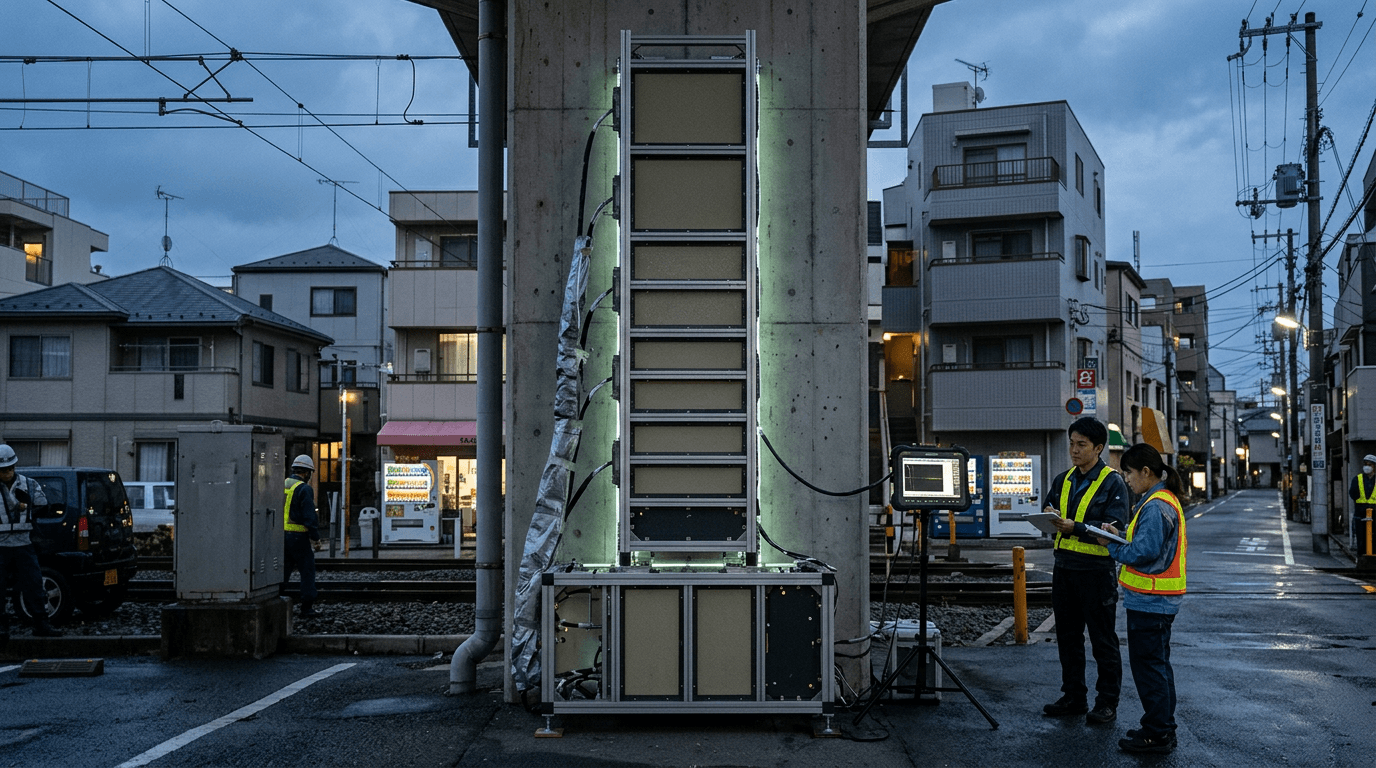
Muons are subatomic particles created when cosmic rays hit Earth's atmosphere, and they penetrate deeply through solid matter — far deeper than X-rays. By placing detectors on one side of a structure and measuring how muons are absorbed or scattered, researchers create density maps that reveal internal voids, cracks, or structural anomalies. Japanese companies are now commercializing portable muon detectors for civil infrastructure inspection — imaging the interiors of bridges, dams, tunnels, and buildings without drilling or invasive testing. The IAEA published a comprehensive guide to muon imaging applications in September 2025.
The strategic value is in Japan's aging infrastructure: the country has 730,000+ bridges, many built during the 1960s-70s construction boom and now approaching the end of their design lives. Muon tomography enables non-destructive assessment of concrete integrity inside structures that cannot be visually inspected. As infrastructure aging becomes a global crisis — the American Society of Civil Engineers rates US infrastructure at C- — Japan's commercialization of muography could create an exportable inspection technology applicable to every developed nation's aging built environment.
Research this in Signals
Signals turns a topic into a sourced research record you can inspect and rerun. Your first scan is free, and this one starts with Muon Tomography (Muography) already loaded, so edit it or scan as is.