Jugaad as Systematic Cost Engineering
Geography: Asia Pacific · South Asia · India
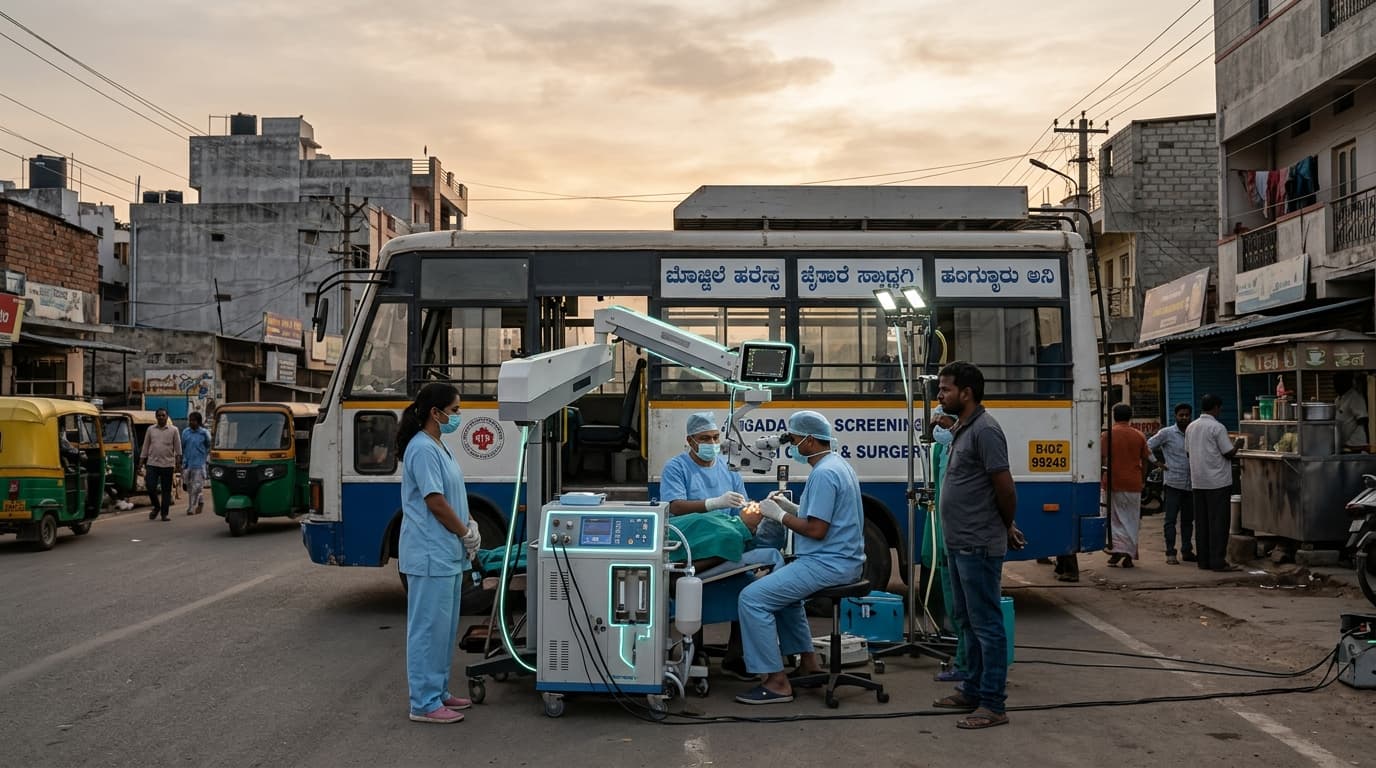
Jugaad — the Hindi word for improvised, frugal problem-solving — has evolved from informal workarounds into a systematic engineering methodology that underpins India's most surprising achievements. ISRO's Mars Orbiter Mission cost $74 million (less than the movie Gravity). The Jaipur Foot prosthetic costs $45 and restores mobility to amputees who can squat, climb trees, and pedal bicycles — capabilities that $12,000 Western prosthetics often can't match. Aravind Eye Care performs cataract surgeries for as little as $12 (vs. $3,500+ in the US), using an assembly-line model inspired by McDonald's to achieve surgical volumes of 500,000+ per year with outcomes matching the best Western hospitals. Tata's Nano, at $2,000, was the cheapest car ever produced.
What makes Indian frugal innovation distinctive is that it isn't about cutting corners — it's about radical re-engineering of the cost structure. Aravind's Dr. Venkataswamy didn't simply do cheaper surgery; he redesigned the entire surgical workflow, trained paramedics to handle pre- and post-operative care, and had surgeons operate on two patients simultaneously in adjoining theatres. The Jaipur Foot uses vulcanized rubber and polyurethane — locally available materials — but the design is biomechanically superior for the barefoot, cross-legged sitting postures common in South Asian life. ISRO reused its existing PSLV rocket and optimized fuel consumption through a longer but cheaper orbital trajectory to Mars.
This methodology is now being studied at Harvard, Stanford, and Cambridge as a legitimate innovation paradigm. The Navi Radjou-coined term 'frugal innovation' has entered business school curricula. India's cost engineering culture produces solutions at 1/10th to 1/100th of Western costs not by accepting lower quality, but by questioning every assumption about what's necessary. As global healthcare, infrastructure, and technology costs spiral upward, India's frugal innovation discipline offers a fundamentally different approach that's increasingly relevant worldwide.
Research this in Signals
Signals turns a topic into a sourced research record you can inspect and rerun. Your first scan is free, and this one starts with Jugaad as Systematic Cost Engineering already loaded, so edit it or scan as is.