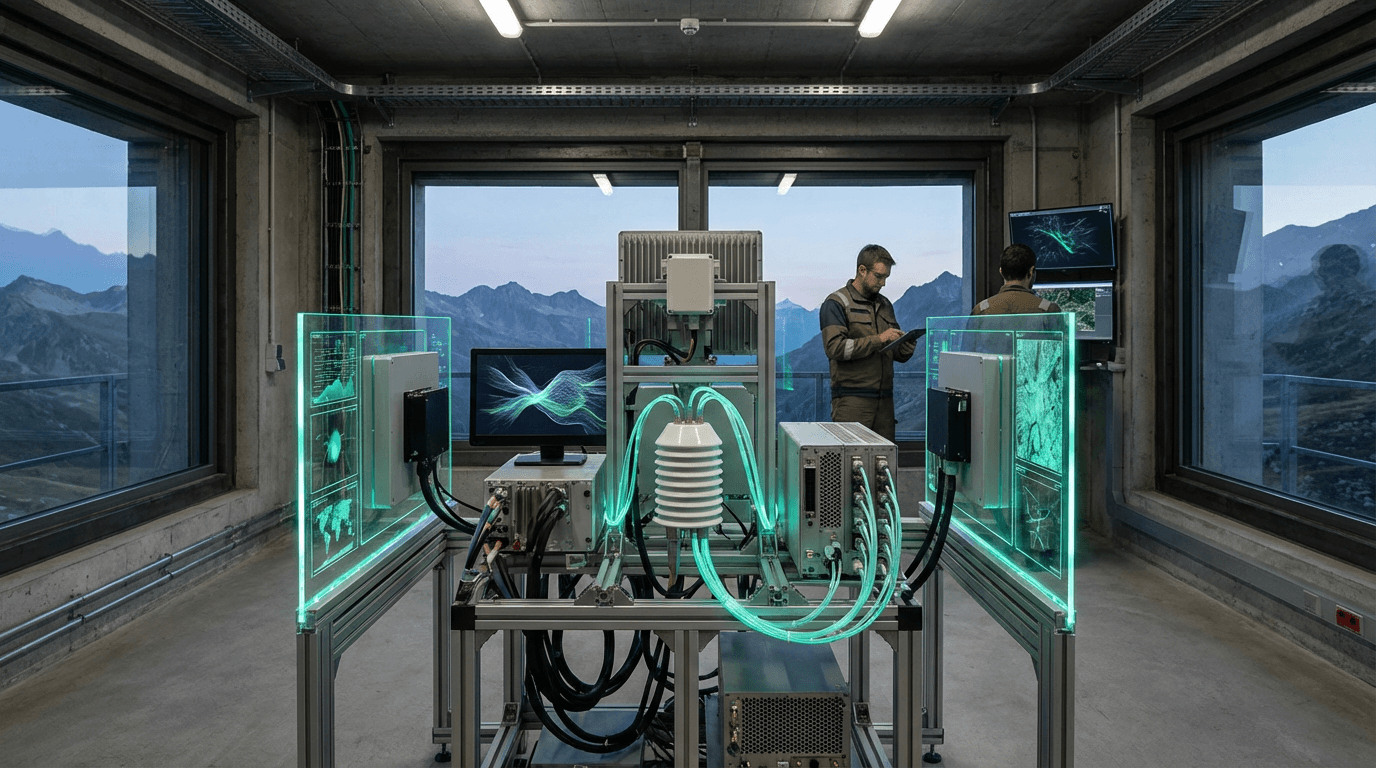
Hypersonic Threat Detection
Hypersonic Threat Detection represents a critical evolution in defense infrastructure, addressing the unprecedented challenge posed by weapons traveling at speeds exceeding Mach 5—over 3,800 miles per hour. These systems integrate multiple sensor modalities, including space-based infrared satellites, ground-based radars operating at extremely high frequencies, and over-the-horizon radar networks capable of detecting atmospheric disturbances created by hypersonic flight. The technical challenge lies in the physics of hypersonic travel itself: these vehicles maneuver unpredictably within the atmosphere, generate plasma sheaths that complicate radar tracking, and compress decision timelines from hours to mere minutes. Detection architectures must process vast streams of sensor data in real-time, employing advanced signal processing algorithms and increasingly, machine learning models trained to distinguish hypersonic signatures from conventional threats, space debris, and atmospheric phenomena.
The strategic imperative for these systems stems from a fundamental shift in the global security landscape. Traditional missile defense architectures were designed for ballistic trajectories—predictable parabolic paths that allow for interception planning. Hypersonic glide vehicles, by contrast, can alter course mid-flight, potentially evading existing defense networks and rendering conventional early warning timelines obsolete. This capability creates what defense analysts describe as a "decision compression" problem, where the window between detection and potential impact shrinks dramatically. For nations maintaining strategic deterrence postures, the inability to reliably detect and track these threats undermines the credibility of second-strike capabilities and introduces dangerous instabilities into crisis scenarios. The technology addresses not only the immediate tactical challenge of threat identification but also the broader strategic requirement of maintaining situational awareness in an era where speed itself becomes a weapon.
Current development efforts span multiple nations, with space-based sensor constellations representing a particularly active area of investment. Low Earth orbit satellite networks offer persistent coverage and reduced detection latency compared to traditional geostationary platforms, though they require sophisticated data fusion to maintain continuous tracking as individual satellites pass overhead. Ground-based systems are being upgraded with adaptive radar technologies capable of adjusting waveforms in real-time to penetrate the ionized plasma that surrounds hypersonic vehicles during flight. Research programs are also exploring the integration of quantum sensing technologies and distributed sensor networks that could provide redundancy against potential attacks on individual detection nodes. As hypersonic weapons proliferate beyond the handful of nations currently possessing them, these detection systems will become increasingly central to maintaining strategic stability, enabling confidence in attribution during crises, and preserving the viability of arms control verification regimes that depend on transparent monitoring capabilities.
Related Organizations

The US government agency responsible for developing a layered defense against ballistic missiles.

Created the Optical Inter-Satellite Link standard for the Proliferated Warfighter Space Architecture (PWSA).

A global aerospace and defense technology innovator delivering end-to-end solutions.

Major defense contractor developing Reciprocal Quantum Logic (RQL) for cryogenic computing.


A major US defense contractor and industrial corporation.

Leidos
United States · Company
Integrates digital engineering and digital twin frameworks for major defense programs.

A Boeing subsidiary delivering high-performance small satellite solutions.

Defense and aerospace company known for the ADAPTIV thermal camouflage system.

An aerospace and national security contractor specializing in advanced engineering technologies.
Supporting Evidence
Research this in Signals
Signals turns a topic into a sourced research record you can inspect and rerun. Your first scan is free, and this one starts with Hypersonic Threat Detection already loaded, so edit it or scan as is.