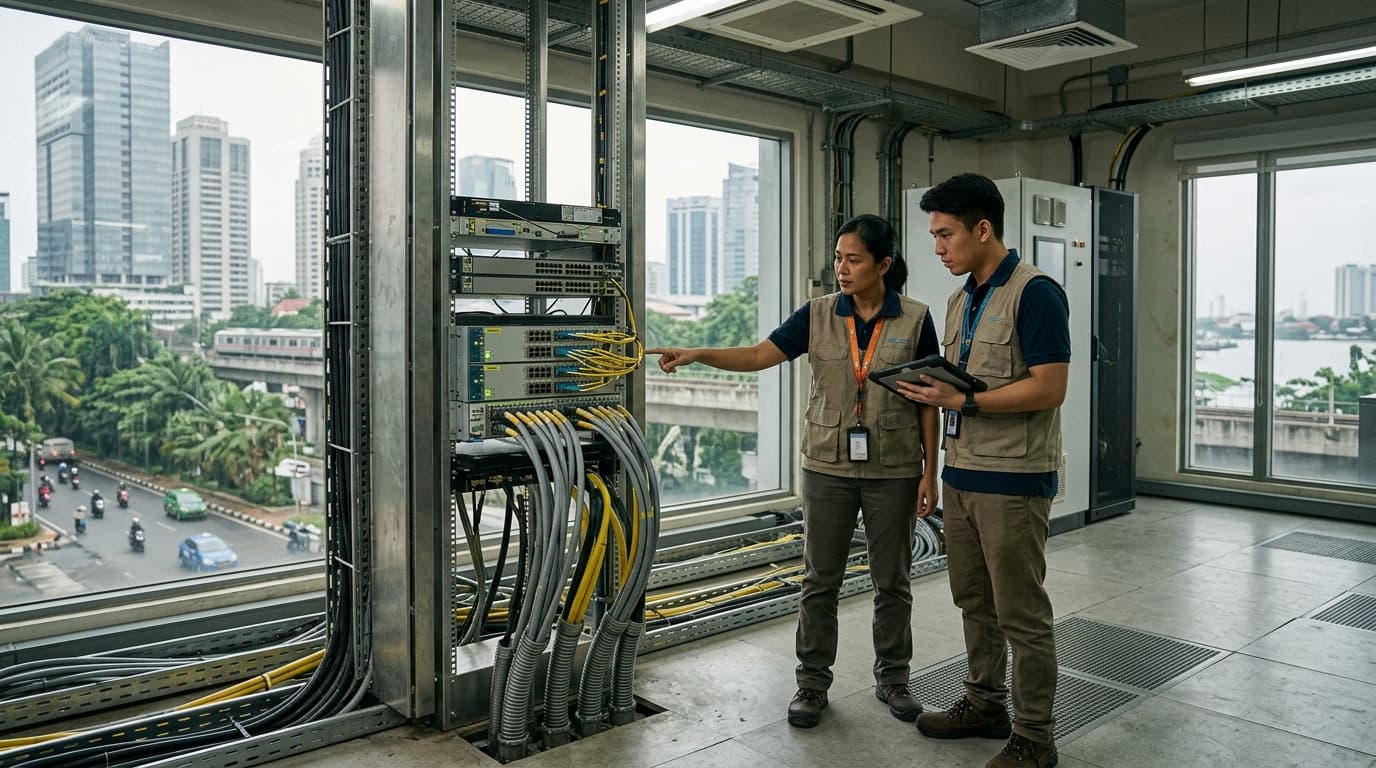
Submarine Cable & Digital Connectivity Hub
Geography: Asia Pacific · Southeast Asia · Southeast Asia
Indonesia — Indonesia's archipelagic geography positions it as a critical node in Indo-Pacific submarine cable infrastructure. New cable systems including Google's Apricot and Echo, Facebook's Bifrost, and multiple domestic inter-island cables are expanding Indonesia's bandwidth capacity by orders of magnitude. Jakarta and Batam serve as landing stations connecting trans-Pacific routes to intra-ASEAN networks.
For a nation of 17,000 islands with 275 million people, submarine and domestic undersea cables are existential infrastructure — more important than roads for economic connectivity. The Palapa Ring project aimed to connect Indonesia's eastern islands with fiber, but coverage gaps remain. New private-sector investment is filling these gaps, driven by data center demand and mobile broadband growth.
Strategically, Indonesia's position as a cable crossroads creates leverage: every major tech company needs cable landing rights in Indonesia to serve ASEAN's largest digital economy. This geographic advantage translates into regulatory influence (data localization requirements, content moderation mandates) and infrastructure investment commitments from Google, Meta, and others.
Research this in Signals
Signals turns a topic into a sourced research record you can inspect and rerun. Your first scan is free, and this one starts with Submarine Cable & Digital Connectivity Hub already loaded, so edit it or scan as is.