Satellite Internet Market: Starlink vs Jio vs OneWeb
Geography: Asia Pacific · South Asia · India
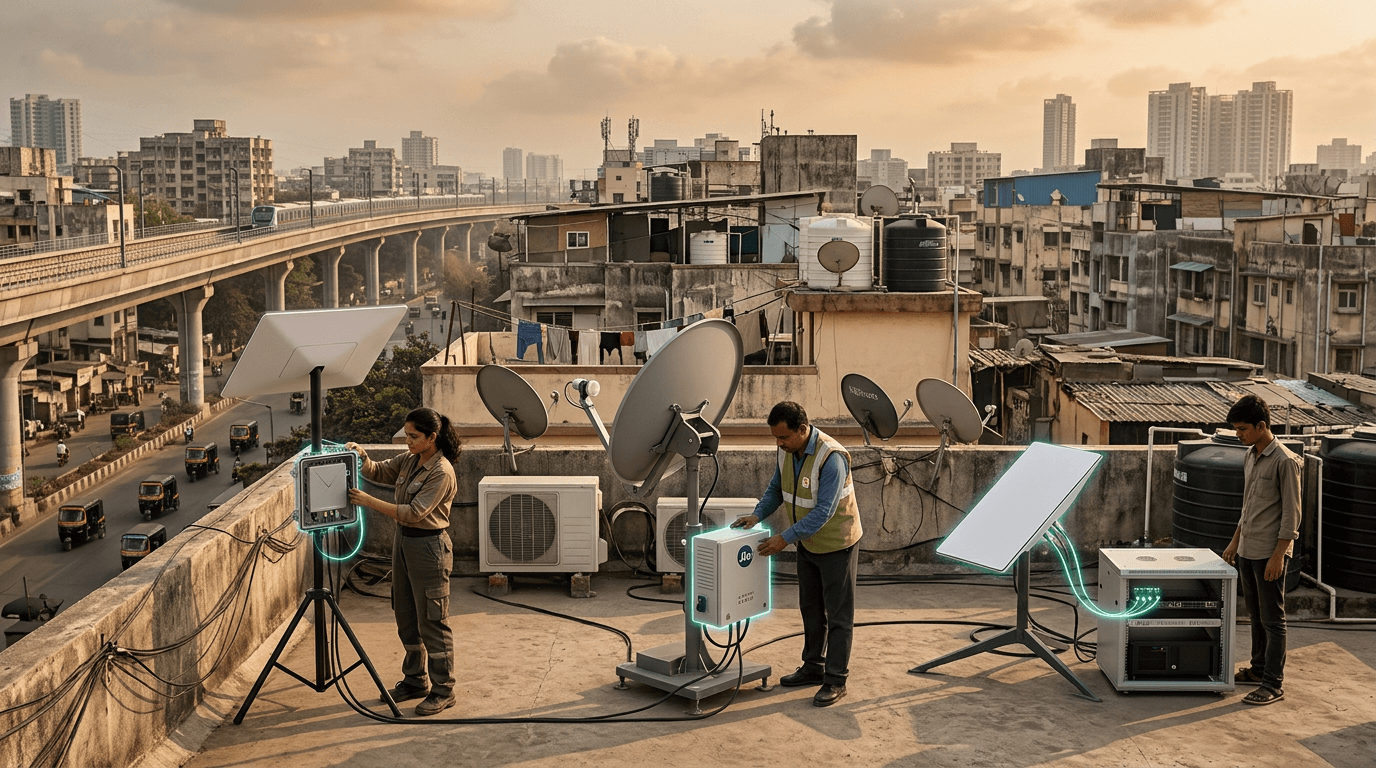
India's satellite internet market has become a geopolitically charged battleground. In 2025, the Indian government granted satellite communication licenses to three major players: SpaceX's Starlink (which began testing in October 2025), Jio Satellite Communications (Reliance's satellite arm, marketing as 'Jio SpaceFiber'), and OneWeb India (now part of Eutelsat Group). Amazon's Kuiper is also seeking entry. The prize: connecting India's remaining 300+ million unconnected citizens, predominantly in rural and remote areas where terrestrial networks are uneconomical.
The regulatory battle is as significant as the technology. India's Telecom Regulatory Authority (TRAI) must decide on spectrum pricing — whether satellite spectrum should be auctioned (as Jio prefers, which would raise barriers to entry for foreign competitors) or administratively allocated (as Starlink prefers, following global practice for satellite spectrum). Data localization requirements add another dimension: India mandates that user data remain within the country, a requirement that challenges Starlink's global architecture. Jio and Indian telecom incumbents have lobbied aggressively to ensure satellite providers don't undercut their terrestrial investments.
The outcome will shape connectivity for the next billion internet users. India's satellite internet market is projected to reach $2 billion+ by 2030. For the 300+ million unconnected Indians — many in the Himalayas, Northeast, islands, and desert regions — satellite internet may be the only feasible connectivity option. The policy decisions India makes on spectrum allocation, pricing, and data sovereignty will create precedents for other large developing countries (Indonesia, Brazil, Nigeria) facing similar questions about how to regulate satellite internet alongside terrestrial networks.
Research this in Signals
Signals turns a topic into a sourced research record you can inspect and rerun. Your first scan is free, and this one starts with Satellite Internet Market: Starlink vs Jio vs OneWeb already loaded, so edit it or scan as is.