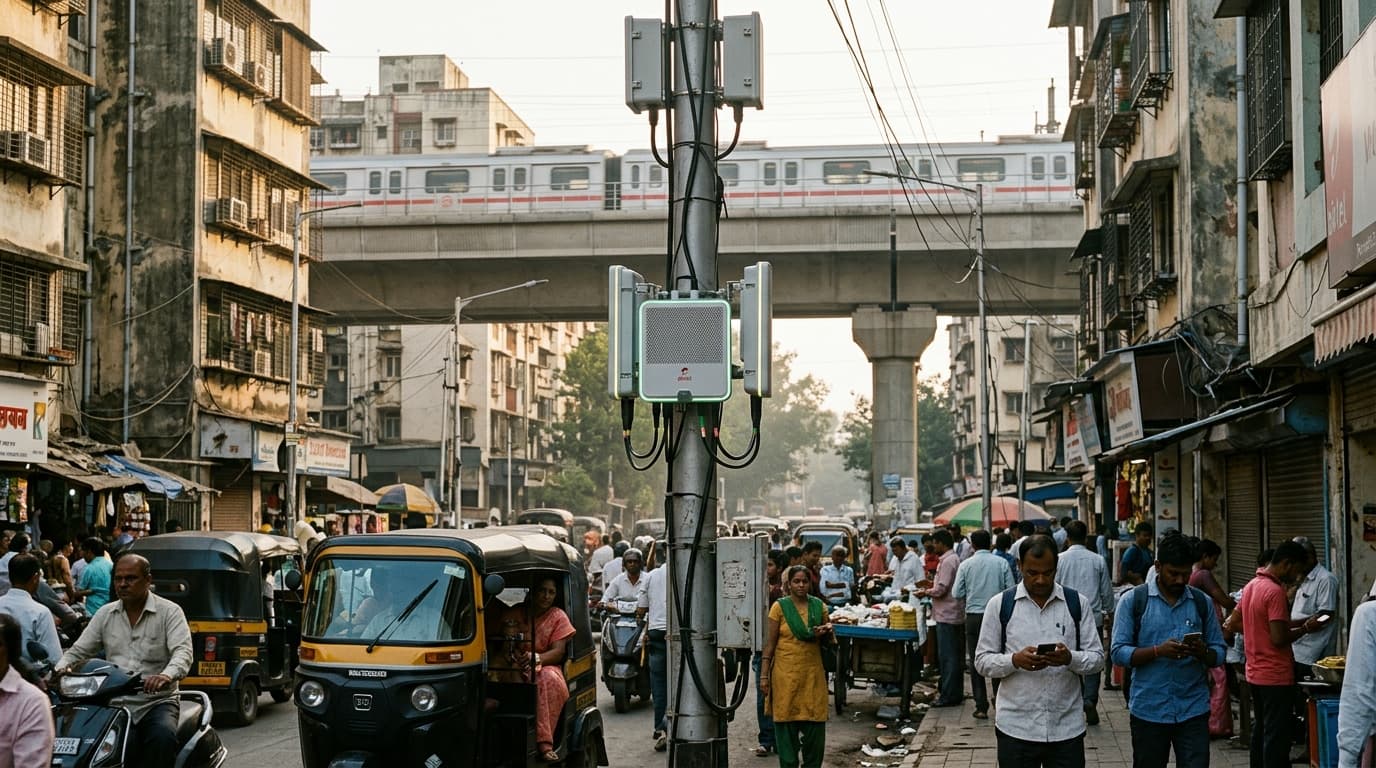
Bharti Airtel 5G Network
Geography: Asia Pacific · South Asia · India
Bharti Airtel, India's second-largest telecom operator, has rolled out 5G across India with approximately 289 million 5G subscribers by late 2025 (58% of its 364 million total subscribers). Industry analysts (CLSA) note that Airtel leads Jio in 5G experience quality, particularly for video streaming and gaming applications, despite a smaller overall subscriber base.
Airtel's 5G strategy differs from Jio's in important ways. While Jio built a standalone 5G network from scratch, Airtel adopted a non-standalone approach initially, leveraging its existing 4G infrastructure and gradually transitioning to standalone. Airtel has partnered with Ericsson, Nokia, and Samsung for network equipment, and is investing in enterprise 5G solutions for factories, hospitals, and logistics companies.
The competitive dynamic between Jio and Airtel has been a key driver of India's rapid 5G adoption. Both operators invested billions in spectrum acquisition and network deployment, driving down 5G pricing and accelerating coverage expansion. India's telecom market structure — two strong private operators plus state-owned BSNL — creates sufficient competition to benefit consumers while being concentrated enough that operators can achieve scale economics.
Research this in Signals
Signals turns a topic into a sourced research record you can inspect and rerun. Your first scan is free, and this one starts with Bharti Airtel 5G Network already loaded, so edit it or scan as is.