Advancing Data Processing with Photonics
This page is a narrower case of it.
Geography: Americas · North America · Canada
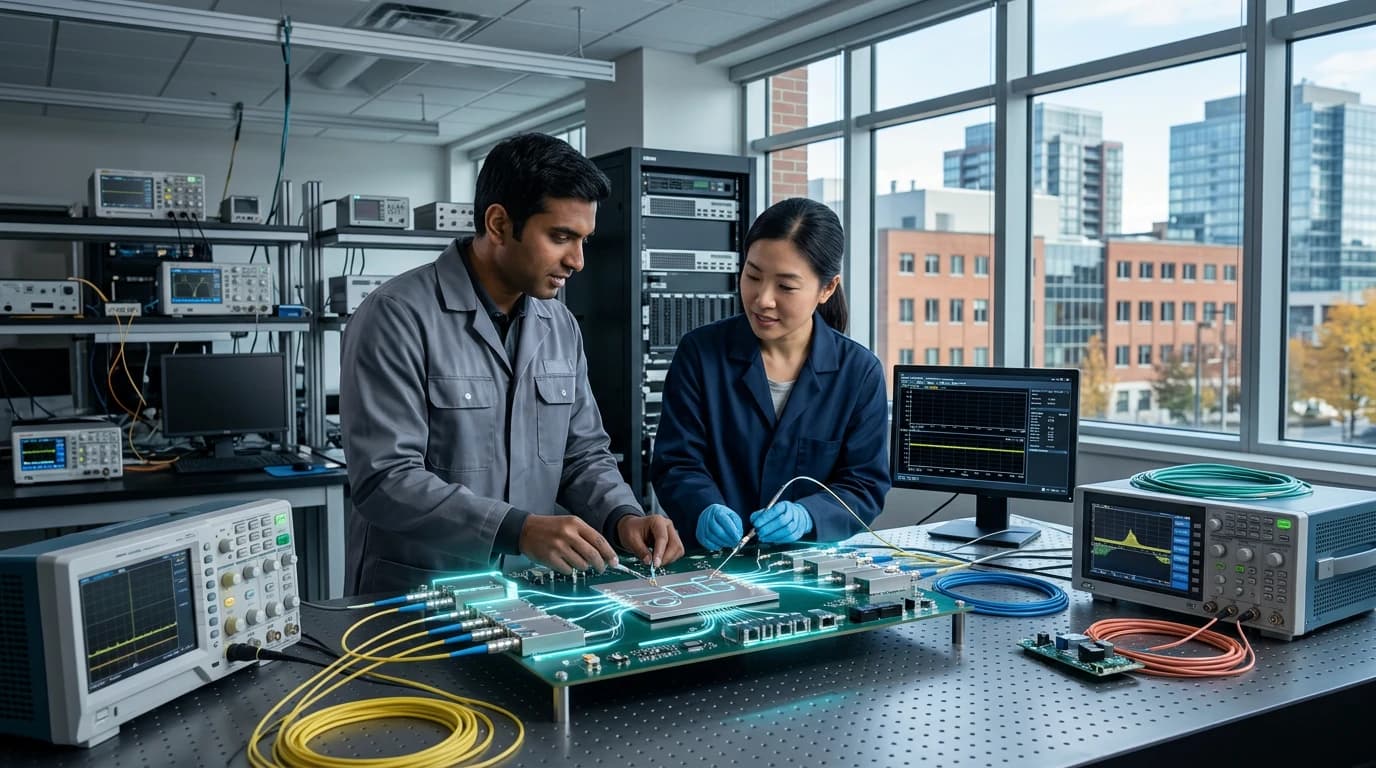
Canada has a deep legacy in photonics — the science and technology of light — dating back to Nortel, JDS Uniphase, and the Ottawa-Waterloo photonics corridor. Today, Canadian companies and universities are developing silicon photonic integrated circuits that combine optical and electronic functions on a single chip. Applications include AI data center interconnects (where photonics dramatically reduces power consumption compared to electrical connections), 5G/6G telecommunications, LiDAR for autonomous vehicles, and quantum networking.
Silicon photonics matters because the exponential growth of AI workloads is creating a data movement bottleneck — moving data between chips consumes more energy than the computation itself. Photonic interconnects can move data at the speed of light with a fraction of the energy cost of electrical connections. As AI data centers scale to consume gigawatts of power, photonic solutions become essential rather than optional.
Canada's strategic position in photonics is built on decades of accumulated expertise and a workforce that survived the Nortel collapse. The connection to quantum computing is not coincidental — Xanadu's photonic quantum computers and Photonic Inc.'s silicon-photonic quantum processors both build on the same fundamental technology base. This convergence of classical photonics, quantum photonics, and AI creates a uniquely Canadian technology cluster with applications spanning multiple market categories.
Published forecasts about this technology, graded against what happened in Hindsight.
Advancing Data Processing with Photonics
This page is a narrower case of it.
Photonic Chips
This page is a narrower case of it.
Silicon Photonics
This page is a narrower case of it.
Signals turns a topic into a sourced research record you can inspect and rerun. Your first scan is free, and this one starts with Silicon Photonics Integrated Circuits already loaded, so edit it or scan as is.