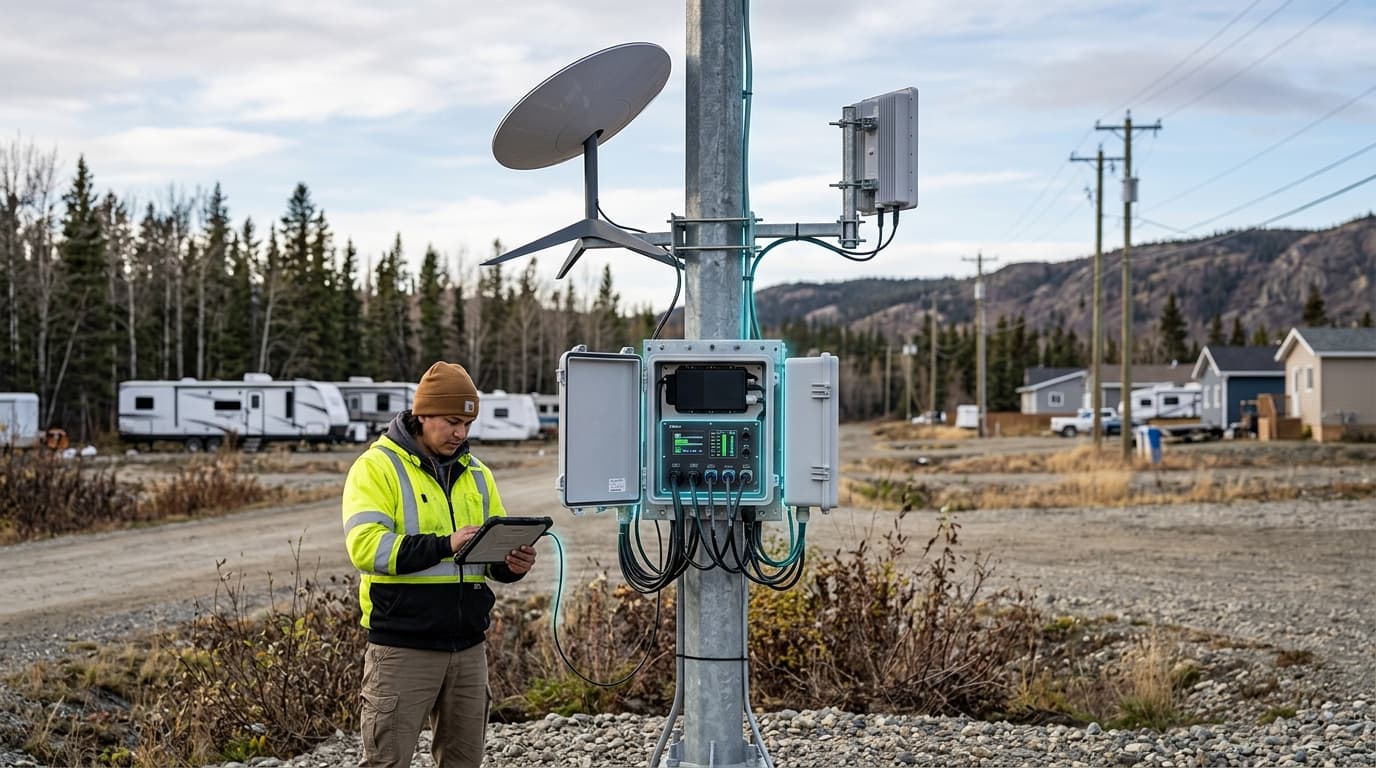
Northern and Remote Broadband Connectivity
Geography: Americas · North America · Canada
Canada is deploying multiple approaches to bring broadband internet to remote and Northern communities that are beyond the reach of terrestrial fiber and cellular networks. This includes participation in LEO satellite constellations (Telesat's Lightspeed), government-subsidized hybrid fiber-satellite solutions, and community-owned networks. The goal is universal broadband access across a country where many Indigenous and Northern communities still lack reliable internet.
Broadband connectivity matters because digital infrastructure is now essential for economic participation, education, healthcare (telemedicine), and emergency services. Canada's Northern and Indigenous communities face some of the worst connectivity gaps in the developed world, with many relying on expensive and slow satellite connections that prevent meaningful digital participation. This digital divide exacerbates existing economic and social inequalities.
The strategic dimension is that connectivity is a prerequisite for sovereignty. Communities without reliable communications cannot effectively monitor their territory, participate in the digital economy, or access government services. For Canada's Arctic sovereignty strategy, ensuring that Northern communities are connected is both a social imperative and a strategic necessity — connected communities are, in effect, distributed monitoring stations for Arctic domain awareness.
Research this in Signals
Signals turns a topic into a sourced research record you can inspect and rerun. Your first scan is free, and this one starts with Northern and Remote Broadband Connectivity already loaded, so edit it or scan as is.