TV White Space Broadband Technology
Geography: Emea · Africa · Africa
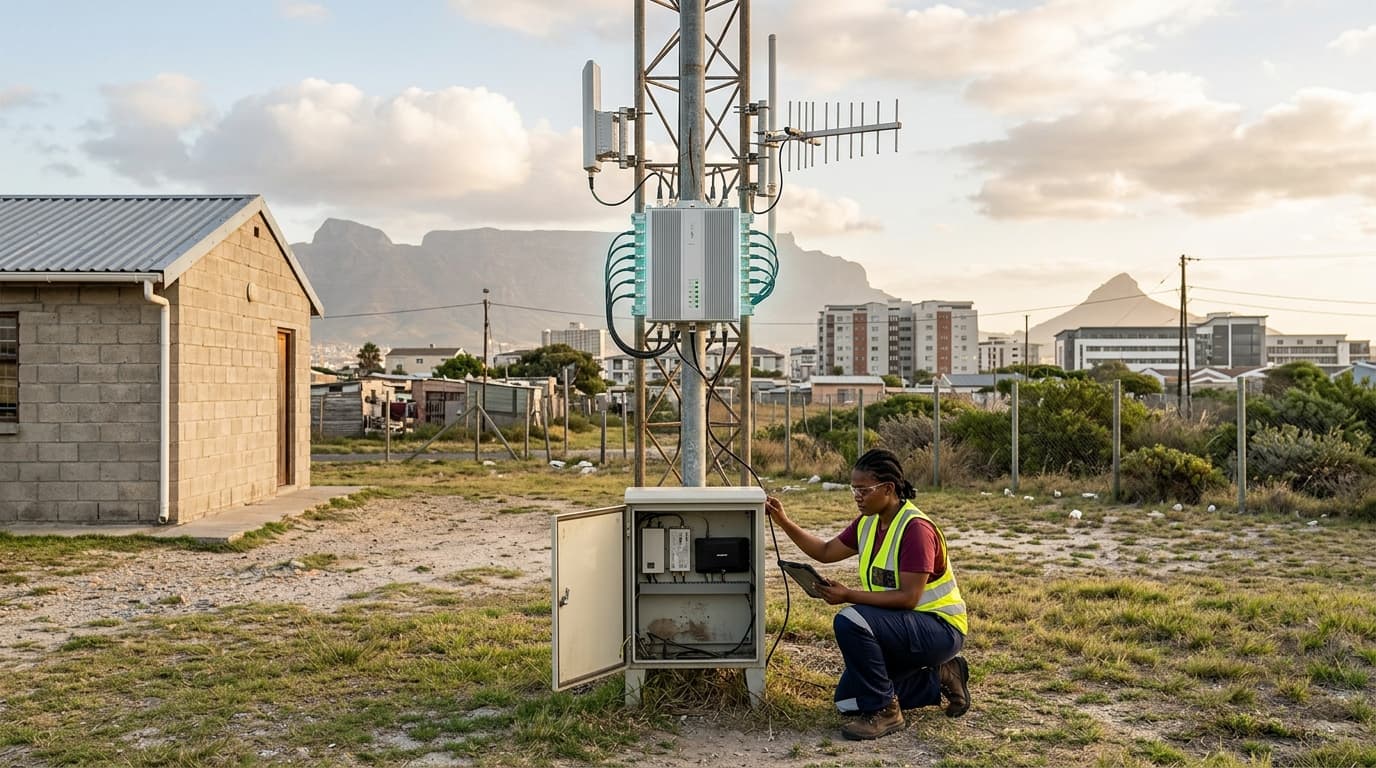
TV White Space (TVWS) technology uses unused frequencies in the television broadcast spectrum to deliver broadband internet to rural and underserved areas. South Africa's CSIR pioneered TVWS deployment in Africa, and Microsoft's Airband Initiative has supported deployments across Kenya, Tanzania, Ghana, and Nigeria. A single TVWS base station can cover a 10+ km radius — far greater than WiFi — delivering speeds of 10-20 Mbps, sufficient for basic internet access, education, and telemedicine.
The technology is ideal for Africa because TV spectrum propagates well through vegetation and buildings, penetrates walls effectively, and can cover large areas from few base stations — dramatically reducing the cost of rural connectivity compared to cellular or fiber. In areas where building cell towers is economically unviable, TVWS provides internet access using available spectrum that would otherwise sit idle.
South Africa's Council for Scientific and Industrial Research (CSIR) contributed to the IEEE 802.22 standard for TVWS and developed the Dynamic Spectrum Management system used to coordinate spectrum sharing. Regulatory frameworks for TVWS have been established in South Africa, Kenya, and Ghana — making these among the most progressive regulators globally for dynamic spectrum access. The technology represents a distinctly African approach to connectivity: using available resources creatively rather than building expensive new infrastructure.
Research this in Signals
Signals turns a topic into a sourced research record you can inspect and rerun. Your first scan is free, and this one starts with TV White Space Broadband Technology already loaded, so edit it or scan as is.