Community-Owned Mesh WiFi Networks
Geography: Emea · Africa · Africa
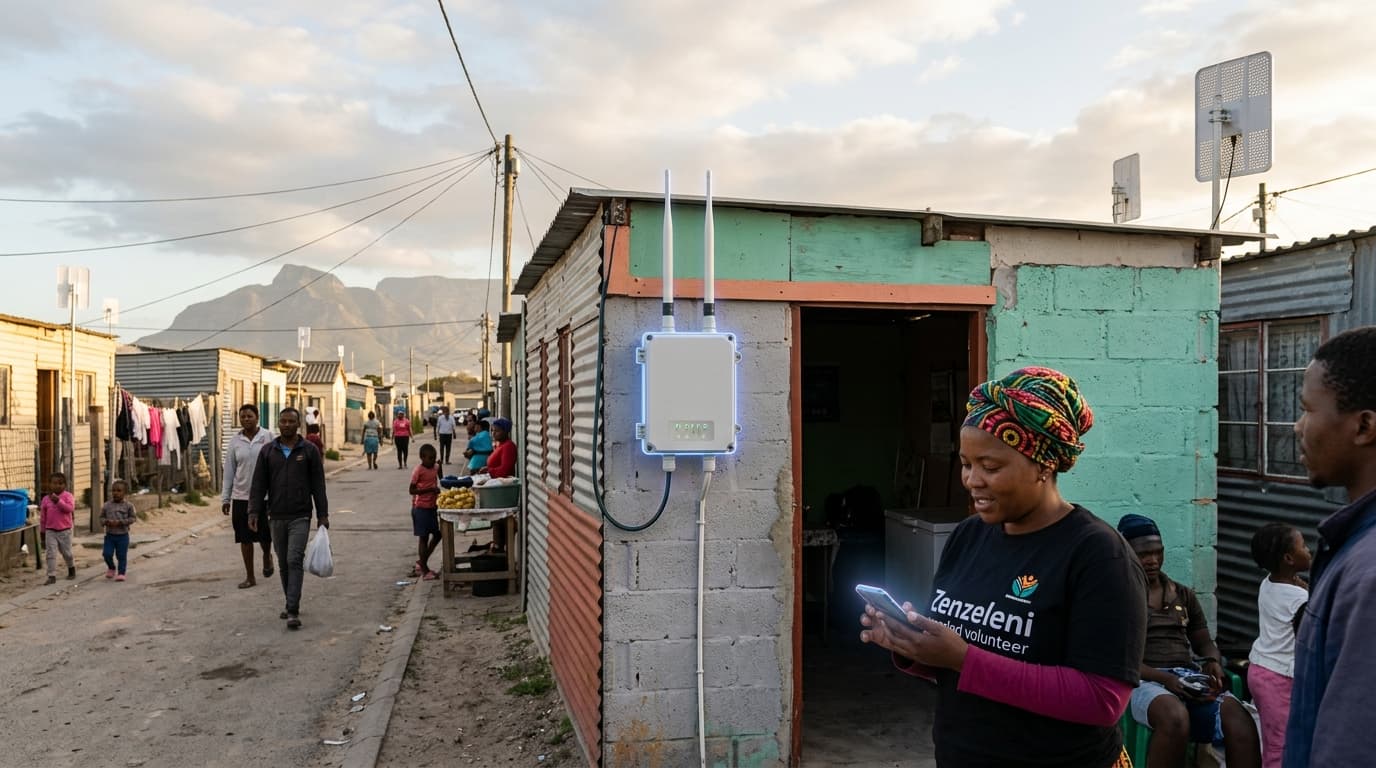
Zenzeleni Networks in Eastern Cape, South Africa, pioneered community-owned internet cooperatives that deploy mesh WiFi networks in rural and township communities. Founded as a university research project, Zenzeleni became a registered ISP owned by the community it serves, providing internet access at roughly 10% of the cost of mobile data operators. The mesh architecture means each node extends coverage further, and the community owns the infrastructure.
The model addresses Africa's internet affordability crisis. Despite increasing coverage, mobile data in many African countries costs 5-10% of average monthly income — far above the UN's 2% affordability threshold. Community mesh networks bypass the telecoms by creating locally owned infrastructure that operates at cost rather than for profit. Similar initiatives have emerged in Kenya (Tunapanda), Nigeria, and across East Africa.
The community ownership model ensures sustainability and local relevance. Network decisions are made by community members, maintenance is performed locally, and revenue stays in the community. This is digital sovereignty at the most granular level — communities controlling their own connectivity infrastructure rather than depending on distant corporations. The approach is being studied as a complement to commercial networks, not a replacement, serving populations that the market has deemed unprofitable.
Research this in Signals
Signals turns a topic into a sourced research record you can inspect and rerun. Your first scan is free, and this one starts with Community-Owned Mesh WiFi Networks already loaded, so edit it or scan as is.