5G
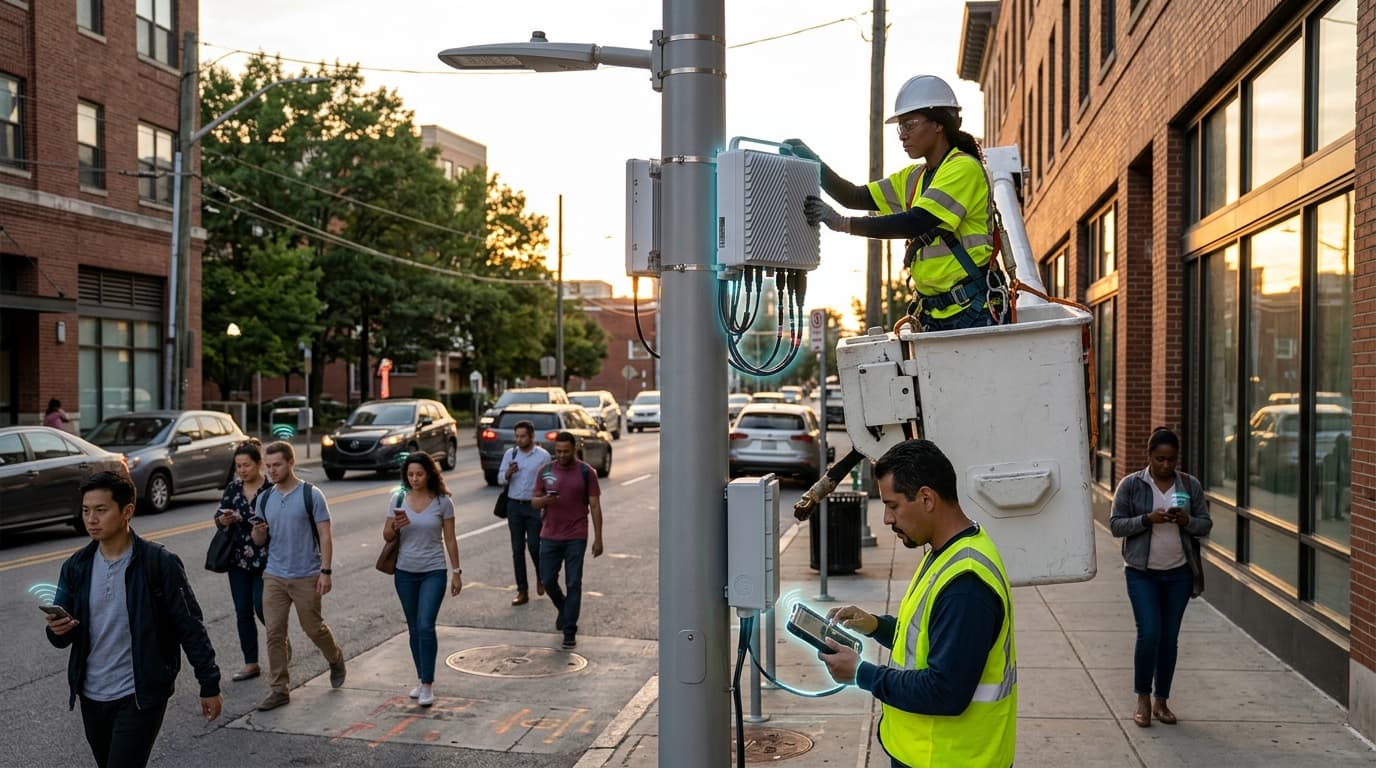
5G is the fifth generation of cellular network technology, offering higher peak data rates, lower latency, and greater capacity than 4G through new radio interfaces, spectrum bands (including millimetre wave), and network architecture such as network slicing and edge integration. Radio and core equipment are supplied by vendors including Qualcomm, Ericsson, Nokia, and Huawei; China has deployed millions of base stations, and 5G connections are expected to reach on the order of 5.5 billion globally by 2030. 5G-Advanced and future releases add capabilities for uplink-heavy and real-time applications.
The technology supports use cases that 4G could not deliver at scale: ultra-reliable low-latency communication for industrial control and autonomous vehicles, massive machine-type communication for IoT, and enhanced mobile broadband for dense urban and venue coverage. Operators and enterprises are deploying private 5G for factories, ports, and campuses where control over spectrum and latency matters. Applications span fixed wireless access, remote surgery and telemedicine, and augmented and virtual reality with lower motion-to-photon delay.
Rollout is uneven by region and spectrum; coverage and performance depend on band and deployment density. Infrastructure cost and spectrum allocation remain constraints. Security and supply-chain concerns have influenced vendor choice in some markets. As deployment matures and 5G-Advanced is standardised, 5G is expected to become the dominant mobile infrastructure for both consumer and industrial connectivity, with 6G research already targeting the next decade.
Research this in Signals
Signals turns a topic into a sourced research record you can inspect and rerun. Your first scan is free, and this one starts with 5G already loaded, so edit it or scan as is.