Virtual Reality
Virtual reality (VR) immerses users in computer-generated environments presented through head-mounted displays that track head and often hand or body movement. Stereoscopic visuals and spatial audio create a sense of presence; input is via controllers, hand tracking, or haptics. Current generations—sometimes grouped as VR 2.0—offer higher-resolution displays, inside-out tracking, and optional full-body or tactile feedback. Leading hardware includes Meta’s Quest line, Sony’s PlayStation VR 2, and HTC’s Vive series. Software spans games, social spaces, productivity tools, and vertical applications in training, therapy, and design.
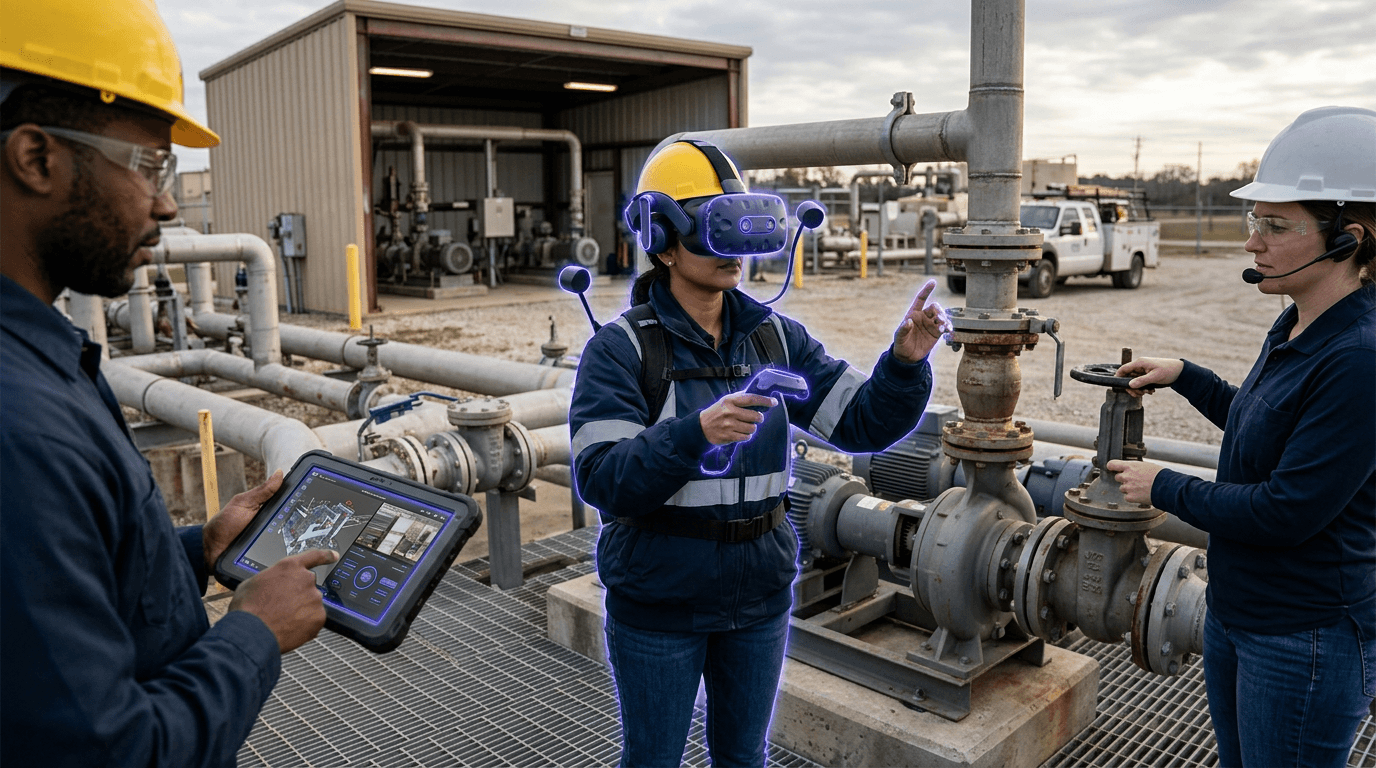
VR addresses the need for immersive simulation and remote presence when physical presence is impossible, expensive, or risky. In enterprise, VR is used for safety and skills training, virtual walkthroughs, and collaborative design review. In healthcare, it supports exposure therapy, rehabilitation, and surgical planning. In education and accessibility, customisable controls and multi-language support can make experiences more inclusive. Integration with 5G and cloud rendering can reduce latency and offload compute for thinner devices. AI is increasingly used to personalise environments and generate or adapt content in response to user behaviour.
Adoption is growing but still concentrated in gaming, enterprise training, and niche professional use. Cost, comfort, and content breadth remain barriers for mass consumer uptake. As form factors and resolution improve and use cases in collaboration and hybrid work solidify, VR is likely to persist as a distinct modality alongside augmented reality and traditional screens for situations where full immersion adds measurable value.
Research this in Signals
Signals turns a topic into a sourced research record you can inspect and rerun. Your first scan is free, and this one starts with Virtual Reality already loaded, so edit it or scan as is.