Augmented Reality
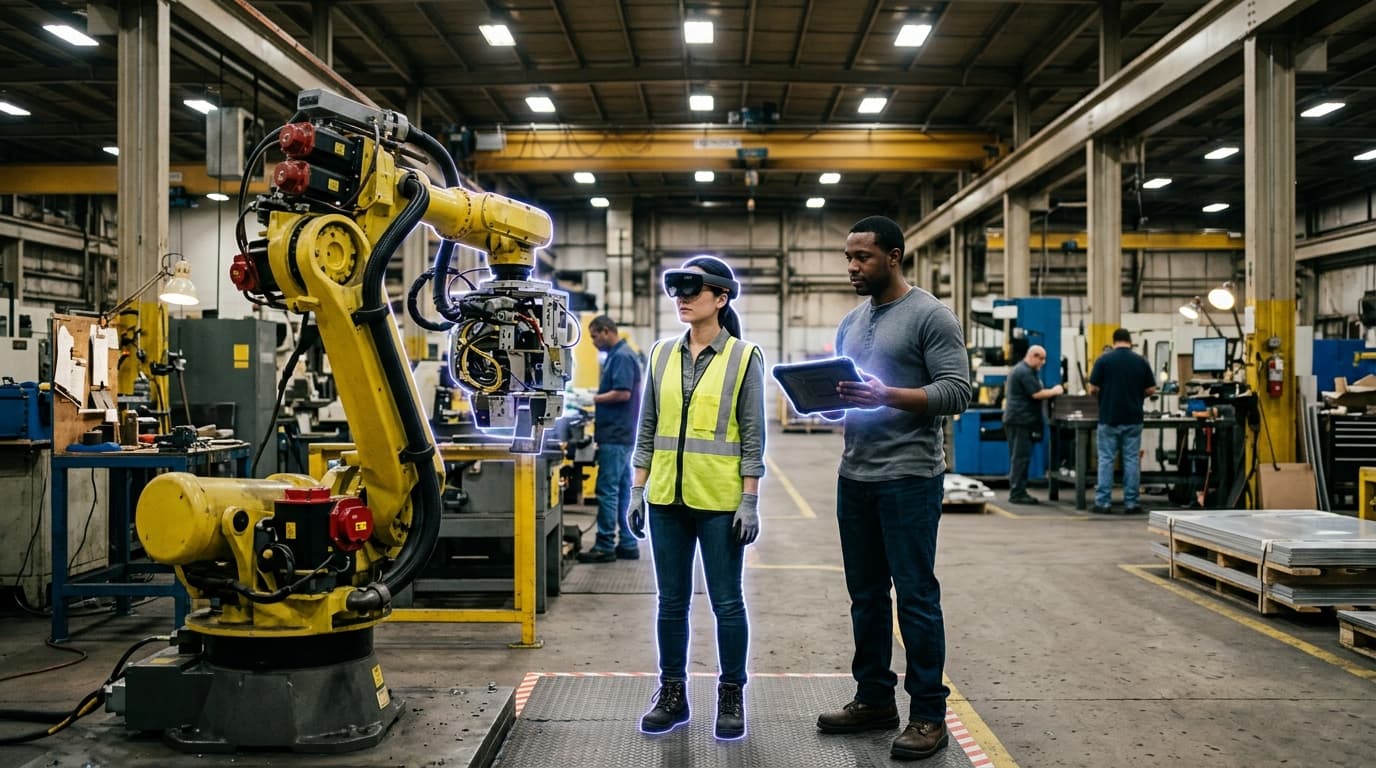
Augmented reality (AR) superimposes digital information—graphics, text, or 3D objects—onto the user’s view of the real world, typically via smartphones, tablets, or optical see-through headsets. Tracking and registration align virtual content with physical surfaces and objects; displays range from handheld screens to head-worn devices such as Microsoft HoloLens and emerging consumer glasses. Software frameworks like Apple ARKit and Google ARCore provide motion tracking, plane detection, and environmental understanding for developers. Applications span gaming (e.g. Niantic’s Pokémon GO), retail try-on and visualisation, industrial assembly and maintenance guidance, and medical imaging overlay.
AR addresses the gap between purely physical and purely digital experiences by anchoring digital information in the user’s immediate environment. In training and education, AR can illustrate procedures or machinery without full simulation. In retail and real estate, it allows customers to visualise products or layouts in place. In healthcare, it can overlay diagnostic or surgical planning data onto the patient or operative field. Disney and other entertainment companies are investing in AR for experiences and storytelling. Integration with 5G and edge compute supports lower latency and richer content for mobile and wearable AR.
Hardware remains a constraint: consumer AR glasses that are lightweight, socially acceptable, and capable of full-day use are still emerging. Content creation and authoring tools are maturing. As display and tracking technologies improve and spatial computing platforms mature, AR is expected to become a more persistent layer between users and the physical world, complementing virtual reality and traditional screens.
Research this in Signals
Signals turns a topic into a sourced research record you can inspect and rerun. Your first scan is free, and this one starts with Augmented Reality already loaded, so edit it or scan as is.