Decentralized Autonomous Markets
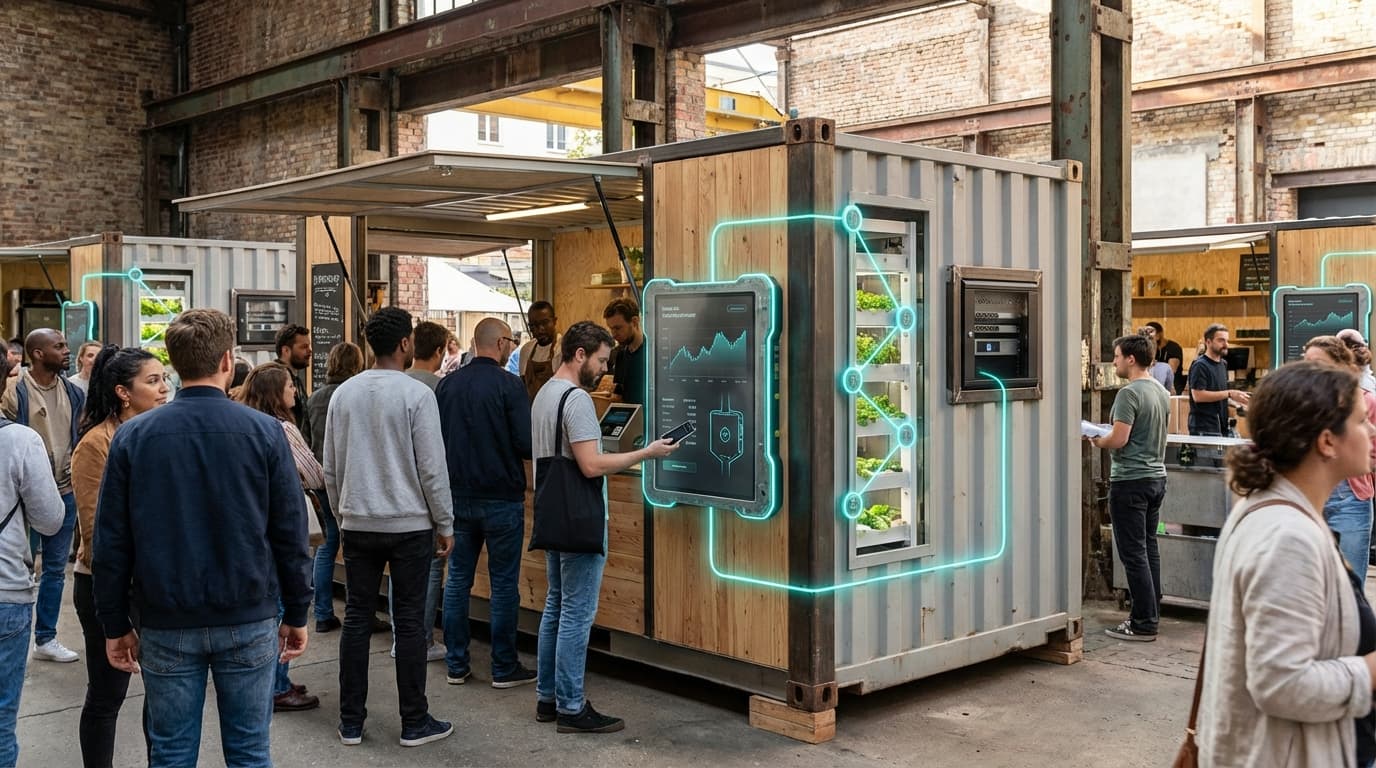
Decentralized autonomous markets are trading systems operated by algorithmic liquidity controllers (AI systems that manage market liquidity) that dynamically adjust fees, market depth (available liquidity), and incentives across different market types including automated market makers (AMMs), orderbooks, request-for-quote (RFQ) systems, and prediction markets. These cross-domain markets integrate diverse assets including digital assets, compute resources, bandwidth, and real-world capacity (like energy or storage) into unified trading environments where everything can be traded, but depend critically on oracle quality (reliable data feeds) and governance of fee curves and incentives (how fees and rewards are set), creating markets that can adapt automatically to changing conditions.
This innovation addresses the need for more efficient and adaptive markets, where traditional markets are too rigid. By using algorithmic controllers, these markets can optimize themselves. Companies, DeFi protocols, and research institutions are developing these systems.
The technology is particularly significant for enabling new forms of markets and resource allocation, where autonomous markets could improve efficiency. As these markets expand, they could transform how resources are allocated. However, ensuring oracle quality, managing governance, and preventing manipulation remain challenges. The technology represents an important evolution in market design, but requires continued development to achieve the reliability and fairness needed for widespread use. Success could enable more efficient markets, but the technology must address governance and oracle quality challenges.
Related Organizations
An AMM specialized in stablecoins using advanced bonding curves and dynamic parameter adjustment.


Balancer Labs
United States · Startup
Developer of the Balancer protocol, an automated portfolio manager and liquidity provider.


A DeFi infrastructure provider offering Dynamic Distribution AMMs that automate liquidity strategies.

Digital Light Synthesis (DLS) 3D printing technology company.

Core contributors to Injective, a blockchain optimized for finance with a shared on-chain orderbook.

An app-chain DEX allowing for customizable AMM curves and superfluid staking.

Creators of the Liquidity Book AMM, which uses discretized bins for concentrated liquidity.

A purpose-built blockchain for trading derivatives with built-in liquidity incentives.
Supporting Evidence
Research this in Signals
Signals turns a topic into a sourced research record you can inspect and rerun. Your first scan is free, and this one starts with Decentralized Autonomous Markets already loaded, so edit it or scan as is.