Transcranial Ultrasound Stimulation (TUS)
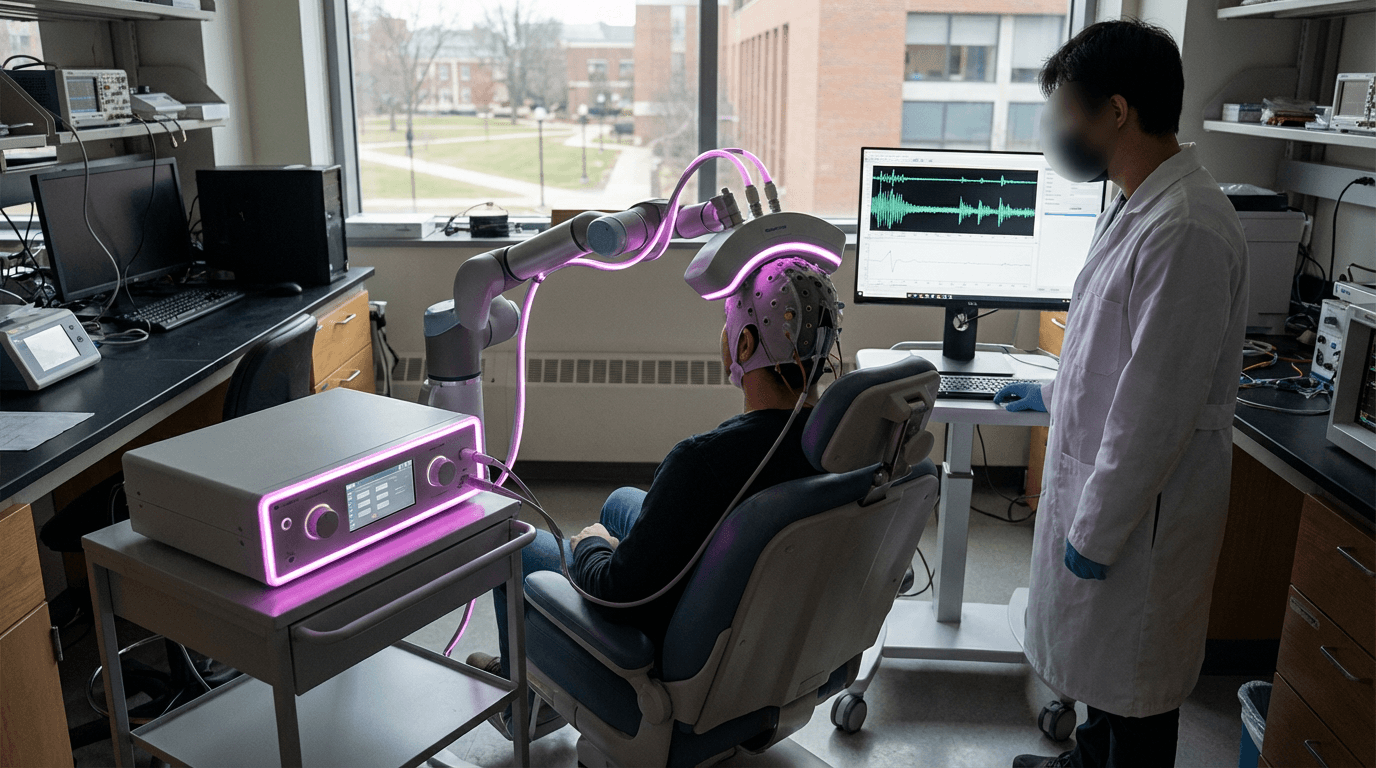
Transcranial Ultrasound Stimulation represents a significant advancement in non-invasive neuromodulation, offering unprecedented access to deep brain structures without surgical intervention. Unlike traditional brain stimulation methods such as transcranial magnetic stimulation (TMS), which primarily affects cortical regions, or deep brain stimulation (DBS), which requires invasive electrode implantation, TUS employs low-intensity focused ultrasound waves that can penetrate the skull and precisely target subcortical structures. The technology works by delivering acoustic energy through the cranium, where it converges at a focal point deep within the brain tissue. At this convergence point, the mechanical pressure waves can temporarily alter neuronal membrane properties, modulating the excitability of specific neural circuits. The spatial precision of TUS—capable of targeting regions as small as a few millimeters—combined with its ability to reach areas like the amygdala, hippocampus, and thalamus, positions it as a uniquely versatile tool for influencing neural activity associated with emotional processing, memory consolidation, and behavioral regulation.
The clinical and therapeutic implications of this technology are particularly compelling for conditions that have proven resistant to conventional treatments. Mental health disorders such as treatment-resistant depression, anxiety disorders, and addiction involve dysregulation in deep brain circuits that are difficult to access non-invasively. Current pharmaceutical interventions often produce systemic side effects and variable efficacy, while existing neuromodulation techniques either lack the depth penetration or require surgical procedures with associated risks and recovery periods. TUS addresses these limitations by offering a middle path: the precision and depth of invasive techniques without the surgical burden. Early research suggests potential applications in modulating reward circuits for addiction treatment, calming hyperactive fear responses in anxiety disorders, and potentially enhancing neuroplasticity for rehabilitation following brain injury. The technology also opens possibilities for temporary, reversible modulation of specific brain functions, allowing clinicians to test therapeutic targets before committing to permanent interventions.
Current deployment of TUS remains primarily within research settings, with several academic institutions and specialized clinics conducting pilot studies to establish safety profiles and optimal stimulation parameters. Early human trials have demonstrated the technology's ability to modulate mood states, reduce cravings in substance use disorders, and temporarily enhance cognitive functions, though larger-scale clinical validation is ongoing. The non-invasive nature of the procedure—typically requiring only a transducer positioned against the scalp—makes it particularly attractive for outpatient settings and repeated treatment sessions. As the technology matures, industry observers note growing interest from both medical device manufacturers and mental health providers seeking alternatives to pharmacological interventions. The convergence of TUS with advanced neuroimaging techniques, which allow real-time visualization of targeted brain regions, suggests a future where personalized neuromodulation protocols could be tailored to individual brain anatomy and specific symptom profiles. This trajectory aligns with broader trends toward precision medicine and non-pharmacological interventions in behavioral health, potentially establishing TUS as a cornerstone technology in the emerging field of therapeutic neuromodulation.
Related Organizations

The leading organization accelerating the development and adoption of focused ultrasound.

Develops Low Intensity Focused Ultrasound (LIFU) devices specifically for brain mapping and neuromodulation.

Manufacturer of high-performance ultrasonic transducers, including the NeuroFUS system.

Prophetic
United States · Startup
Developing 'The Halo', a non-invasive neurostimulation headband designed to induce and stabilize lucid dreams.
Stanford University Airan Lab
United States · University
A research lab developing noninvasive optical and ultrasonic interfaces to the brain, specifically focusing on ultrasonic drug uncaging and neuromodulation.

Distributor and integrator of non-invasive brain stimulation solutions, including TUS/LIFU.

A world leader in focused ultrasound research, conducting clinical trials on BBB opening and neuromodulation for various neurological conditions.

Pioneer in MR-guided Focused Ultrasound (MRgFUS) for non-invasive brain surgery and modulation.
Develops neuronavigation-guided focused ultrasound systems for BBB opening and neuromodulation.
University of Plymouth Brain Research & Imaging Centre
United Kingdom · University
A specialized research center heavily invested in Transcranial Ultrasound Stimulation research for human cognition and mental health.
Supporting Evidence
Research this in Signals
Signals turns a topic into a sourced research record you can inspect and rerun. Your first scan is free, and this one starts with Transcranial Ultrasound Stimulation (TUS) already loaded, so edit it or scan as is.