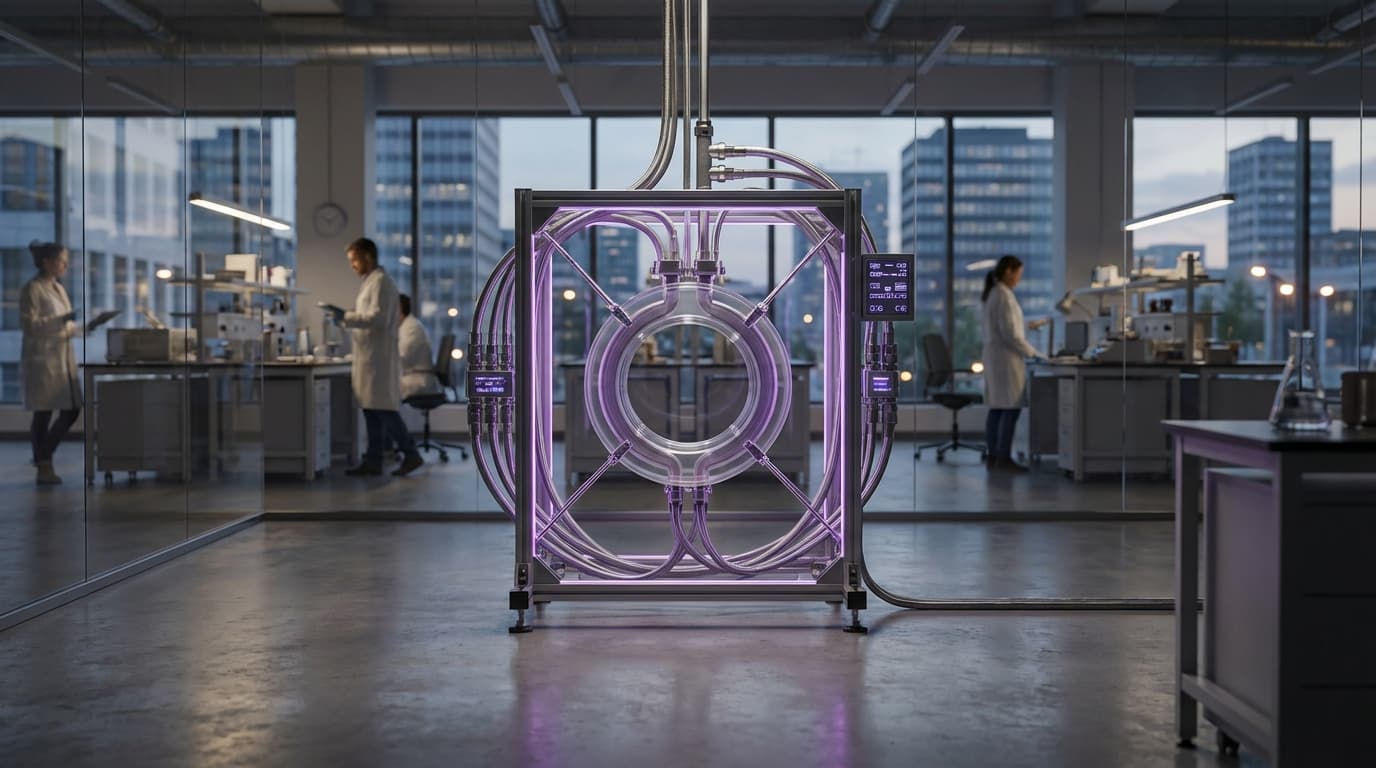
Room-Temperature Superconductor
Room-temperature superconductors are materials that can conduct electricity with zero resistance at ambient temperatures and pressures, eliminating the need for expensive and energy-intensive cooling systems required by current superconductors. Conventional superconductors only work at extremely low temperatures (typically below -200°C), requiring liquid helium or nitrogen cooling that makes them impractical for most applications. A room-temperature superconductor would enable lossless power transmission, ultra-efficient electrical devices, and revolutionary applications in computing, transportation, and energy storage.
The discovery of a room-temperature superconductor would be transformative across multiple industries. Power grids could transmit electricity over vast distances without losses, dramatically improving efficiency and enabling renewable energy from remote locations. Magnetic levitation trains could become economically viable, electric motors and generators could achieve near-perfect efficiency, and quantum computers could operate without complex cooling systems. The technology would also enable ultra-strong electromagnets for applications ranging from medical imaging to particle accelerators.
At TRL 2, room-temperature superconductors remain hypothetical, with numerous claims over the years that have not been reproducibly verified. Research continues to explore various material classes including hydrides under pressure, cuprates, and novel carbon-based materials. The technology faces fundamental challenges including understanding the mechanisms that could enable room-temperature superconductivity, synthesizing stable materials, and verifying claims with rigorous experimental protocols. However, the potential impact is so enormous that research continues despite the difficulty. If a room-temperature superconductor is discovered and can be manufactured practically, it would represent one of the most significant technological breakthroughs in history, enabling a fundamental transformation of electrical and electronic systems with massive efficiency gains and new capabilities.
Related Organizations
Germany · Research Lab
A leading research institute where Mikhail Eremets' group researches high-pressure hydrides.
China · Research Lab
A premier research institute in condensed matter physics in China.

Argonne National Laboratory
United States · Research Lab
U.S. Department of Energy multidisciplinary science and engineering research center.
United States · Government Agency
Home to the Center for Functional Nanomaterials and a long history of superconductor research.
United States · University
A private research university known for high-pressure physics research.

A fusion energy company building magnets using High-Temperature Superconductors (HTS).

A fusion company developing spherical tokamaks using high-temperature superconducting (HTS) magnets.

A global leader in the production of Bismuth-based high-temperature superconducting wires.

A subsidiary of Furukawa Electric, manufacturing Second Generation (2G) High Temperature Superconducting (HTS) wire.

A manufacturer of scientific instruments and superconducting wires (via Bruker EST).
Supporting Evidence
Research this in Signals
Signals turns a topic into a sourced research record you can inspect and rerun. Your first scan is free, and this one starts with Room-Temperature Superconductor already loaded, so edit it or scan as is.