Internet of Everything
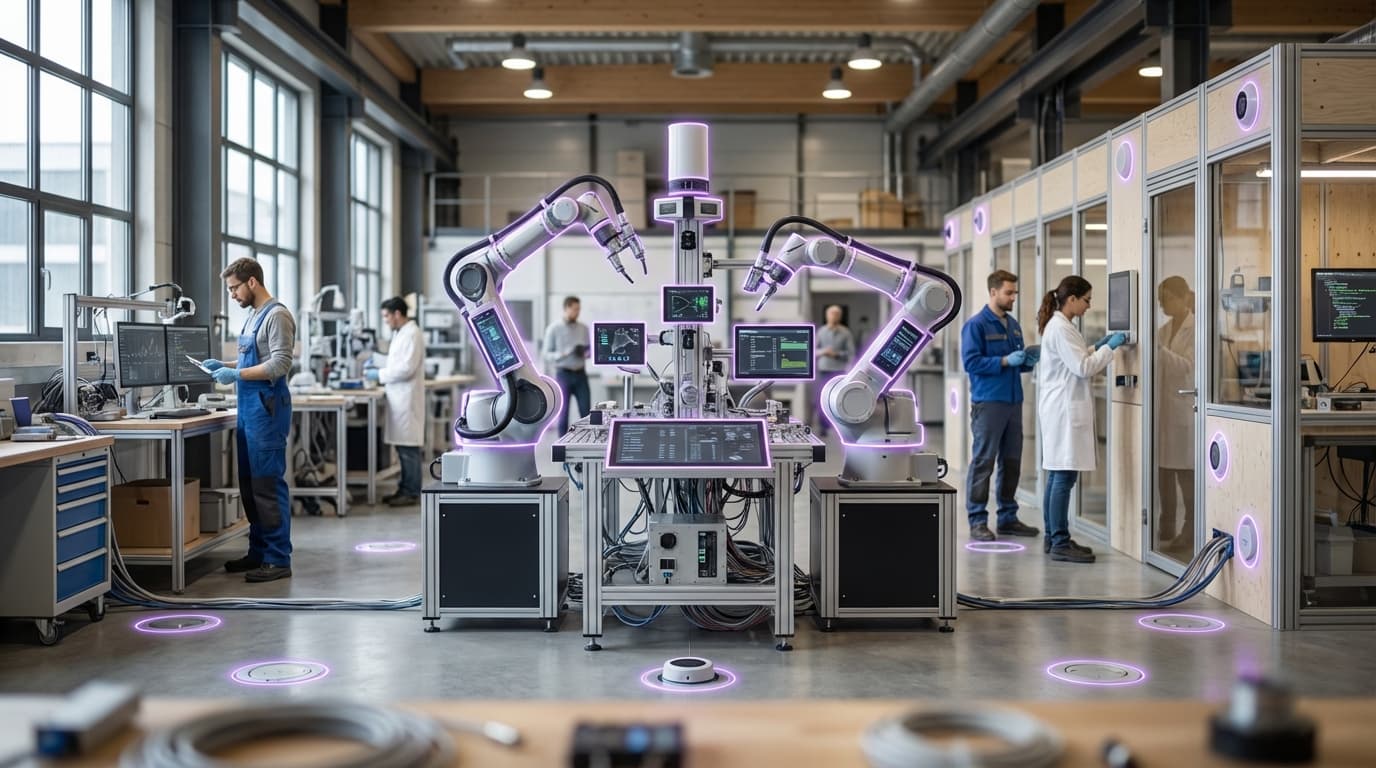
The Internet of Everything (IoE) extends the Internet of Things concept to create a comprehensive network connecting not just devices, but people, processes, data, and physical objects into an integrated system. IoE creates intelligent connections between people-to-people, people-to-machines, and machines-to-machines, enabling data to flow seamlessly across all elements of urban life. This framework embeds sensing, communication, and intelligence into infrastructure, objects, and even people, creating a living, responsive urban environment where information and actions are coordinated across all connected elements.
The technology enables holistic urban management where data from traffic, energy, water, waste, healthcare, and social systems are integrated to optimize city operations and services. IoE systems can coordinate responses across multiple domains—for example, adjusting traffic signals, public transit, and energy distribution simultaneously based on real-time conditions. Applications include smart city platforms that integrate all urban systems, personalized services that adapt to individual needs, and predictive systems that anticipate and respond to urban challenges. Cities worldwide are developing IoE frameworks to create more efficient, responsive, and livable urban environments.
At TRL 4, Internet of Everything frameworks are being developed and piloted in various cities, though full integration and coordination remain challenging. The technology faces obstacles including data privacy and security concerns, interoperability between diverse systems, managing the complexity of integrated operations, and ensuring equitable access to benefits. However, as connectivity becomes ubiquitous and AI capabilities improve, IoE becomes increasingly feasible. The technology could transform cities into intelligent, adaptive systems that optimize resources, improve quality of life, and respond proactively to challenges, potentially creating urban environments that are more efficient, sustainable, and responsive to the needs of residents while enabling new forms of civic engagement and service delivery.
Related Organizations

A global networking leader that coined the term IoE, providing the infrastructure connecting people, data, and things.

Offers the AI Stack which includes tools for hardware-aware model efficiency and architecture search.

Industrial giant offering the 'Senseye Predictive Maintenance' suite and MindSphere IoT platform.

Produces sensors and software connecting mobility, consumer goods, and industrial tech.
PTC
United States · Company
Offers ThingWorx, a platform that connects industrial devices, people, and systems.


Multinational conglomerate operating in aerospace and building technologies.


Global specialist in energy management and automation that integrates cybersecurity into its industrial hardware and software.

Nordic Semiconductor
Norway · Company
Specializes in low-power wireless communication technologies (Bluetooth LE, cellular IoT) for connected devices.
Supporting Evidence
Research this in Signals
Signals turns a topic into a sourced research record you can inspect and rerun. Your first scan is free, and this one starts with Internet of Everything already loaded, so edit it or scan as is.