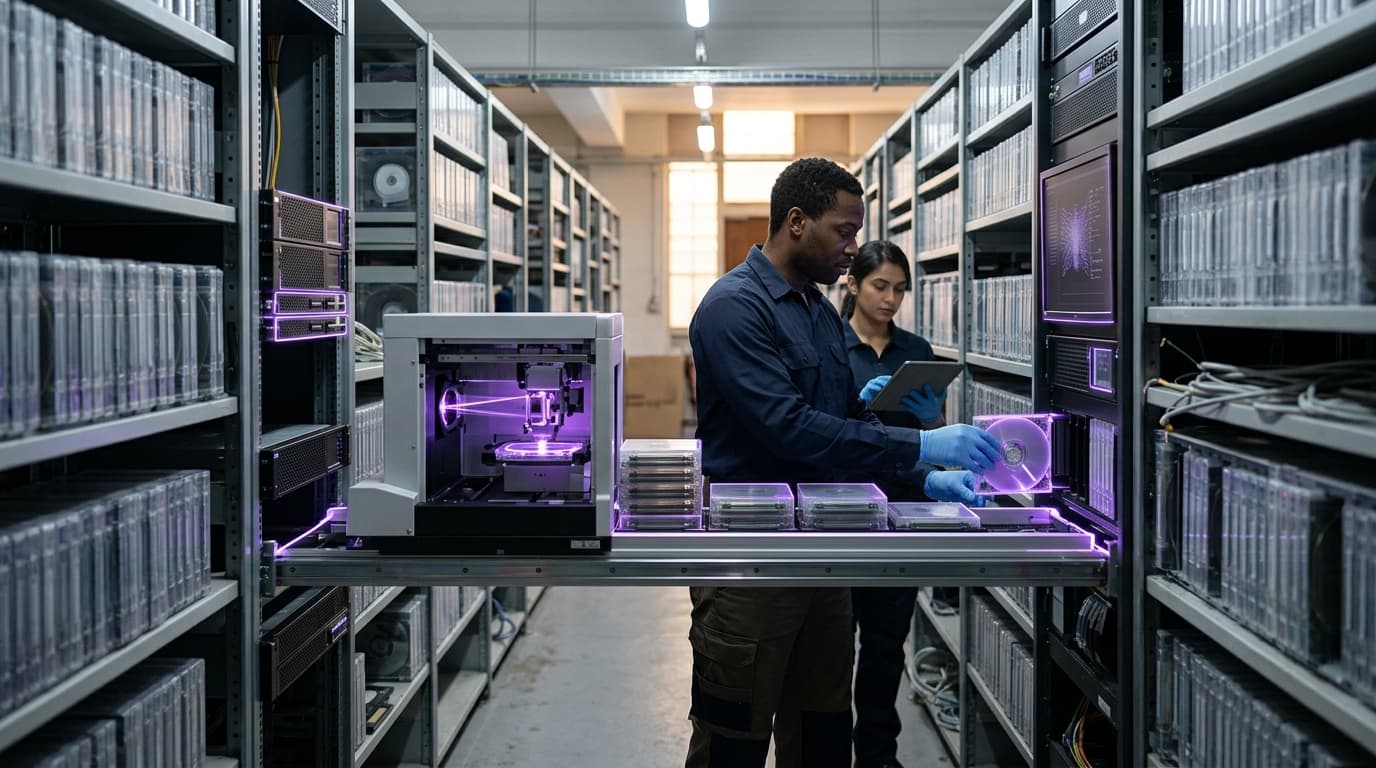
Fourth-Generation Optical Discs
Fourth-generation optical discs encompass 3D optical data storage and holographic data storage—technologies that extend beyond the layer-limited capacity of Blu-ray by encoding information throughout the volume of the medium or in holographic interference patterns. 3D optical storage uses multiple layers or volumetric recording to increase capacity; holographic storage encodes data in the interference of reference and signal beams, enabling high-density, high-throughput recording and readout. Applications target archival storage where long-term stability, removability, and resistance to electromagnetic interference are valued. Commercial holographic storage systems have been attempted; broad adoption has not materialized.
Data preservation faces challenges: magnetic media degrades, solid-state requires power, and cloud storage introduces dependency and cost. Fourth-generation optical offers a potential pathway to dense, durable, removable archival. Significant challenges include manufacturing cost, compatibility with existing infrastructure, and competition from cloud and tape. Research continues into improved media, faster readout, and lower-cost drives. The technology remains niche; mainstream adoption would require compelling cost and performance advantages over existing solutions.
Research this in Signals
Signals turns a topic into a sourced research record you can inspect and rerun. Your first scan is free, and this one starts with Fourth-Generation Optical Discs already loaded, so edit it or scan as is.