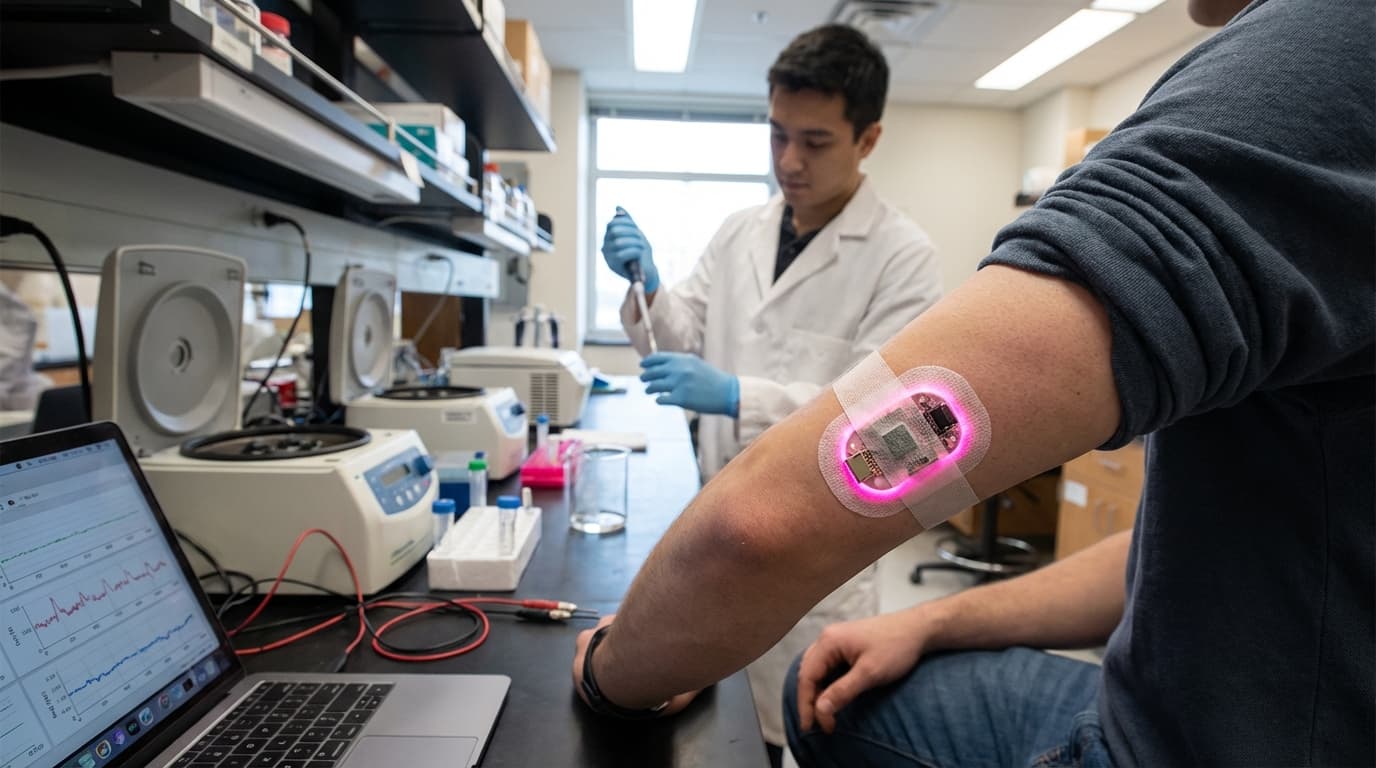
Wearable Metabolic Monitors
Wearable metabolic monitors use stretchable microneedle patches that minimally penetrate the skin or sweat sensors that analyze perspiration to provide continuous, real-time readouts of multiple metabolic analytes including glucose, lactate, cortisol, and electrolytes. These devices enable comprehensive metabolic monitoring outside of clinical settings, and longevity clinics and elite sports programs are using them to personalize nutrition, exercise, and fasting protocols based on real-time metabolic data, optimizing interventions for individual metabolic responses.
This innovation addresses the limitation where comprehensive metabolic monitoring required blood draws or laboratory analysis, making it difficult to track metabolic state continuously and understand how lifestyle factors affect metabolism in real-time. By providing continuous, multi-analyte monitoring, these devices enable personalized optimization of diet, exercise, and other interventions. Companies are developing these technologies, with some devices already available for specific applications.
The technology is particularly valuable for health optimization, sports performance, and metabolic health management, where understanding metabolic responses in real-time can improve outcomes. As the technology improves and becomes more accessible, it could enable more effective personalized health interventions. However, ensuring accuracy across multiple analytes, managing sensor lifespan, and making the technology affordable remain challenges. The technology represents an important evolution in health monitoring, but requires continued development to achieve the accuracy, reliability, and user experience needed for widespread adoption. Success could make comprehensive metabolic monitoring as accessible as basic fitness tracking, enabling more people to optimize their metabolic health and performance.
Related Organizations

Developing a wearable biosensor using a microneedle array to measure glucose and ketones simultaneously.

Developing a continuous molecular monitoring patch using DNA aptamer sensors to track multiple targets like vancomycin and lactate.
United States · Startup
Develops flexible, skin-like microfluidic wearables for analyzing sweat and hydration.
United States · Startup
Produces a wearable hydration biosensor that analyzes sweat in real-time to provide hydration data for athletes.
France · Startup
Developers of K'Watch, a smartwatch with microneedles for continuous glucose and lactate monitoring.

Creator of the FreeStyle Libre system, a leading continuous glucose monitoring platform.
United States · Startup
Developing a non-invasive, graphene-based sensor patch to monitor glucose and other biomarkers from interstitial fluid without needles.
United States · Company
Developing non-invasive medical diagnostics using radio frequency spectroscopy to detect glucose levels.

Provides a metabolic health platform integrating third-party CGM sensors (like Abbott's) with their own smart ring for holistic tracking.

Spun out of Northwestern University, developing soft, flexible sensors for ICU-grade monitoring in the home.
Supporting Evidence
Research this in Signals
Signals turns a topic into a sourced research record you can inspect and rerun. Your first scan is free, and this one starts with Wearable Metabolic Monitors already loaded, so edit it or scan as is.