Implantable Bioelectronic Interfaces
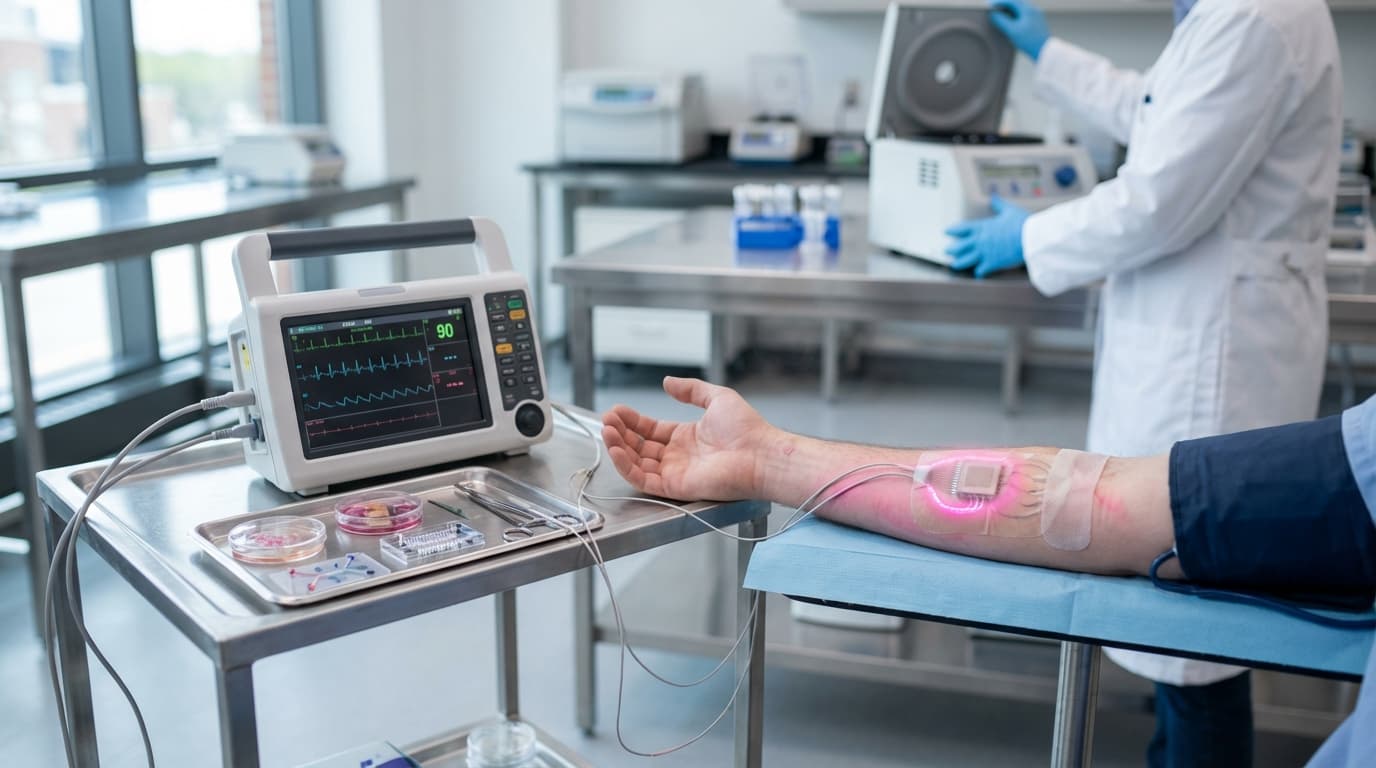
Implantable bioelectronic interfaces are advanced medical devices that enable closed-loop neuromodulation, continuously monitoring biological signals like inflammatory markers or metabolic indicators and automatically modulating nerve activity (such as vagal or peripheral nerves) in real-time to maintain optimal physiological states. These systems combine bioelectronic tissues that integrate with living cells, conductive hydrogels that provide flexible interfaces, and embedded microelectrode arrays to create devices that merge electronic prosthetics with regenerative tissue scaffolds, creating seamless integration between technology and biology.
This innovation addresses the need for responsive, adaptive medical devices that can monitor and treat conditions in real-time rather than requiring external control or periodic adjustments. By creating closed-loop systems that sense and respond automatically, these interfaces can provide more effective treatment for conditions like chronic inflammation, metabolic disorders, and neurological conditions. Companies like SetPoint Medical, Galvani Bioelectronics, and research institutions are developing these technologies.
The technology is particularly significant for treating chronic conditions where continuous monitoring and adjustment are beneficial, potentially providing more effective treatment than medications or open-loop devices. As the technology improves, it could enable new treatments for a wide range of conditions. However, ensuring long-term biocompatibility, reliable sensing, and effective neural modulation remain challenges. The technology represents a convergence of electronics and biology that could transform how we treat many diseases, but requires continued development to achieve reliable, long-term performance in the body.
Related Organizations

Partnership between GSK and Verily to develop bioelectronic medicines.

Global medical device company focused on closed-loop spinal cord stimulation.

Developing a platform to treat chronic inflammation via the vagus nerve.

Creates therapies to restore movement, independence, and health in people with spinal cord injury.
United States · University
Academic lab developing magnetoelectric bio-implants.

Bioelectronic medicine company transforming the standard of care for chronic disease.
United States · Research Lab
The central technology development arm of General Electric.

Supporting Evidence
Research this in Signals
Signals turns a topic into a sourced research record you can inspect and rerun. Your first scan is free, and this one starts with Implantable Bioelectronic Interfaces already loaded, so edit it or scan as is.