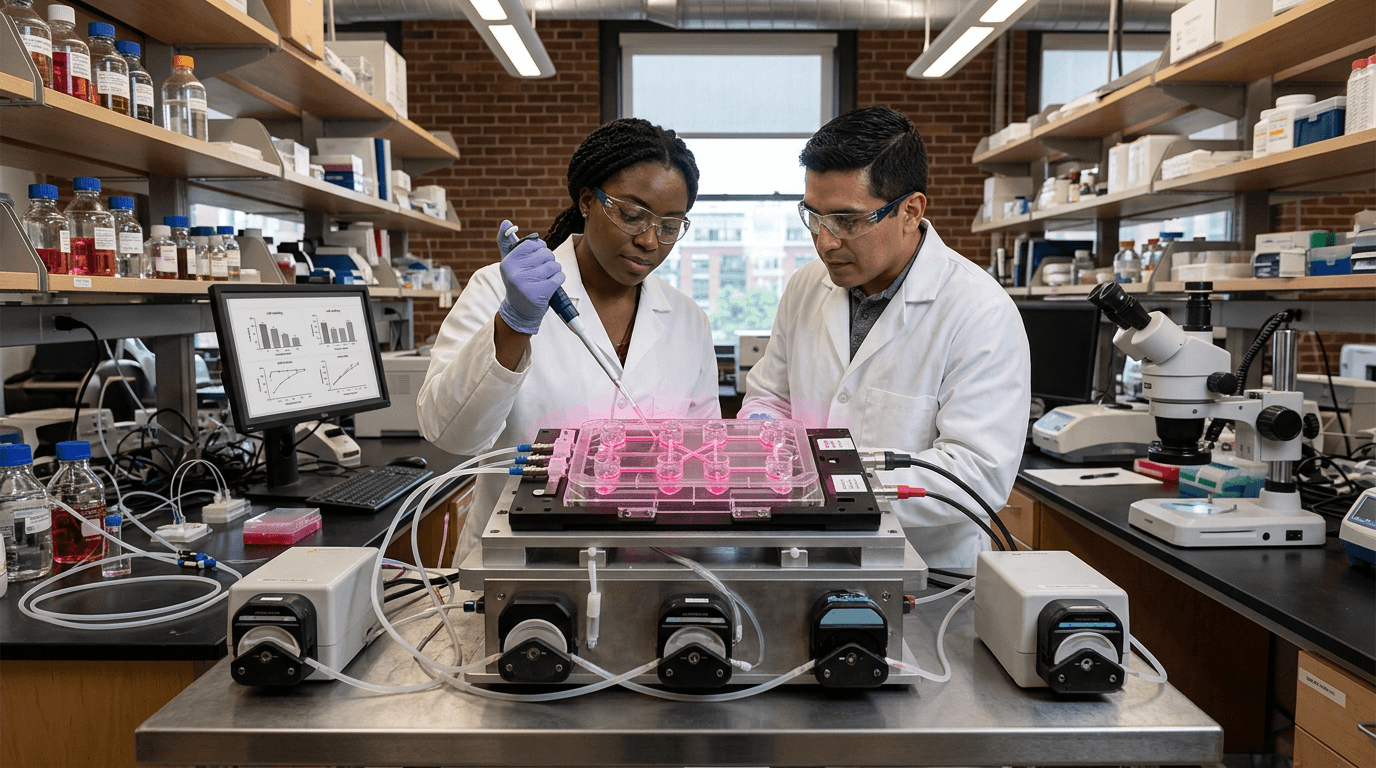
Organ-on-a-Chip Microphysiological Systems
Geography: Americas · North America · United States
Organ-on-a-chip (OoC) devices are microfluidic systems containing living human cells arranged to replicate the architecture and function of human organs — lungs, livers, kidneys, intestines, and even linked multi-organ systems. Companies like Emulate (Harvard spin-out), Hesperos, and CN Bio Innovations build these platforms for pharmaceutical companies to test drug efficacy and toxicity on human tissue rather than animal models. ARPA-H has funded organ-chip development for personalized medicine applications.
The FDA Modernization Act 2.0 (signed December 2022) eliminated the longstanding requirement that drugs be tested on animals before human clinical trials, explicitly allowing organ-chips, computer models, and other non-animal methods as alternatives. This regulatory shift created massive demand for organ-chip platforms from pharmaceutical companies eager to reduce the cost, time, and ethical burden of animal testing. Drug development currently has a 90% clinical trial failure rate — largely because animal models poorly predict human responses.
Organ-chips could compress drug development timelines by providing more predictive human data earlier in the process. Multi-organ 'body-on-a-chip' systems can model drug metabolism across liver, kidney, and heart simultaneously, catching toxic interactions that single-organ tests miss. The technology also enables personalized medicine: chips seeded with a patient's own cells can test drug responses before treatment begins. The US leads in organ-chip development through its biotech ecosystem, and the regulatory green light from the FDA Modernization Act gives American companies a significant first-mover advantage.
Research this in Signals
Signals turns a topic into a sourced research record you can inspect and rerun. Your first scan is free, and this one starts with Organ-on-a-Chip Microphysiological Systems already loaded, so edit it or scan as is.