Minimally Invasive Brain-Computer Interfaces
Geography: Americas · North America · United States
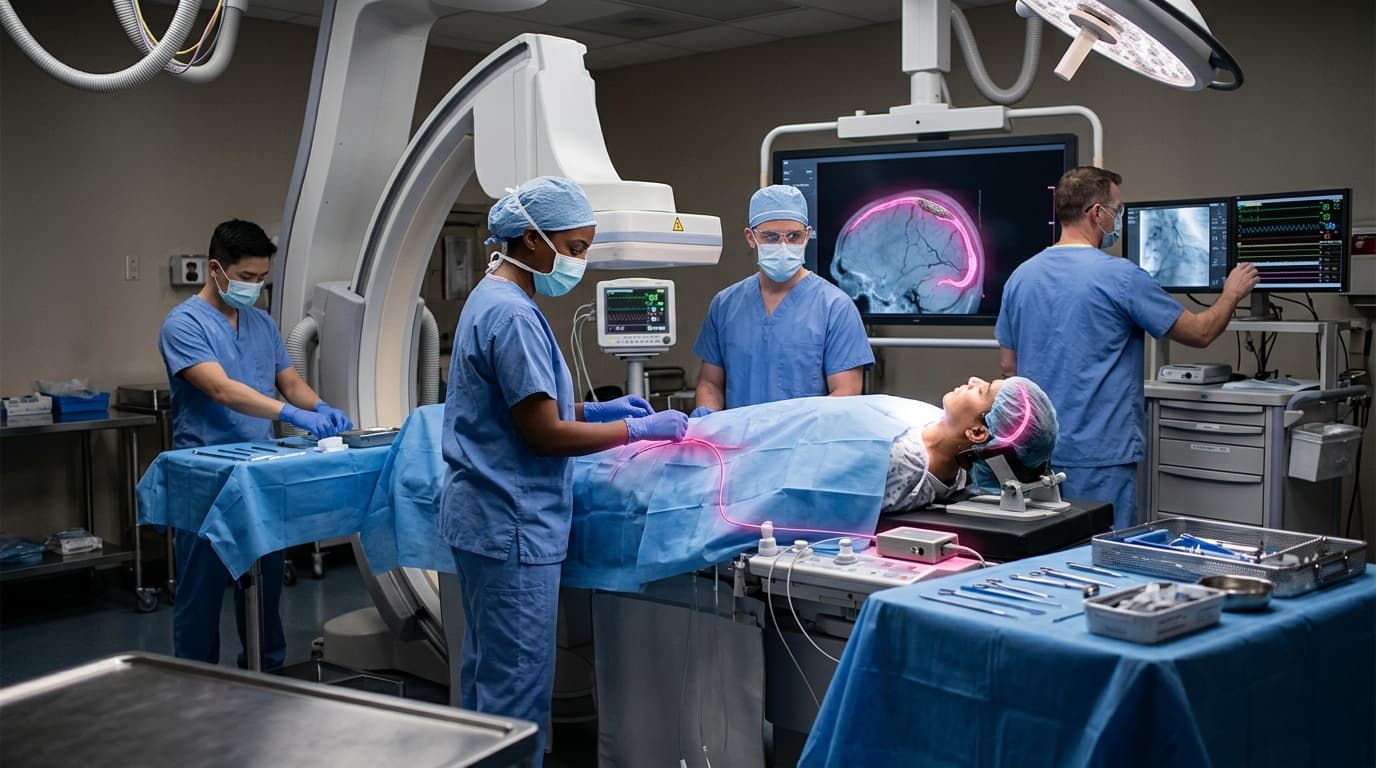
Minimally invasive BCIs seek to read neural signals without requiring open-brain surgery. Synchron's Stentrode is delivered through the jugular vein and positioned in blood vessels near the motor cortex — similar to a cardiac stent procedure. Precision Neuroscience developed an ultra-thin electrode array that slides between the skull and brain surface through a small incision, avoiding penetration of brain tissue.
The safety-accessibility tradeoff is critical for BCI adoption. Open-brain surgery carries inherent risks and limits the patient population to those with severe enough conditions to justify the procedure. Minimally invasive approaches could expand the addressable market by orders of magnitude — from thousands of severely paralyzed patients to millions with moderate disabilities or, eventually, healthy users seeking cognitive enhancement.
Synchron has implanted multiple patients in both US and Australian trials, demonstrating that endovascular BCIs can restore digital communication for ALS patients. While signal resolution is lower than penetrating electrodes, the approach trades bandwidth for safety and accessibility — a tradeoff that may prove more commercially viable for broader adoption.
Research this in Signals
Signals turns a topic into a sourced research record you can inspect and rerun. Your first scan is free, and this one starts with Minimally Invasive Brain-Computer Interfaces already loaded, so edit it or scan as is.