Invasive Brain-Computer Interfaces
Geography: Americas · North America · United States
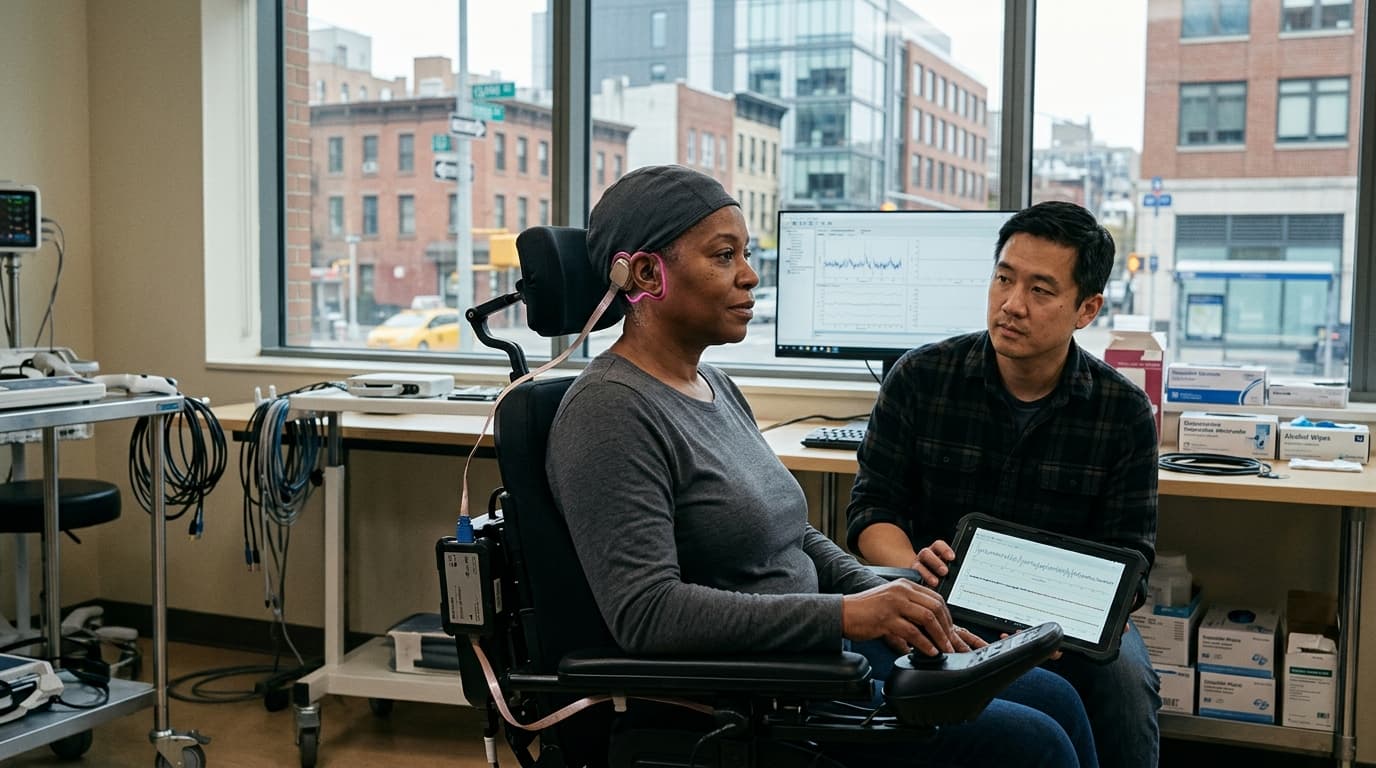
Invasive brain-computer interfaces directly read neural signals from the brain's surface or interior, translating thoughts into digital commands. Paradromics completed its first human implant at the University of Michigan in June 2025 and achieved record-breaking BCI data rates. Neuralink has implanted multiple patients who can control computers with thought. Blackrock Neurotech's Utah array has been used in clinical research for over a decade.
BCIs are transitioning from academic research to clinical products. The initial market is assistive technology for people with severe paralysis — restoring the ability to communicate, control devices, and interact with the world through thought alone. Paradromics' FDA-approved trial focuses specifically on speech restoration for people who have lost the ability to speak.
The long-term vision extends far beyond medical applications. Merge Labs, backed by Sam Altman with a $250 million funding round at $850 million valuation, is positioning for consumer-grade brain-computer interaction. If BCIs can achieve the bandwidth and safety needed for healthy users, they could become the ultimate human-computer interface — bypassing screens, keyboards, and voice entirely. Morgan Stanley values the potential market at $400 billion.
Research this in Signals
Signals turns a topic into a sourced research record you can inspect and rerun. Your first scan is free, and this one starts with Invasive Brain-Computer Interfaces already loaded, so edit it or scan as is.