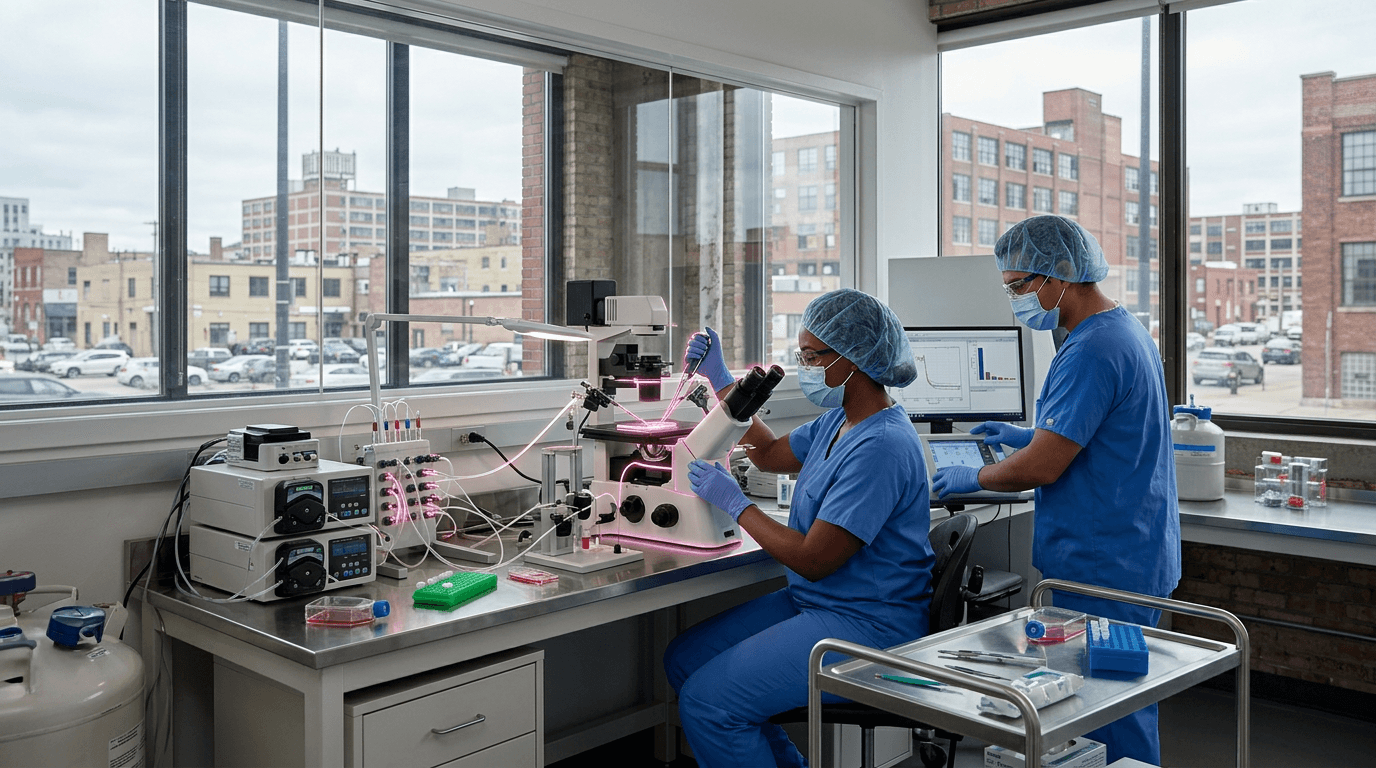
Precision Gene Editing (Base & Prime Editing)
Geography: Americas · North America · United States
Base editing and prime editing represent the next generation beyond CRISPR-Cas9. Instead of cutting DNA and relying on the cell's imprecise repair machinery, base editors chemically convert one DNA letter to another in place, while prime editors can insert, delete, or replace sequences of any length. Beam Therapeutics (founded by base editing inventor David Liu) has programs in sickle cell disease, T-cell lymphoma, and liver disease. Prime Medicine is advancing prime editing therapeutics.
The precision advantage is critical for safety: CRISPR's double-strand breaks can cause unintended mutations, chromosomal rearrangements, and activation of cancer-causing genes. Base and prime editing avoid these risks while achieving the same therapeutic goals. This makes them more suitable for treating conditions where patients have alternatives (unlike cancer, where higher risk is acceptable).
The US invented both base editing and prime editing (David Liu's lab at the Broad Institute) and leads in commercial development. These technologies could eventually enable precise correction of the majority of known genetic diseases — over 30,000 point mutations cause human disease. The strategic implication is that genetic medicine may become as routine as antibiotics within a generation.
Research this in Signals
Signals turns a topic into a sourced research record you can inspect and rerun. Your first scan is free, and this one starts with Precision Gene Editing (Base & Prime Editing) already loaded, so edit it or scan as is.