Aquaculture Genetic Improvement Programs
Geography: Asia Pacific · Southeast Asia · Southeast Asia
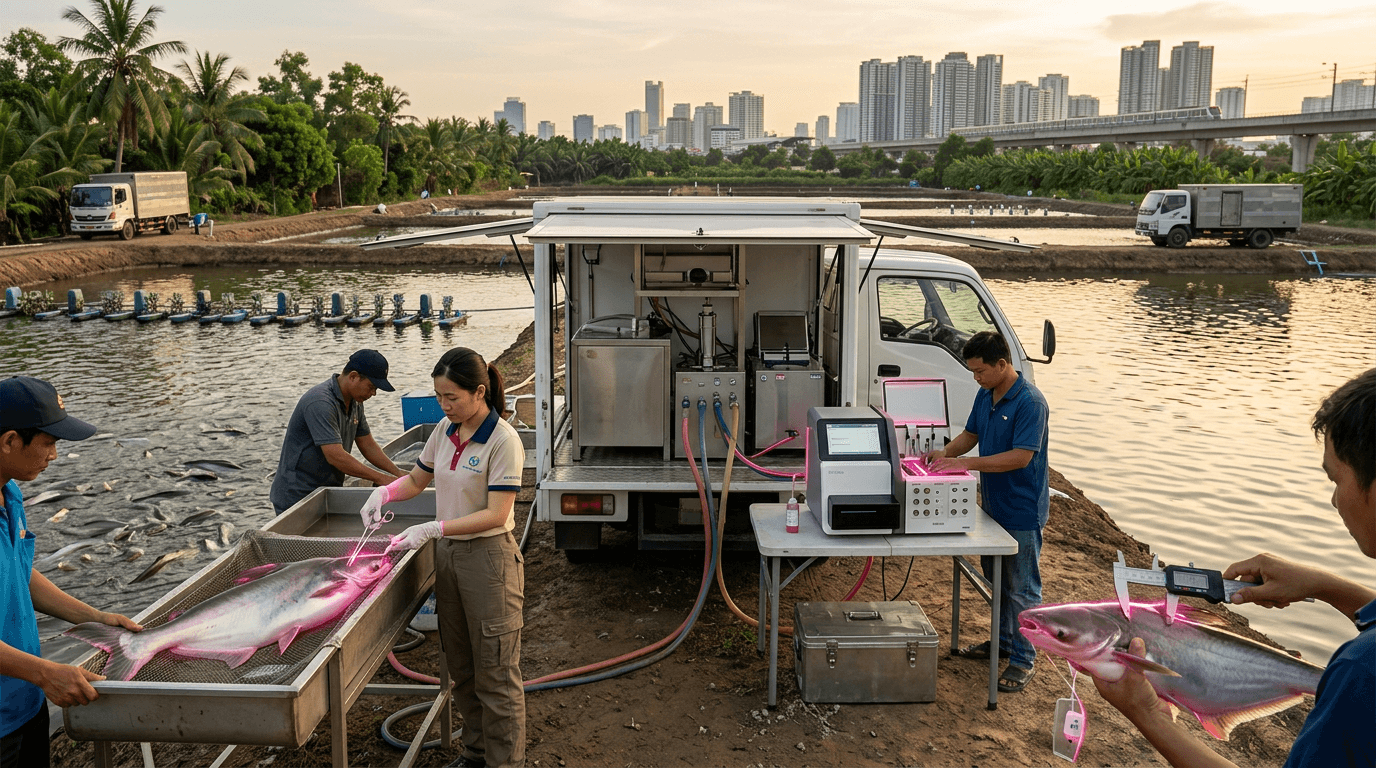
Vietnam — Vietnam is the world's largest pangasius (catfish) exporter and third-largest shrimp producer. National aquaculture genetics programs at the Research Institute for Aquaculture (RIA) use selective breeding and emerging genomic selection techniques to develop disease-resistant, fast-growing strains. The programs apply quantitative genetics to improve growth rate, survival rate, and feed conversion efficiency.
Modern genomic selection uses DNA markers to predict breeding value, allowing breeders to select for multiple traits simultaneously. This accelerates genetic gain from 5-8% per generation (traditional selective breeding) to 15-20% per generation. For species like shrimp where disease resistance is critical (white spot syndrome can cause 100% mortality), genomic selection for disease resistance genes has transformative potential.
Vietnam's aquaculture genetics programs serve as public goods for the industry — improved broodstock is distributed to farmers, raising productivity across the sector. This government-funded genetics infrastructure is a competitive advantage that private-sector-only approaches in competing countries (Ecuador, India) lack. The model could extend to other tropical aquaculture species across ASEAN.
Research this in Signals
Signals turns a topic into a sourced research record you can inspect and rerun. Your first scan is free, and this one starts with Aquaculture Genetic Improvement Programs already loaded, so edit it or scan as is.