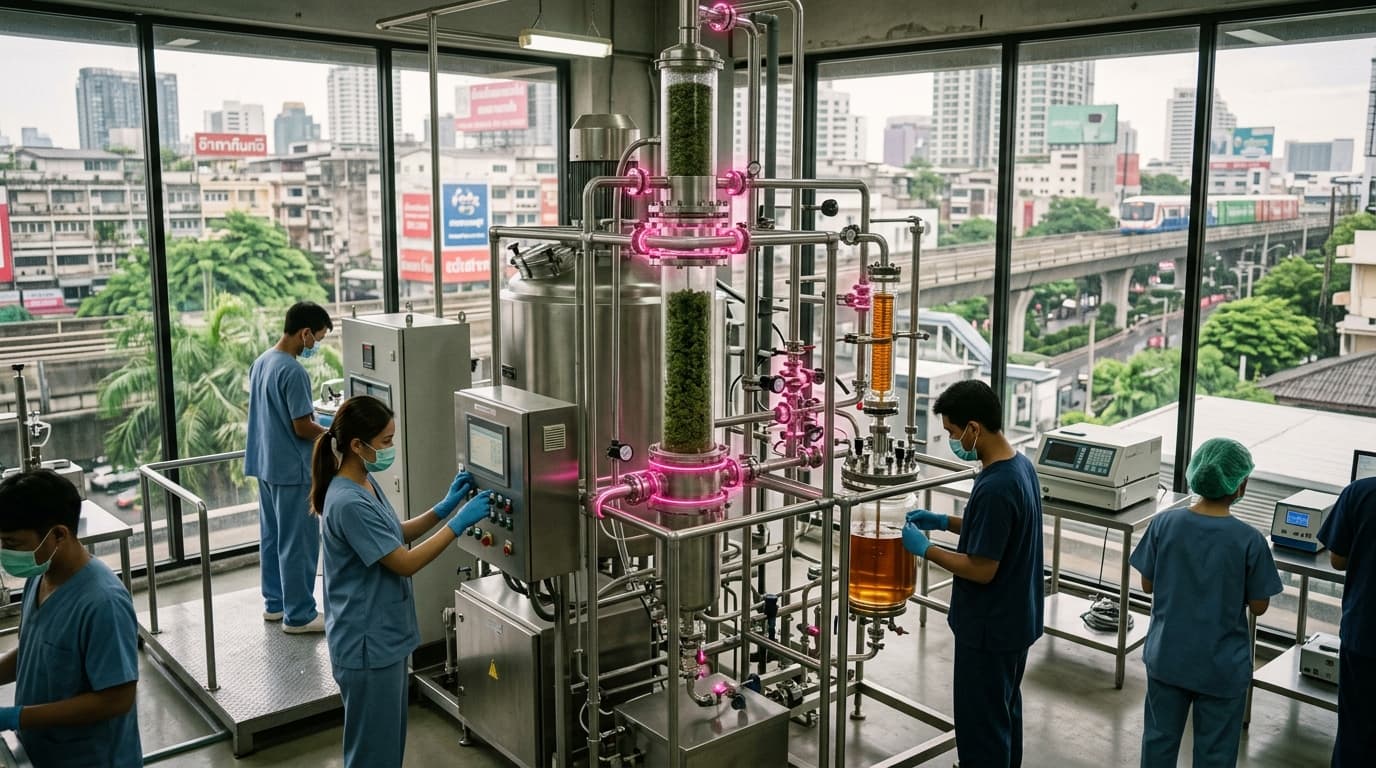
Medical Cannabis Research & Extraction Technology
Geography: Asia Pacific · Southeast Asia · Southeast Asia
Thailand became the first Asian country to decriminalize cannabis in 2022, and in mid-2025 formalized a structured medical cannabis framework under the Ministry of Public Health. The new regulations require special licenses for research, extraction, sales, and processing of cannabis flowers under the Thai Traditional Medicine Wisdom Protection and Promotion Act. Government-backed research institutions like the Government Pharmaceutical Organization (GPO) and Chulalongkorn University operate licensed extraction facilities producing standardized medical-grade cannabis oils, tinctures, and dried flower products.
The regulatory journey has been turbulent — the 2022 decriminalization led to an explosion of recreational shops that alarmed health authorities, triggering the 2025 re-regulation. But the surviving framework is arguably stronger: it creates a legal, quality-controlled medical cannabis ecosystem unique in Asia. Thai researchers are investigating cannabis applications for chronic pain, epilepsy, multiple sclerosis, and chemotherapy side effects, building a clinical evidence base that neighboring countries lack.
Strategically, Thailand's first-mover advantage in Asian medical cannabis positions it as a potential regional hub for pharmaceutical-grade cannabis research and export. While Japan, South Korea, and China maintain strict prohibition, Thailand's regulated framework could attract clinical trial activity and biotech investment looking for legal Asian research environments. The integration with traditional Thai medicine adds cultural legitimacy that purely pharmaceutical approaches lack — creating a distinctive Thai cannabis science that blends modern extraction technology with centuries of herbal medicine knowledge.
Research this in Signals
Signals turns a topic into a sourced research record you can inspect and rerun. Your first scan is free, and this one starts with Medical Cannabis Research & Extraction Technology already loaded, so edit it or scan as is.