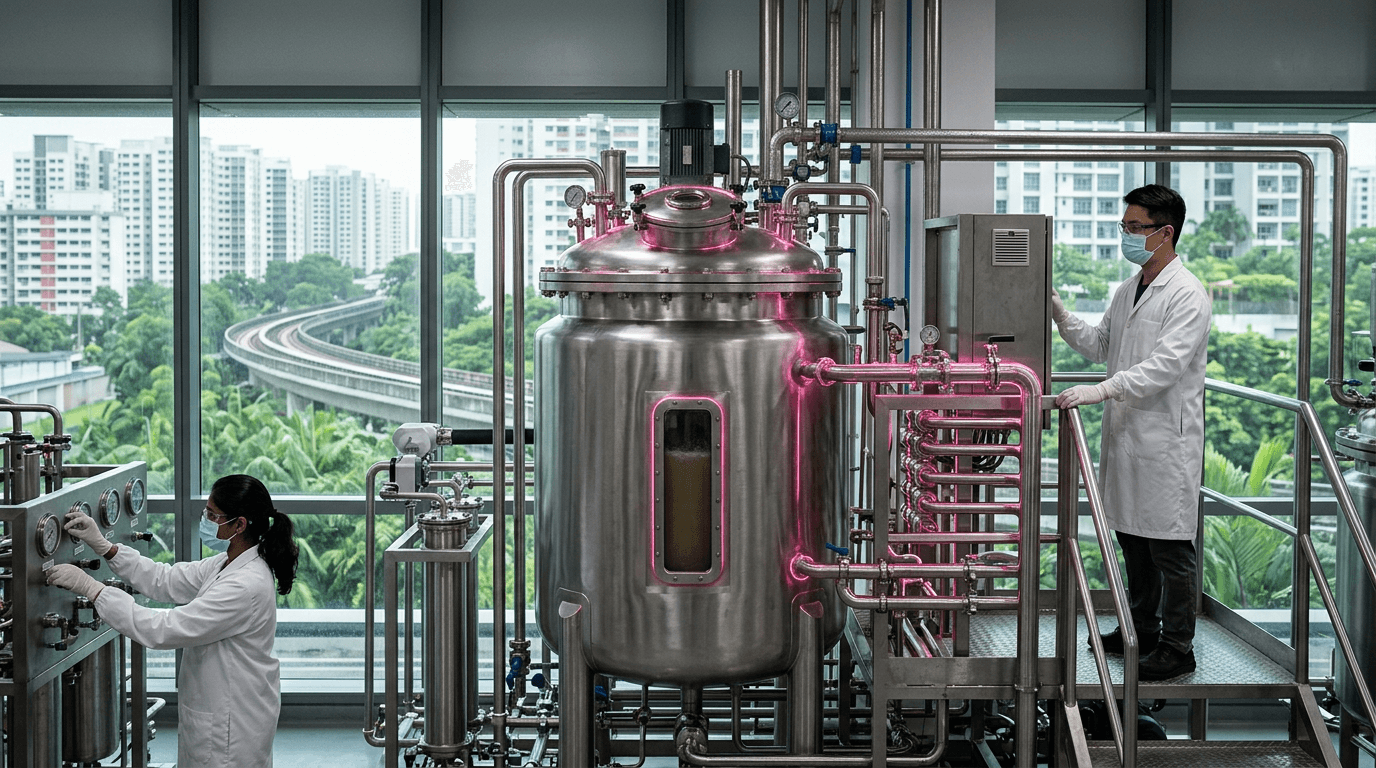
Precision Fermentation for Alternative Proteins
Geography: Asia Pacific · Southeast Asia · Southeast Asia
Singapore has emerged as the global regulatory pioneer for precision fermentation food technology. TurtleTree, a Singapore-headquartered startup, secured the world's first FDA 'no questions' GRAS letter for precision-fermented lactoferrin in May 2025 — a bioactive milk protein produced using genetically engineered microorganisms instead of cows. The Singapore Food Agency (SFA) is processing parallel approval for domestic sale. This follows Singapore's 2020 landmark as the first country to approve cell-cultured meat (Eat Just's chicken), establishing a pattern of regulatory first-mover advantage.
Precision fermentation uses programmed microorganisms to convert simple sugars into complex food proteins — effectively brewing milk proteins, collagen, or egg whites in bioreactors. Singapore's '30 by 30' food security strategy (producing 30% of nutritional needs domestically by 2030) drives aggressive investment in these technologies, since the city-state imports over 90% of its food. The combination of regulatory clarity, R&D funding (Singapore Food Story initiative), and proximity to Asian consumer markets makes it the de facto launchpad for alternative protein companies targeting Asia.
The global implications extend beyond food. Singapore is establishing itself as the regulatory template-setter for novel food — the same role Switzerland plays for pharma or Singapore already plays for fintech. As precision fermentation scales, regulatory precedents set by SFA and tested through FDA pathways become the blueprints that Malaysia, Thailand, Japan, and eventually China will follow. Singapore's real product isn't the fermented protein — it's the regulatory infrastructure and the trust framework that enables global commercialization.
Research this in Signals
Signals turns a topic into a sourced research record you can inspect and rerun. Your first scan is free, and this one starts with Precision Fermentation for Alternative Proteins already loaded, so edit it or scan as is.