Cell-Cultured Protein Production
Geography: Asia Pacific · Southeast Asia · Southeast Asia
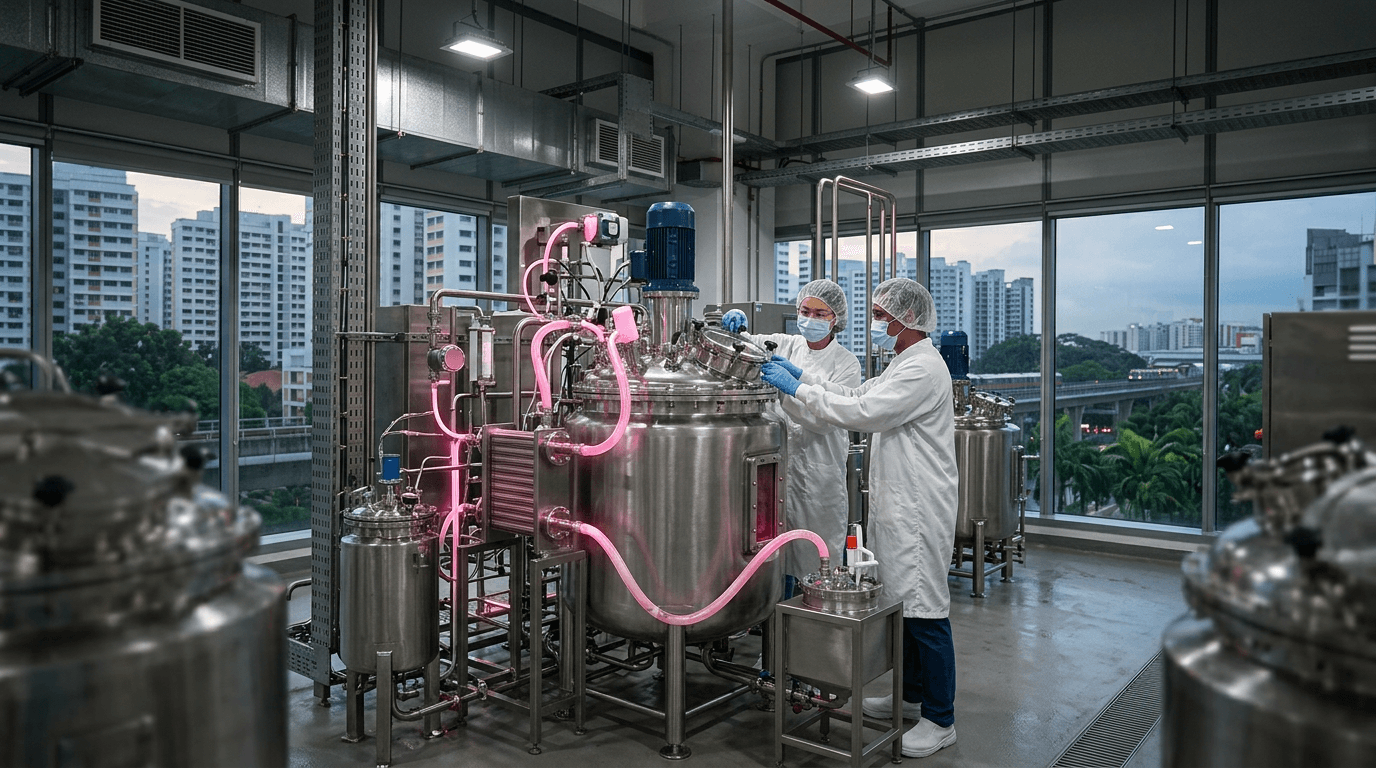
Singapore — Singapore approved the world's first sale of cell-cultured meat in December 2020 and has since built an ecosystem of cultivated protein companies. Esco Aster's Changi facility, one of the largest cultured meat plants globally, produces 400-500 tonnes of cell-cultured chicken annually. Cell culture-based cultivation accounts for ~70% of Singapore's cultured meat market, with the sector growing at 15.9% CAGR through 2032.
The regulatory first-mover advantage is significant: Singapore's Food Agency (SFA) developed the world's first comprehensive regulatory framework for cultured protein, which other countries (Australia approved in June 2025) are now using as a template. This regulatory IP — the standards, testing protocols, and safety frameworks — is as valuable as the technology itself.
Strategically, cultured protein addresses Singapore's food security vulnerability (importing 90% of food) while creating an exportable industry. The '30 by 30' vision drives public investment in alternative proteins, precision fermentation, and vertical farming. If production costs drop below conventional meat (currently 5-10x more expensive), Singapore's regulatory head start and manufacturing infrastructure could make it the global hub for alternative protein licensing and production.
Research this in Signals
Signals turns a topic into a sourced research record you can inspect and rerun. Your first scan is free, and this one starts with Cell-Cultured Protein Production already loaded, so edit it or scan as is.