K-Beauty R&D and Manufacturing Innovation
Geography: Asia Pacific · East Asia · South Korea
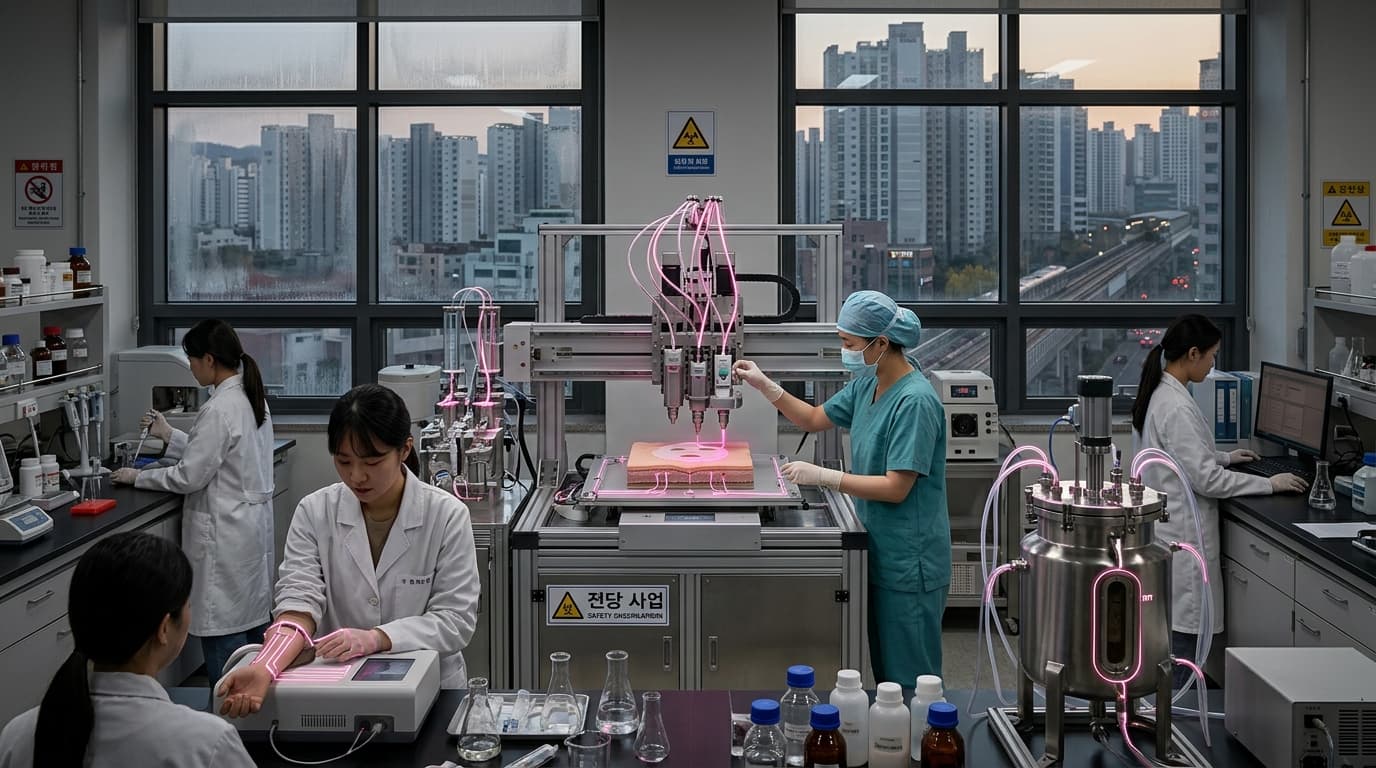
Korean beauty innovation is an R&D-driven technology pipeline disguised as a consumer product industry. Amorepacific, LG H&H, and hundreds of specialized Korean cosmetics firms collectively file more beauty-related patents than any country except China and the US. The innovation isn't just formulation — it's manufacturing technology. Korea invented cushion compact manufacturing (a porous sponge soaked with liquid foundation, now copied by every major beauty brand), developed industrial-scale sheet mask production (automated serum-infusion and packaging lines), and pioneered the multi-step skincare routine as both a consumer behavior and a product architecture.
The depth of Korean beauty R&D is invisible to consumers. Amorepacific's R&D center in Yongin employs over 500 researchers studying skin biology, with specialties in peptide synthesis, fermented extract efficacy (galactomyces, saccharomyces), and microbiome-based skincare. Korean companies increasingly use AI-powered skin analysis — smartphone cameras assess skin condition, then algorithms recommend personalized product combinations from existing product lines. 3D facial scanning enables custom-fit sheet masks manufactured to individual face geometry.
The global impact is structural: Korean beauty innovations set the global product development agenda. Formulations and formats that appear in Korean products (snail mucin, centella asiatica, fermented rice extract, sunscreen-moisturizer hybrids) reach Western markets through both Korean brand exports and Western brands copying the technology 2-3 years later. Korea's $9.5B annual cosmetics export industry is built not on marketing but on a genuine R&D pipeline that consistently produces novel ingredient technologies, delivery systems, and product formats.
Research this in Signals
Signals turns a topic into a sourced research record you can inspect and rerun. Your first scan is free, and this one starts with K-Beauty R&D and Manufacturing Innovation already loaded, so edit it or scan as is.