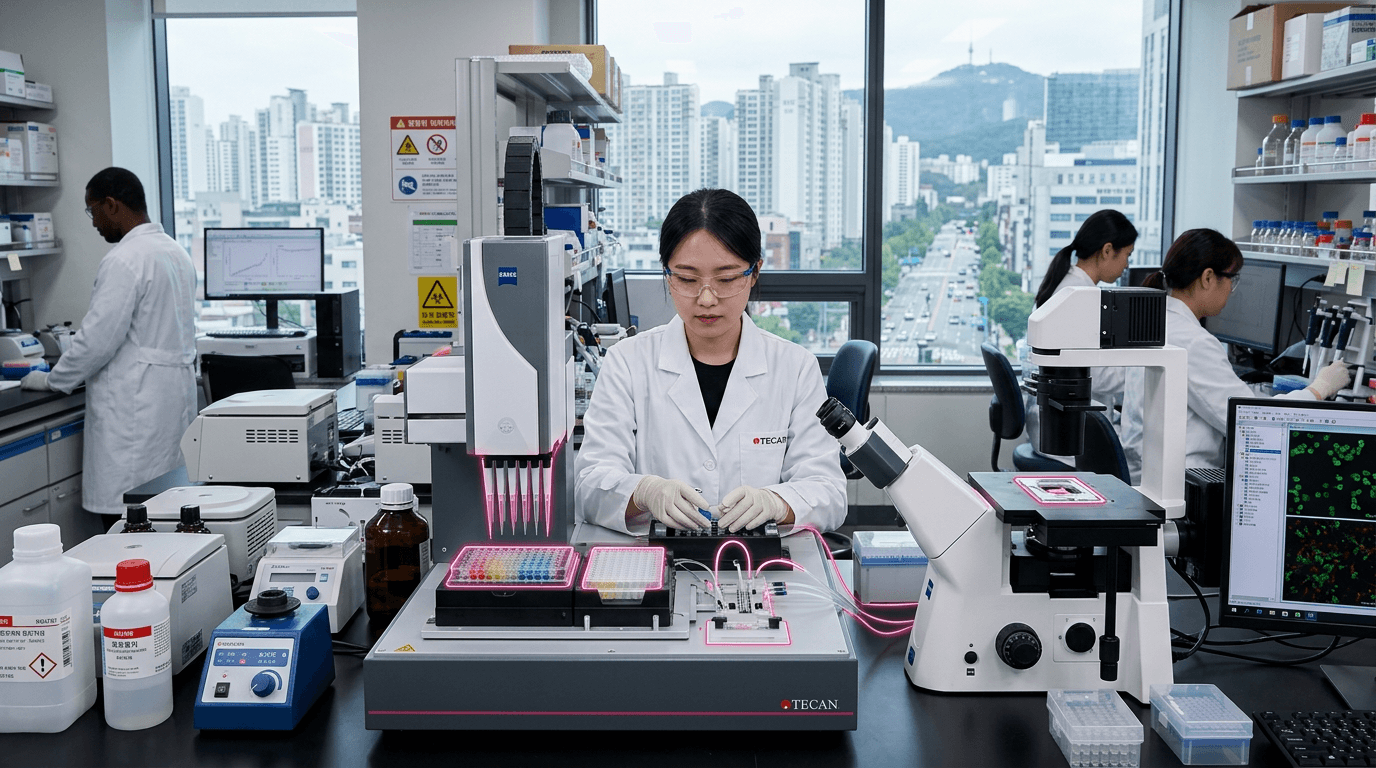
Antibody-Drug Conjugate (ADC) Technology Platforms
Geography: Asia Pacific · East Asia · South Korea
South Korea has emerged as a global hub for antibody-drug conjugate (ADC) technology development — precision cancer therapies that attach toxic payloads to antibodies that target specific tumor cells. LigaChem Biosciences (Daejeon) developed the ConjuAll platform, licensing its ADC candidates to Japan's Ono Pharmaceutical for first-in-class solid tumor treatments. AimedBio secured a deal worth up to $991 million from Boehringer Ingelheim in October 2025 for one of its ADC programs. Multiple Korean companies including Ubix Therapeutics, Genome & Company, and Alteogen are also active in the ADC space.
ADCs are one of the fastest-growing segments in oncology — the global ADC market is projected to exceed $30 billion by 2030, driven by breakthrough approvals like Enhertu (Daiichi Sankyo/AstraZeneca). Korean companies are competing not on individual drugs but on platform technologies: novel linkers that control drug release, site-specific conjugation methods that improve therapeutic windows, and degrader-antibody conjugates (DACs) that combine targeted protein degradation with antibody delivery. South Korea and China are identified as the two countries leading DAC development.
Korea's ADC ecosystem builds on the country's established strengths in biologics manufacturing (Samsung Biologics, Celltrion) and biosimilar development. The adjacency is natural: companies that mastered antibody manufacturing for biosimilars possess the molecular biology expertise to engineer more complex antibody-based therapies. LOTTE Biologics is building a 120,000L facility in Songdo specifically designed for ADC and complex biologic manufacturing, targeting GMP readiness by 2027.
Research this in Signals
Signals turns a topic into a sourced research record you can inspect and rerun. Your first scan is free, and this one starts with Antibody-Drug Conjugate (ADC) Technology Platforms already loaded, so edit it or scan as is.