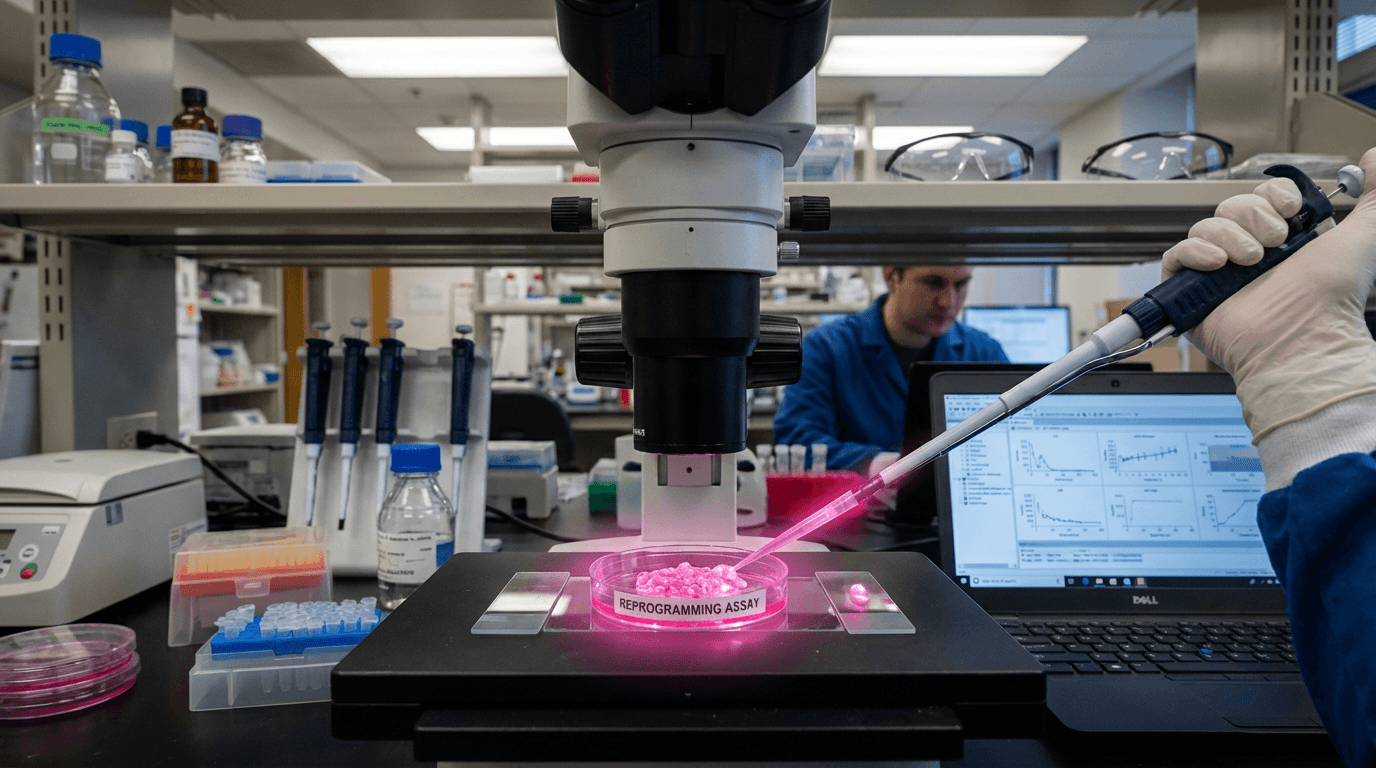
Partial Reprogramming Therapies
Partial reprogramming therapies use in-vivo transient expression of Yamanaka factors (a set of transcription factors that can reprogram cells to a pluripotent state) to target aging phenotypes and rejuvenate cells and tissues to a younger state, while carefully controlling the process to avoid complete dedifferentiation (loss of cell identity) and tumorigenesis (cancer formation). This approach aims to reset the epigenetic age of cells and reverse age-related degeneration without causing cells to lose their specialized functions or become cancerous, offering a potential path to reversing aging at the cellular level. Companies like Altos Labs, Turn Biotechnologies, and research institutions are developing these approaches.
This innovation addresses the fundamental question of whether aging can be reversed, where research suggests that cellular aging involves epigenetic changes that might be reversible. By partially reprogramming cells, these therapies could potentially reverse aging while maintaining cell identity. The approach represents a promising but early-stage strategy for treating aging.
The technology is particularly significant for longevity medicine, where reversing cellular aging could address multiple age-related conditions simultaneously. As research progresses, partial reprogramming could become an important tool for healthy aging. However, ensuring safety, avoiding cancer, and maintaining cell identity remain critical challenges. The technology represents an exciting approach to treating aging, but requires extensive development and validation. Success could enable new approaches to treating age-related conditions and potentially extend healthspan, but the path to clinical use is long and requires careful development to ensure safety and effectiveness.
Related Organizations

Biotechnology company focused on cellular rejuvenation programming.

Co-founded by Brian Armstrong, focused on epigenetic reprogramming to restore youthful function to T-cells and other tissues.

Home to the lab of Juan Carlos Izpisua Belmonte (prior to Altos), a pioneer in in-vivo partial reprogramming.

Developing therapeutics that target the biology of aging, including epigenetic reprogramming to restore visual function.
Spinout from the Wyss Institute developing gene therapies for aging, including partial reprogramming strategies.

A startup with a mission to increase healthy human lifespan by ten years, focusing on cellular reprogramming, autophagy, and plasma-inspired therapeutics.

Alphabet-owned R&D company focused on the biology of aging, with active research into reprogramming biology.

Uses AI to identify safe rejuvenation genes that can reset the epigenetic clock without causing cancer.
Supporting Evidence
Research this in Signals
Signals turns a topic into a sourced research record you can inspect and rerun. Your first scan is free, and this one starts with Partial Reprogramming Therapies already loaded, so edit it or scan as is.