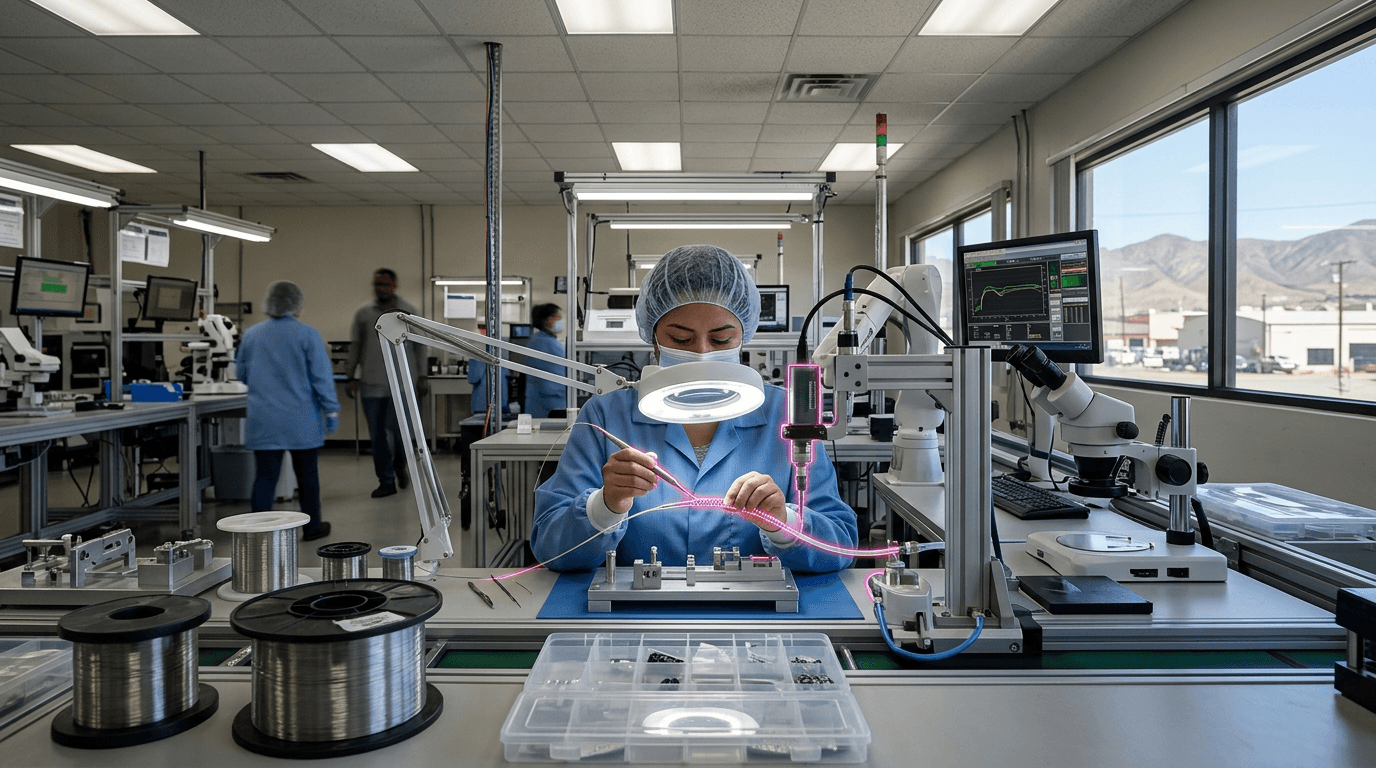
Advanced Medical Device Manufacturing
Geography: Americas · South America · Latin America
Mexico's medical device manufacturing sector has grown into a $15B+ industry, making the country the 8th-largest exporter globally. The Baja California border region hosts clusters of facilities producing Class II and III medical devices — surgical instruments, cardiovascular catheters, orthopedic implants, diagnostic imaging components, and hearing aids — for the US market. Companies like Medtronic, Becton Dickinson, and Edwards Lifesciences operate advanced clean-room manufacturing in Tijuana and Mexicali.
The technological sophistication extends to micro-molding for minimally invasive surgical tools, laser welding of implantable devices, precision CNC machining of titanium and cobalt-chrome components, and ISO 13485-certified quality management systems. Mexican facilities are increasingly performing not just assembly but design verification, biocompatibility testing, and regulatory documentation for FDA submissions.
The nearshoring dynamic is particularly strong for medical devices because of US FDA requirements for supply chain transparency and the strategic push to reduce dependence on Chinese manufacturing for critical healthcare products. Mexico's proximity allows just-in-time delivery to US distribution centers, and the USMCA provides duty-free access for qualifying products. The sector's growth is constrained primarily by the availability of specialized engineering talent, which Mexico's universities are expanding to address.
Research this in Signals
Signals turns a topic into a sourced research record you can inspect and rerun. Your first scan is free, and this one starts with Advanced Medical Device Manufacturing already loaded, so edit it or scan as is.